Origins of The Queen’s College
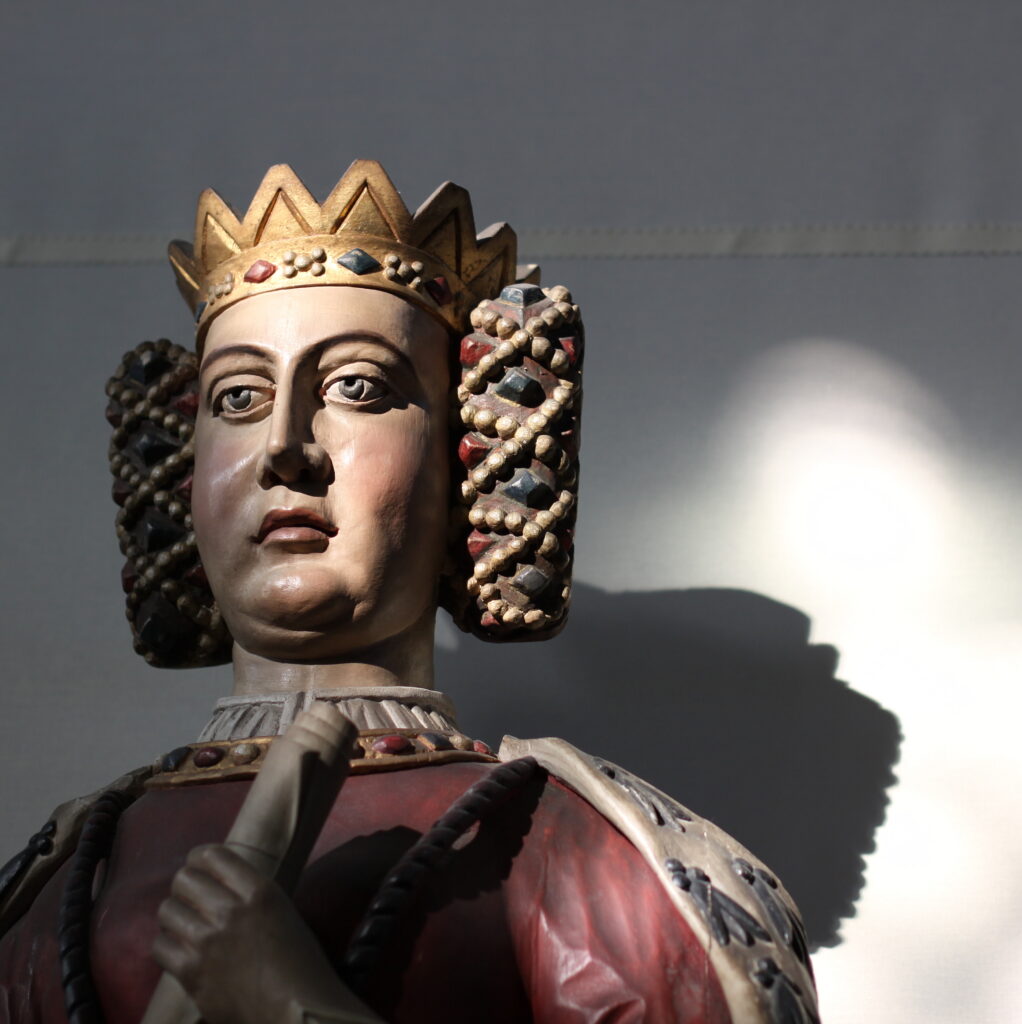
“Hall of the Queen’s Scholars at Oxford” was founded in 1341 by Robert de Eglesfield, a chaplain in the household of Queen Philippa, who named it in her honour. He envisaged an establishment of fellows, chaplains, ‘poor boys’ and various officials and servants, headed by a Provost. Membership was to be open, but with a preference for inhabitants of Cumberland and Westmorland. Initially Queen’s was poor, but the endowment slowly grew. Crucially, in 1343, Philippa secured for Queen’s a small hospital in Southampton with its lands, destined to be the basis of much of the College’s prosperity in the nineteenth and twentieth centuries as Southampton Docks expanded and surrounding farmland was developed.
From northern roots to wider reach
After 1400 the preference for people from Cumberland and Westmorland became a monopoly, making Queen’s a community of north-westerners. During the fifteenth and sixteenth centuries it prospered, and in Elizabeth’s reign, when it became one of the most popular Oxford colleges, there is growing evidence for the development of the tutorial system. Benefactions continued, notably those of Bishop Thomas Barlow (Provost 1658-77); Sir Joseph Williamson (Charles II’s Secretary of State and subscriber of The Royal African Company); and Lady Elizabeth Hastings (died 1739), whose endowment of exhibitions from twelve schools in Cumberland, Westmorland and Yorkshire extended the College’s normal catchment area.
Rebuilding Queen’s: the Baroque transformation
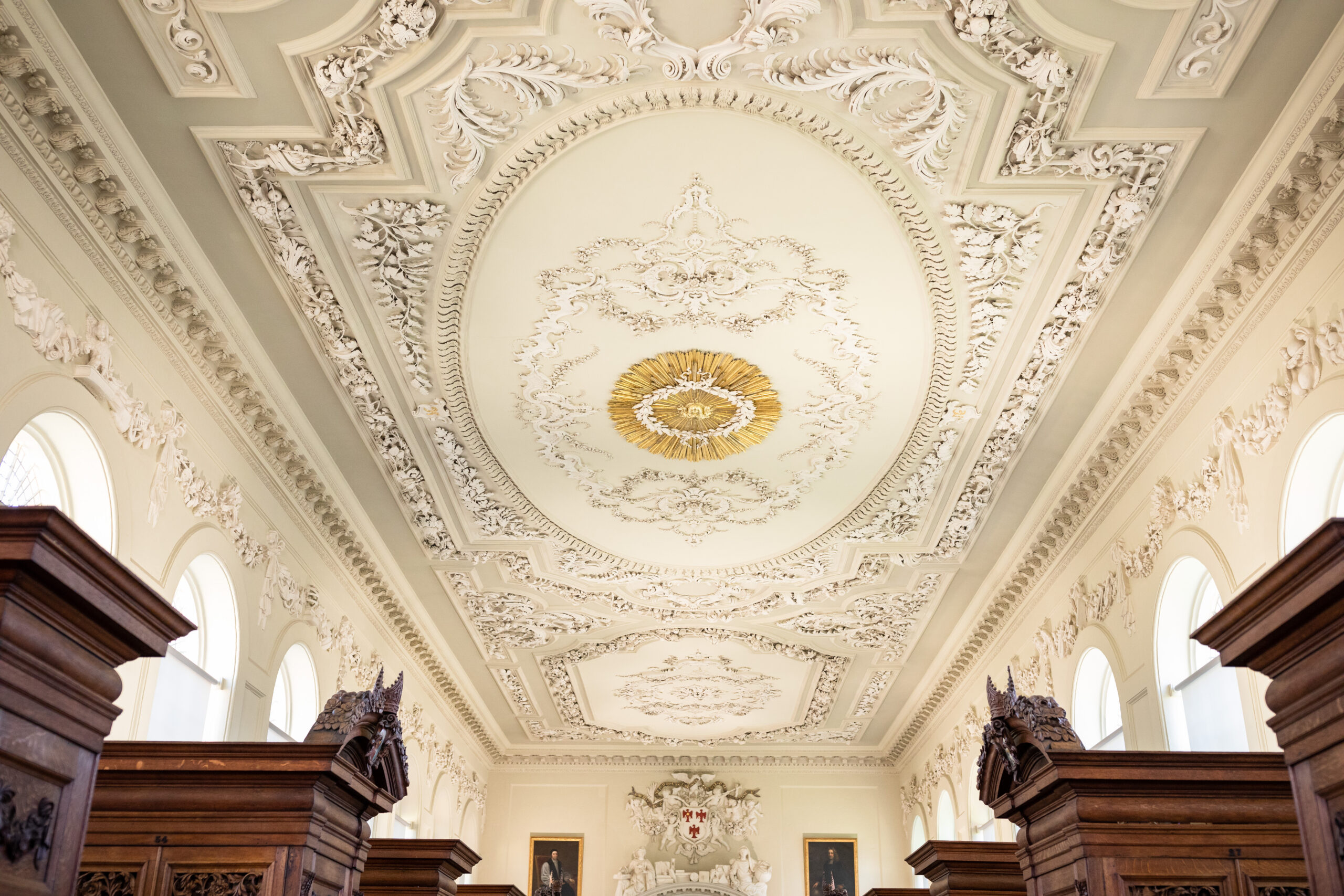
In the seventeenth-century, Queen’s continued to expand and the magnificent Library, one of the finest in England, was added during 1693-6 to house Barlow’s books. Around 1700 the crucial decision was taken to rebuild the medieval College entirely, so that by the 1730s Queen’s was the only Oxford college to be housed entirely in Baroque buildings. The Front Quad, which has been called ‘the grandest piece of classical architecture in Oxford’, was heavily influenced by the great architect Nicholas Hawksmoor, who produced even more extravagant designs that were never executed.
From decline to renewal
During the eighteenth-century Queen’s experienced the same decline as most colleges, and in the early Victorian period the same revival and reform. Since the late nineteenth-century, it has developed a strong academic reputation, while solid endowments and wise management have made it secure and prosperous. Today, although candidates from all possible backgrounds are welcomed and northerners no longer have preference, the College remains conscious of its history and traditions and values its ancient links with Cumberland, Westmorland and Yorkshire. Queen’s has partnered with The Access Project to deliver a major new outreach initiative in the North West to enhance the current Access and Outreach work undertaken at the College.