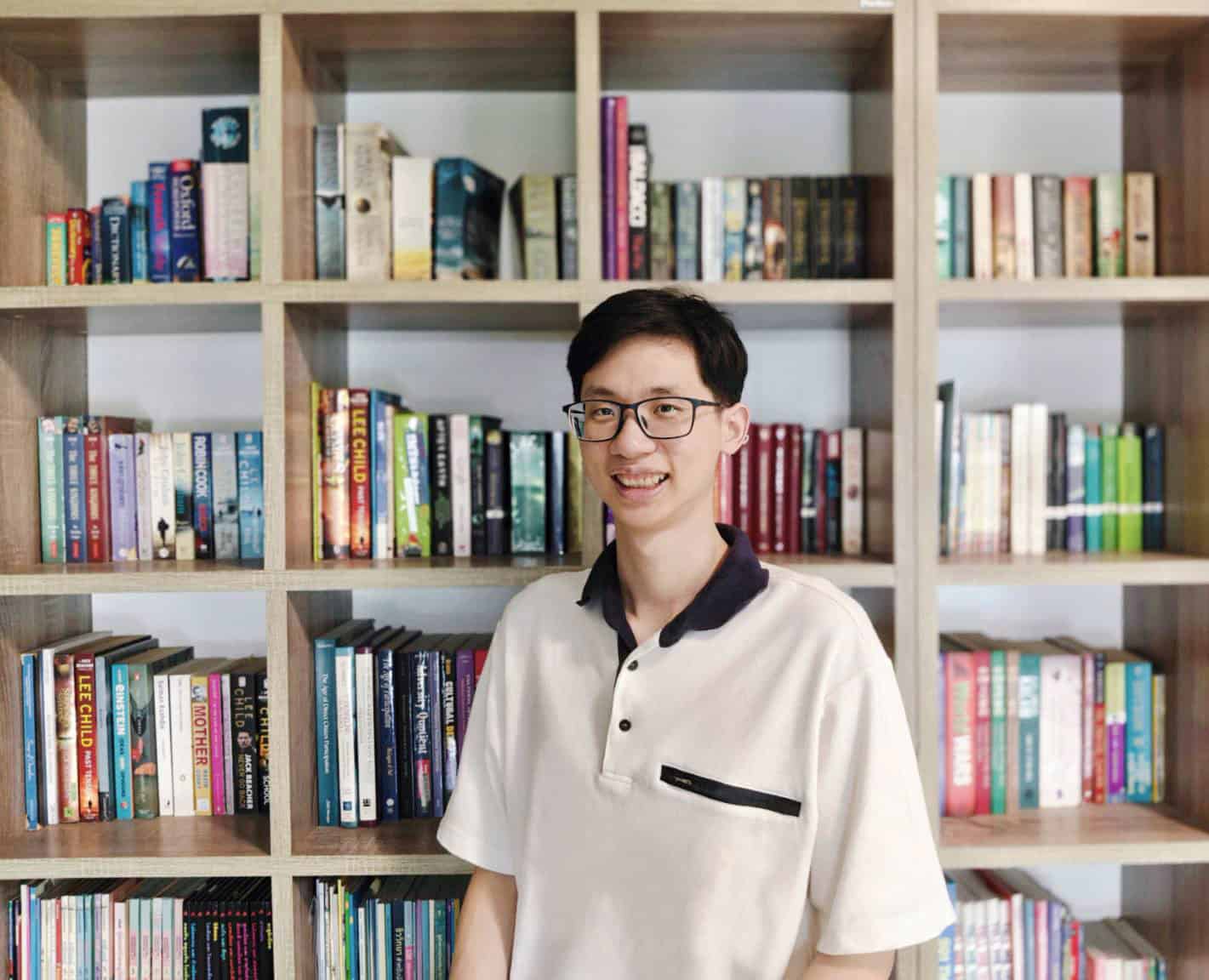
It’s no longer news that Artificial intelligence is disrupting the way humans think and live. This term’s Queen’s College Symposium (QCS) brought together perspectives from across disciplines to explore the opportunities and ethical questions being raised. Co-organiser Great Nnamani reflects on the insights that surprised him and the value of student-led academic exchange at Queen’s.
Great tells us more about this term’s QCS event.
AI is transforming so many aspects of our lives, often in very different ways. What were the most interesting questions you wanted QCS to explore this term, and why?
It is no longer news how disruptive AI has been to our personal lives and to several fields –academic and non-academic. Littered across social media are videos and content generated by AI. People are gradually getting used to having more AI content than the innovative human-made content. On a more personal note, I have been alarmed by the number of AI videos that my aunt randomly sends me every day.
But whilst this disruption has become quite obvious, none has hit me as hard as the news that OpenAI had claimed to have found a solution to the Navier-Stokes problem. They subsequently published hundreds of papers detailing their progress on longstanding mathematical problems. The first thing I became concerned about was what that meant for mathematicians themselves, and the inevitable impact on the discipline. Conversely, there has been a remarkable spring of innovation. AI is improving weather forecasts, and most recently, AI beat some of the best human forecasters in the Metaculus Cup. In fact, out of the top five places, AI only left the third and fourth for humans. The mix of positives and negatives complicates the AI discourse.
Sanjna and I, the MCR Academic Officers this year, thought we could explore these issues and questions, albeit more intently. At a college like Queen’s, where one can sometimes get caught up in one’s own discipline and lose sight of the invaluable research happening across the College, we thought we could gather members working in different fields to share how AI is transforming their respective disciplines. What are the new developments? At what point does AI cross the boundary from a tool that supports human expertise to one that begins to replace it? What does the future of different fields look like as AI continues to (self) improve?
At what point does AI cross the boundary from a tool that supports human expertise to one that begins to replace it?
The Symposium brought together perspectives from intellectual property, neuroscience, and hospitality. Were there any overlaps between these very different disciplines?
One major and apparent overlap is the disruption that AI inherently creates, but each discipline seems to have its own unique concerns and possibilities. During her presentation, “Sink or Swim for IP: Will AI Take Up All the Water?” Fellow in Law Professor Emily Hudson took us back through the history of technological disruption and its implications for the creative industries. One example that caught my attention was the introduction of the piano and the role it played in the production and distribution of music. If we consider this in context, what initially seemed like a threat to traditional musical creativity eventually gave rise to new forms of production and consumption. She also took us through the history of copying technologies, from earlier printing and recording technologies to digital distribution and now, generative AI. She then brought this historical perspective into the present debate on copyright and artificial intelligence. For me, the most interesting question was that of who owns creative works generated with AI and how copyright law should respond.
DPhil student Jackson Cheung, on the other hand, took us into clinical neuroscience. His presentation was on how AI is used to interpret electrical signals from the brain. This is such a massive transformation in the treatment of neurological conditions. He shared examples of patients who had lost the ability to communicate following neurological conditions but could now use these technologies to generate speech. My observation of the audience was that many of us were already aware of AI’s disruptive potential, but the level of sophistication and the possibilities within these different fields were quite new to us. And that, for me, is essentially the beauty of attending such an insightful session.
My observation of the audience was that many of us were already aware of AI’s disruptive potential, but the level of sophistication and the possibilities within these different fields were quite new to us.
Was there a particular insight or surprising perspective that stood out to you?
Sam Altman, long before the ChatGPT era, once remarked in 2015 that “AI will probably most likely lead to the end of the world, but in the meantime, there’ll be great companies.” My understanding of this statement is that he tries to affirm the enormous commercial opportunities AI presents alongside the potentially far-reaching consequences of its development. Irrespective of the concerns raised about AI, I am completely impressed by what the technology is making possible. And my impression has been reinforced after Jackson’s presentation.
Before his talk, I knew absolutely nothing about AI that interprets brain signals or one that restores communication for people who have lost the ability to speak. One thing I found very interesting was his clarification that these systems are not necessarily reading people’s minds, since one could easily misinterpret that. The systems are, in fact, learning to recognise specific patterns associated with attempted speech and then progress to translate these into words. But perhaps the most thought-provoking part of his presentation was the question of whether understanding what the brain is doing means knowing what is best for the person. He discussed the possibility of AI systems detecting patterns associated with emotions such as anxiety or depression and automatically adjusting brain stimulation in response. But should a machine decide which emotions need to be changed?
Should a machine decide which emotions need to be changed?
Moreover, this conversation on AI has also spread into “What’s Brewing at Queen’s?”, another beautiful academic conversation kick-started by Sanjna last year and graciously hosted at the Provost’s Lodgings. In the most recent session, Amogh, an MPP student at Queen’s, presented on “Middle Powers and Frontier AI,” using India as a case study. He discussed how countries that do not control the development of the most advanced AI models can nevertheless preserve access and even build domestic capabilities. In truth, the conversation about AI is not likely to end soon. If anything, the more we learn about its capabilities, the more questions seem to emerge. I suspect we have only begun to understand what this technology could mean for our societies and everyday lives.
What do you think events like the QCS contribute to the intellectual life of the College?
There is already a very vibrant intellectual life at Queen’s, one that has been further enriched by the frequent academic sessions and conversations the Provost hosts with leading scholars and other distinguished guests. The beauty of QCS, however, is its student-centric nature. Students plan the sessions. Students pick the theme. Students review the submissions and select the speakers. We also take care of the practical details, like selecting the meals to be served at the dinner. We are at the heart of the entire process. That is beautiful and should be encouraged.
The beauty of QCS is its student-centric nature.
With the increased attendance of SCR members at recent QCS events, JCR and MCR members also get the opportunity to connect more closely with Fellows. There are not many college events that create this opportunity in quite the same way as QCS does. For instance, my first proper interaction with the Provost was during the QCS dinner in Michaelmas 2025. At the just-concluded QCS, I also bumped into some Fellows and had very fruitful conversations with them. These are the sorts of interactions that scarcely happen in our everyday academic routines, but which, I believe, make a real difference to our experience of college life.
What has organising the Symposium meant to you personally?
For most of the first year of my MPhil, I attended College events, including the three QCS events held last year. But on none of those occasions was I part of the organising team; I only attended to learn and contribute to the conversations. It felt honourable to be part and parcel of QCS this time, but from the other side, as a co-organiser with Sanjna. Organising QCS this term was more seamless than I anticipated. First, it solidified my teamwork skills. It was such a pleasure working with Sanjna, who had co-organised QCS throughout last year and had a good understanding of whom to contact for what. I learned a lot from her about the practical aspects of organising events at the College level, and I now have a much better appreciation of everything that goes into putting an evening like this together.
Additionally, I enjoyed seeing how the initial ideas gradually came together, from selecting a theme and reviewing speaker proposals to coordinating the presentations and bringing different people into the conversation. I also enjoyed watching the audience engage with the presentations and ask questions across disciplines. More than anything, it was completely fulfilling to hear the Provost describe the event as “brilliant”. That was a lovely way to end what had been a very rewarding experience. In the meantime, let’s get ready for the next QCS in Hilary Term!