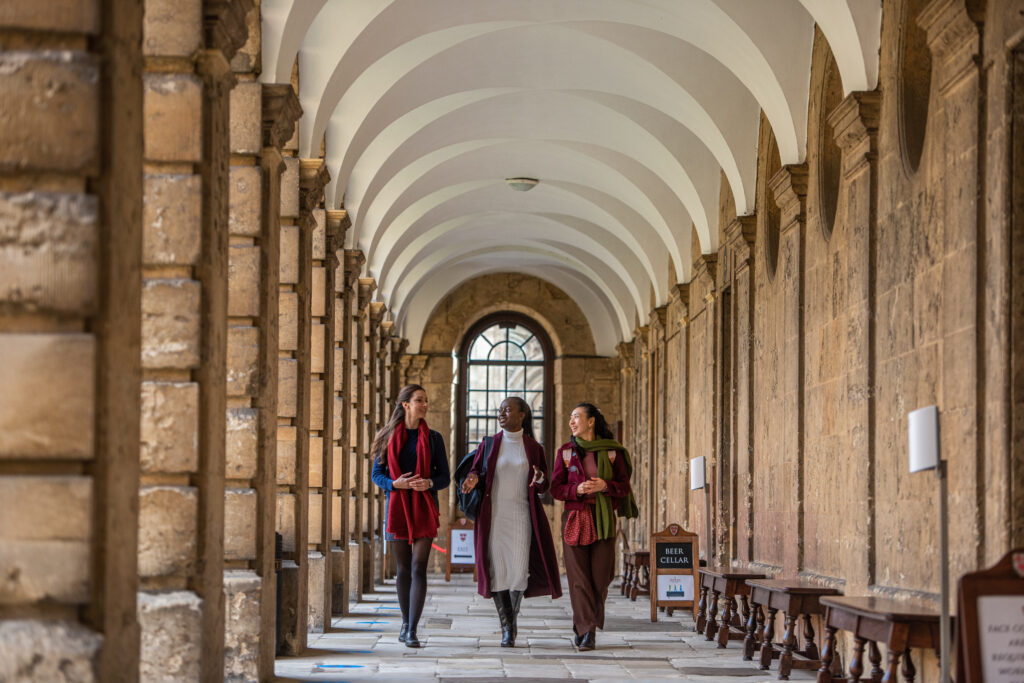
Welcome to the Queen’s College undergraduate admissions page. We would be delighted if you were to choose to apply to us if you want to study at Oxford. Queen’s is a friendly and inviting college with a rich cultural mix and somewhere that can open a new world of opportunities to students. As well as a strong emphasis on high quality education the college community offers opportunities to students in a wide variety of areas such as music, sport, theatre and other social events. We also offer a range of scholarships, grants and awards to our students to help financially with their studies. Full details of all this can be found on our webpage, so please feel free to explore our undergraduate admissions pages to learn more about what makes Queen’s special. Information on specific subjects can be found here.
Please download our brochure that gives more information about what it’s like to study and live here.
UCAS Campus Code: J
The application process
The initial stages of the application process are the same at Queen’s as they are at any other college in the University. UCAS applications are due by 6pm (UK time) on 15 October 2026 for 2027 entry. Applicants need to ensure that they have registered for and booked any necessary admissions tests. The deadline to book the ESAT, TMUA, or TARA is Monday 28 September 2026 (except for the LNAT and the UCAT). The most comprehensive information about applying to the University is available on the central University admissions webpages.
Interviews will take place online in December 2026.
If you are a current applicant and would like step-by-step support with each stage of our admissions process, we recommend that you sign-up for the University’s Choosing Oxford newsletter.
The College supports the University’s policy about the age of candidates for undergraduate admissions, which states:
‘The University does not set any age requirements (except for the Medicine course: please see below), but applicants for all undergraduate courses will be expected to demonstrate a mature approach to the study of their subject which includes demonstrable skills of critical analysis, wide contextual knowledge and the ability to manage their time independently. You should look at the selection criteria for your chosen course carefully and consider whether you are fully able to meet them at this stage.’
The College is happy to consider applications from students regardless of their age. Recognizing that thriving on an undergraduate course requires both intellectual and personal maturity, the College may decide to offer a place for academic reasons, while deferring the entry year until a later date when the College is fully confident in the candidate’s ability to meet the challenges of university study.
For Medicine, the College follows the University policy, i.e. ‘Students must be 18 years of age at the time they start the Medicine course. The clinical contact in our programme starts in the first term and means that younger students would not be able to take part in required elements of the course. For Medicine, your application will not be shortlisted unless you will be at least 18 years old on the 1 November of your first term.’ This requirement brings the Medical School into line with many other top-ranking Medical Schools in the UK and is further explained in the FAQs on the Medical Sciences website.
Finding out your result
We will send out admissions decisions for 2027 entry in January 2027, at the same time as the other colleges. Unfortunately, we are not able to give out application results before this date.
Remember…
Our tutors are looking for academic enthusiasm, capability, and potential. You will be expected to think on your feet; take the interview questions at face-value, ask for help if you need it, speak through your thought process out loud, be honest, and make the most of being given the chance to speak to experts in your subject!
Tutors are not trying to trick you or make you feel uncomfortable; they actually want to help you do your best.
Contact us
Finally, if you have any questions about the admissions process or applying to Queen’s, please get in touch with us:
Email: admissions@queens.ox.ac.uk / Tel: 01865 279161
Queen’s now
Welcome! New academics join Queen’s

New Honorary Fellow
The hidden networks of life

New Master’s course puts human creativity at the heart of translation
Queen’s launches new Provox podcast
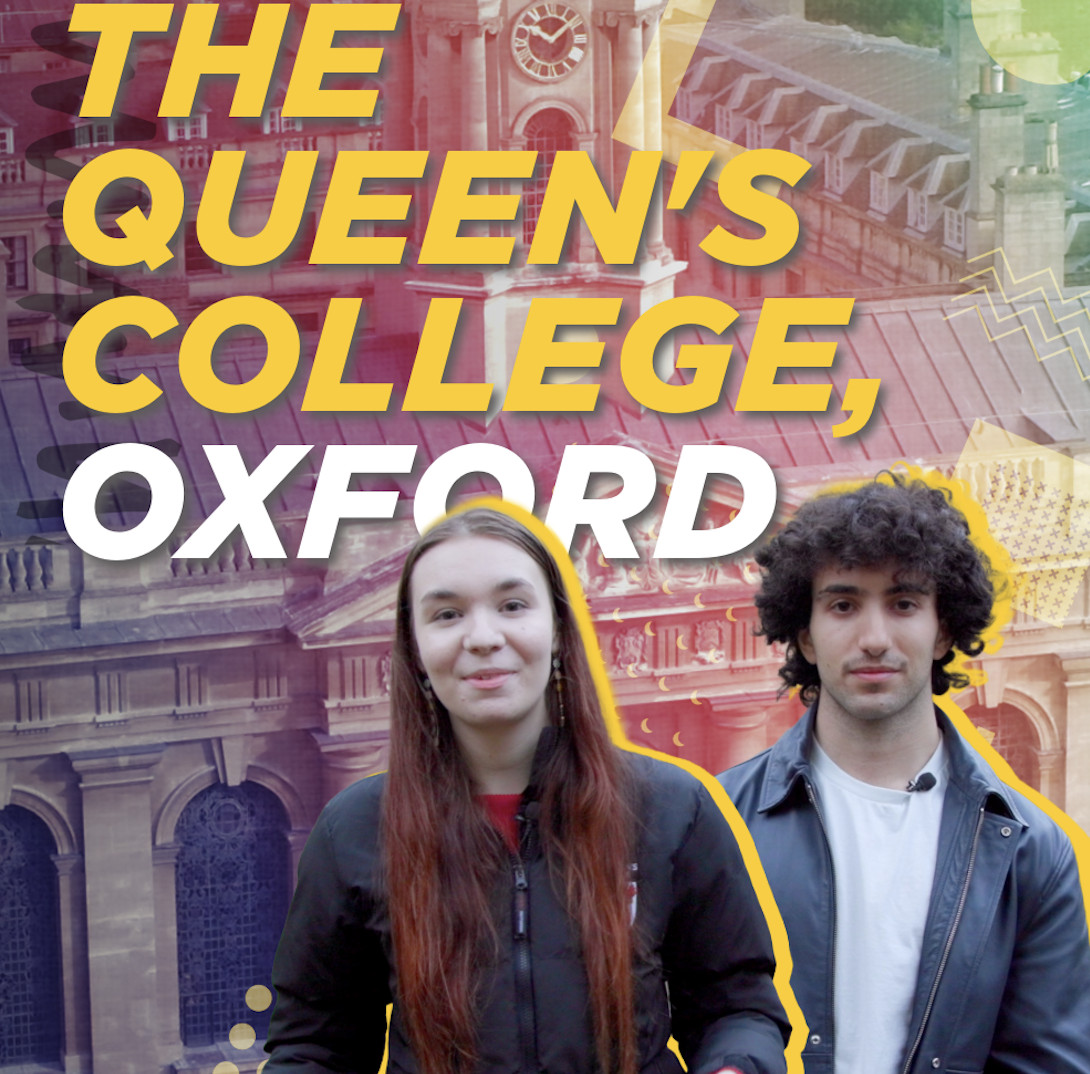
New student-led video tour of College life
What’s for lunch?
- A delicious selection of soup, sandwiches,
pasta with sauce,
jacket potatoes with a variety of fillings,
and locally sourced seasonal vegetables
**
Murgh Malai Chicken,
Saffron Rice & Mint Yoghurt
**
Mango & Passion Fruit Fool
———————-
Sweet Potato & Pea Samosa,
Mango Chutney & Mixed Leaves



🎉 We’re delighted to announce the appointment of Andrew Mitchell CMG (Modern Languages, 1986), HM Ambassador to Germany, to an Honorary Fellowship at Queen’s.
From memories of student life to the power of learning languages and the importance of curiosity in diplomacy, Andrew reflects on his career so far and the lasting influence of Queen’s.
And the message that has stayed with him throughout? “It’s always about the people.”
🔗Read our interview with Andrew: ow.ly/CEA750ZZmkG
📷 Till Budde ...
🏅 What is it about neutrinos that keeps attracting Nobel Prizes?
The 2026 Nobel Prize for Physics has been awarded to Francis Halzen for his pioneering work on the IceCube Neutrino Observatory in Antarctica and the discovery of high-energy neutrinos from space.
This marks the fifth Nobel Prize recognising research into these elusive particles.
Queen’s Fellow and neutrino physicist Dr Kirsty Duffy joins the 'Physics World Weekly' podcast to explore what makes neutrinos so fascinating.
🎧 Listen to the conversation: ow.ly/u3f150ZWM77
📷 Credit: Ilya Bodo, IceCube/NSF
The IceCube Lab at the Amundsen-Scott South Pole Station in Antarctica.
#NobelPrize #Physics #OxfordUniversity #NobelPrize2026 #NeutrinoPhysics #IceCubeObservatory #HighEnergyNeutrinos #ParticlePhysics #PhysicsResearch #PhysicsPodcast #ScienceDiscovery #PhysicsatOxford ...
🧠 What if we could map the brain like Google Maps and trace not just individual landmarks, but the connections between them?
Our latest blogpost features DPhil student Sapolnach, whose research explores the rapidly developing field of connectomics: mapping the networks that shape our thoughts and behaviour.
We spoke to him about the big questions driving his research, as well as his work to open up neuroscience to young people around the world and give students the chance to work with real brain data.
🔗 Read Mapping the Mind: ow.ly/9ELf50ZUS0o
#brainmapping #connectomics #neuroscienceresearch #CognitiveScience #BrainNetworks #BrainData #ScientificResearch #studyatoxford ...
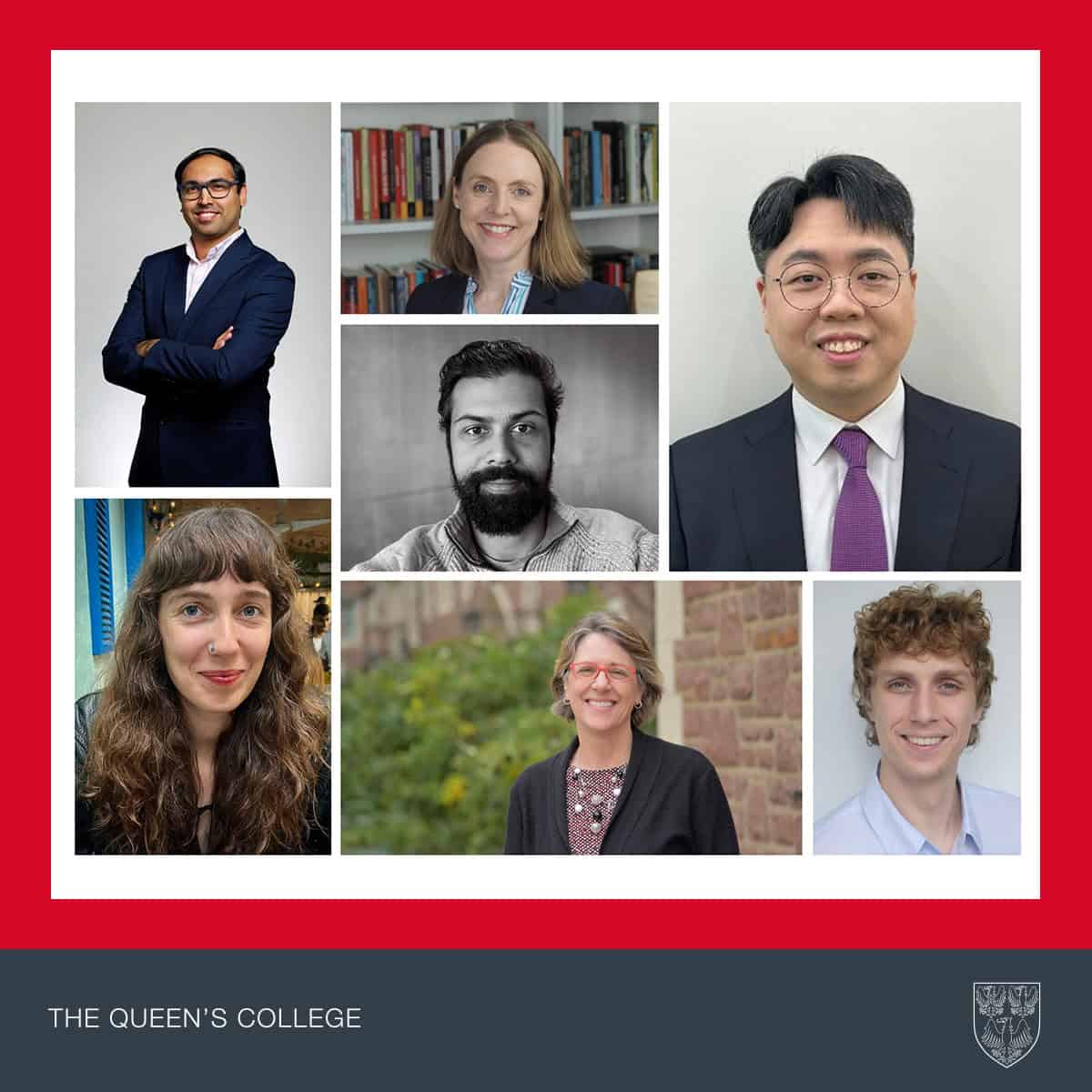
🎓A very warm welcome to the newest members of Queen’s academic community!
This year, we’re delighted to welcome academics whose research spans everything from plant genetics, quantum materials and the Higgs boson, to philosophy, American politics and history, and the neuroscience of decision-making.
🔗 Meet our new Fellows and discover more about their work: ow.ly/wCBV50ZTohp
#OxfordUniversity #AcademicLife #Research #AcademicCommunity #ResearchExcellence #QuantumMaterials #HiggsBoson #PhilosophyResearch #AmericanPolitics #NeuroscienceResearch #NewFellows #PlantGenetics ...