Viewing archives for Philosophy, Politics and Economics (PPE)

Introduction

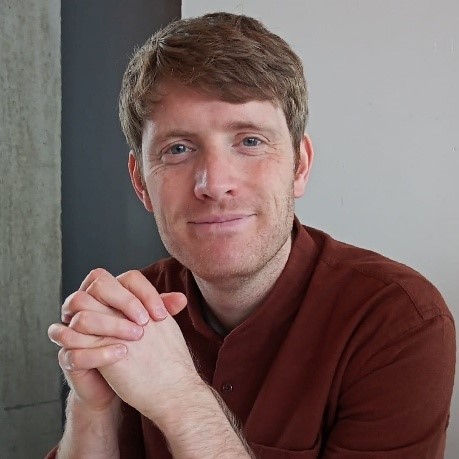
I grew up in Bath, where I attended state schools, before studying PPE and then an MPhil in Comparative Government at Exeter College, Oxford. I took my DPhil in Politics at Harris Manchester College, Oxford, and subsequently became a Junior Research Fellow at the Rothermere American Institute. In 2016 I was appointed to my first academic post at Royal Holloway, University of London, where my research was supported in part by British Academy postdoctoral and mid-career fellowships. In 2026, I returned to Oxford as the inaugural Churchill Associate Professor of U.S. Politics at the Rothermere American Institute in association with The Queen’s College.

Teaching

I teach tutorials in U.S. Politics and supervise undergraduate and postgraduate dissertations on U.S. Politics at Oxford with a particular focus on federalism, public policy, and American Political Development. I am leading the development of Oxford’s first MSc in American Politics at the Rothermere American Institute.

Research

My research in American Political Development examines how law, institutions, and public policy shape representation and political inequality in the United States. My award-winning first monograph demonstrated that state policymakers learned to design school voucher programmes to minimize legal vulnerability. Subsequent work examined how policy drift perpetuates and deepens racial inequalities via welfare retrenchment, and how courts adjudicate the constitutionality of drifting policies. My most recent monograph and associated papers develop original spatial measures of redistricting continuity and change. This work identifies the strategic uses of minimal-change redistricting: to shield incumbents from electoral risk, preserve the benefits of prior gerrymanders, and obstruct Black and Latino voters from achieving representation.

Publications

A full list of my publications is available at www.ursulahackett.com
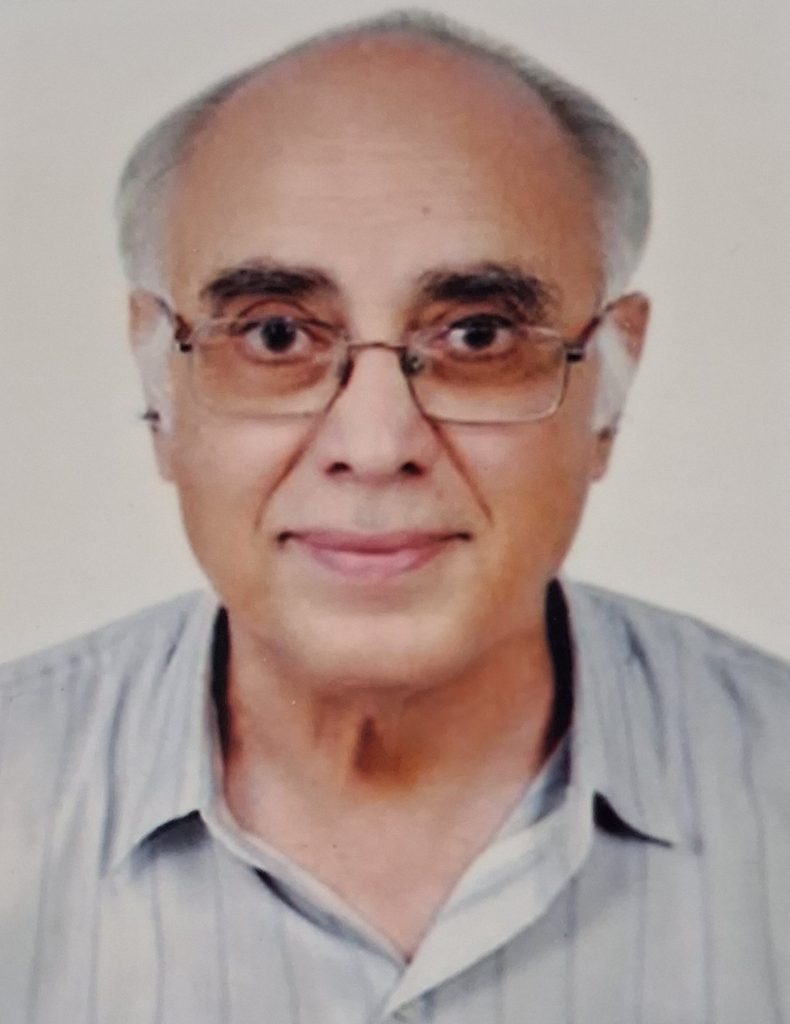
My favourite memory of Queen’s

Variety of folks from different backgrounds.

What Queen’s means to me

Important in changing trajectory of my life.

My journey since leaving Queen’s

Started as an accountant then moved into corporate finance and helped to build a very small business into a leading tech specialist. For the last 18 years pre-retirement Partner at what has now become one of the world’s largest Private Equity tech investors with $140bn under management.

My favourite memory of Queen’s

Hours spent in the breathtakingly beautiful library.

What Queen’s means to me

A place of great serenity; thought-provoking tutorials; friends from around the world.

My journey since leaving Queen’s

1961-63: Lecturer, St.Xavier’s College, Bombay/Mumbai
1963-1994. Member of the Indian Foreign Service. Served as Indian ambassador to Cuba (1981-84), Indonesia (1985-88) Bhutan(1989-91).
Fellow, Centre for International Affairs, Harvard (1988-89) (now Weatherhead Center)
First Director General, India Taipei Association (1995-97) , This looks after’s India’s interests in Taiwan,

Associated with Institute of Chinese Studies, Delhi ..as director in 1994 , now Emeritus Fellow.

Associated with Pratham Delhi Education Initiative as its Founder.

Head of several development support organisations e.g. Tech Mahindra Foundation.

Introduction

I attended the local comprehensive school (The Arnewood School in New Milton) before earning bachelor’s and master’s degrees in Philosophy at the University of Southampton. I then combined full-time work in the Modern Languages Department at Southampton with completing an MPhil focused on nineteenth-century philosophy. In 2017, I was appointed to a PhD position in Philosophical Aesthetics at Uppsala University in Sweden. During my doctoral studies, I worked as an Editorial Assistant at the British Journal of Aesthetics, was a visiting researcher at Birkbeck College and Auburn University, and received Essay Prizes from the European Society for Aesthetics (2020) and the British Society for Aesthetics (2024). I was subsequently a postdoc in the Department of Literature and Rhetoric at Uppsala University. In September 2025, I returned to the UK to take up my current position at Queen’s University.

Teaching

I teach the ‘Logic’, ‘General Philosophy’ and ‘Moral Philosophy’ first-year papers at Queen’s as well as the ‘Ethics’ and ‘Knowledge and Reality’ finals paper.

Research

My primary research project focuses on philosophical aesthetics and draws on work in the history of philosophy, value theory, epistemology, and normative theory. It revolves around two currently neglected claims with a venerable historical lineage. First, that objects bearing aesthetic value demand that we cognitively explore them on their own terms and for their own sake as the distinct individuals they are. Second, that intelligible beauty is the highest form of aesthetic value. I intend to develop a comprehensive account of aesthetic value and aesthetic normativity from these two claims.

I also work on the philosophy of honesty and nineteenth-century philosophy. In a secondary research project, I argue for a particular view of honesty: to be honest is to strive to live—and succeed in living—in harmony with the truth.

Publications

  • Page, J. (forthcoming) Winner of the British Society of Aesthetics Essay Prize 2024 ‘Artistic Honesty’, British Journal of Aesthetics.
  • Page, J. (forthcoming) ‘Aesthetic Communication’, Ergo
  • Page, J. (2024) ‘Nietzsche contra Schopenhauer on Art and Truth’,The Monist, Vol. 107, Issue 4, October 2024, Pages 378–392, https://doi.org/10.1093/monist/onae021

A full list of my publications can be found here

Introduction

I am a Career Development Fellow in Economics at Queen’s College, Oxford University. I
hold a B.A. in Economics with Honors from Stanford University and a Ph.D. in Economics
from Brown University.

Teaching

I teach tutorials in macroeconomics for both Prelims and the Core course, as well as in the Economics of Developing Countries.

Research

My research delves into the connections between cultural diversity, human capital
formation, and income inequality, investigating how historical and societal influences shape economic trajectories. A key focus of my work is the cultural foundations of human capital formation in Sub-Saharan Africa and the deep factors that contribute to variations in cultural diversity and income inequality across different societies.

Publications

A full list of my publications.

Introduction

I am an applied economist with research interests at the intersection of political economy, economic history, and organisational economics. I recently completed my Ph.D. in Business & Public Policy at the University of California, Berkeley. Before my doctoral studies, I earned a master’s degree in economics from the Barcelona School of Economics and undergraduate degrees in economics and philosophy from the University of Munich (LMU).

Research

My current research explores two related themes: 1) The historical development of state capacity, and (2) personnel selection and performance in public organizations and political parties. I combine novel data sources (archival, administrative, or proprietary) with modern econometric methods. Examples of my current projects include papers examining the electoral return to patronage jobs in early 20th century New York City, the competition between colonial companies in Canada’s early modern fur trade, the rise of Britain’s fiscal state on the eve of the industrial revolution, and the role of political parties in selecting competent candidates in contemporary Finland.

Introduction

I grew up in Eggersriet, Switzerland. In 2013, I obtained my BA in Philosophy, Politics and Economics at Oxford University (Lincoln College). After stints as a journalist, a researcher at the Swiss National Bank, an analyst at a development NGO, and a teacher in a refugee reception centre in Switzerland, I read for an MSc in Economics at the London School of Economics (LSE), where I subsequently stayed for an additional year as a pre-doctoral research fellow.  I completed my PhD in Economics at UC Berkeley in spring 2022 and returned to Oxford as an Associate Professor of Economics at the Economics Department and a Tutorial Fellow at Queen’s College later that year.

Teaching

I teach tutorials in Probability and Statistics and Quantitative Economics at Queen’s. At the Economics Department, I am involved in teaching the undergraduate options course in Development Economics, and I also lecture as part of the MSc in Economics for Development. In addition, I supervise a few MPhil and DPhil students each year.

Research

I conduct empirical research on migration, networks, and spatial linkages between economic agents. For instance, one of my current projects investigates to what extent co-national social networks help newly arriving refugees integrate in the local labor market and society more broadly, and how this affects local firms, workers, and politics. In another, I study how unconditional cash transfers to rural households in Kenya shape their social and economic interactions, and how the benefits of cash ripple through existing social networks within their villages.

Courses

  • BA Philosophy, Politics, and Economics

Average Intake at Queen’s: 8

The Course

The PPE course lasts for three years. The first year consists of introductory courses in all three subjects which are taught within the College. All three subjects are examined at the end of the first year in ‘Prelims’ (Preliminary Examinations). In the second and third years, many choose the option of a combination of any two of the subjects but it is possible to continue studying all three if you wish. In either case there is a choice of papers from a wide range of optional subjects.

Teaching

Students who continue with Philosophy beyond Prelims take two core courses (Ethics and either Early Modern Philosophy; or Knowledge and Reality; or Plato’s Republic; or Aristotle’s Nicomachean Ethics) in the second year, and are then free to choose further options in their second and third years, including the option of writing a 15,000 word thesis on a specific topic of their choice.

Students who opt to continue with Politics choose two courses from the following five: Comparative Government, International Relations, British Politics and Government since 1900, Theory of Politics, and Political Sociology.  They are free to take optional papers covering the government and politics of particular countries and regions, the history and theory of the international system, topics in sociology and social policy, and the history of political thought.  There is also the option to write a 15,000 word thesis on a topic of their choice.

Students who choose to continue with Economics take three core courses (Microeconomics, Macroeconomics, and Quantitative Economics) during their second year, and are then free to choose up to three option papers in their third year from the following list of papers: British Economic History, Econometrics, Economics of Developing Countries, Economics of Industry, Game Theory, International Economics, Labour Economics and Industrial Relations, Mathematical Methods, Money and Banking, Public Economics.

Admissions

How are candidates selected for interview? The PPE admissions tutors select candidates for interview using a number of pieces of information: past and predicted exam results, school reports, and personal statements.

What happens at interview? Shortlisted candidates will normally have two interviews: one shorter interview with two tutors from the same subject, and another longer interview with two tutors from different subjects. In both cases, the initial discussion will usually focus on a brief text and set of questions shared with the interviewee. Candidates are not expected to have studied any philosophy, politics, or economics at school, and the discussion will not presuppose or test existing knowledge.  The interviewers will be seeking to assess the candidate’s potential as a PPE student.  Candidates should read the text and questions carefully and be ready to think and respond to problems and criticisms put to them.  They should try to present their arguments and thinking as clearly and concisely as possible.


Research

My main research interests are in epistemology and metaphysics, philosophy of mind and action, philosophy of art, and the philosophy of Wittgenstein. In my most recent book, Action, Knowledge, and Will, I argue that human behaviour has four irreducibly different dimensions—physical, psychological, intellectual, and ethical—which were amalgamated or confused in the traditional idea of a ‘will’. My work in philosophy of art has focused mainly on the visual arts. My book The Objective Eye is about the nature of colours and shapes, their representation in pictorial art, and the concept of realism in art theory. I have also written about art and neuroscience.

Publications

Links to some of my recent publications:

Introduction

I read Philosophy, Politics and Economics at Christ Church, Oxford, and then studied for a doctorate at Nuffield College, Oxford. I have been the Fellow in Politics at Queen’s since 1995, as well as University Lecturer and Associate Professor in the Department of Politics and International Relations.

Teaching

I teach the ‘Introduction to Politics’ first year paper, the core political history paper ‘British Politics and Government since 1900’, and the option paper ‘Modern British Government and Politics. I also supervise undergraduate theses, mostly in political history, MPhil theses and doctoral theses in the Department of Politics and International Relations and the History Faculty.

Research

I work on British political history since 1900, especially the politics of governments and parties of the left; the working of colonial systems of government; the decolonization of the European colonial empires after 1945; the theory and practice of anti-imperialism, especially the implications of postcolonial theory for the study of anti-imperialist resistance; and the dilemmas of political leadership in anti-imperialist (and other) social movements; colonial violence, and how it was made tolerable to metropolitan audiences in liberal empires; and problems of participation in social movements.

Publications

  • The British Left and India: Metropolitan Anti-Imperialism, 1885-1947 (Oxford University Press, 2007).
  • The Soft Heart of the British Empire: Indian Radicals in Edwardian London, Past & Present, 220 (2013), 143-184.
  • Men and the 1970s British Women’s Liberation Movement, The Historical Journal, 56 (2013), 801-26.
  • Facts are Sacred:The Manchester Guardian and Colonial Violence, 1930-32, Journal of Modern History, 84 (2012), 643-78.
  • ‘Four straws in the wind’: Metropolitan Anti-Imperialism, January-February 1960, in Sarah Stockwell and Larry Butler (eds.),The Wind of Change: Harold Macmillan and British Decolonization (2013).

Introduction

I grew up in Adelaide, South Australia. I did my undergraduate degree in philosophy and French at the University of Adelaide, followed by Honours in philosophy. I then did a PhD in philosophy at Flinders University. After temporary lectureships at Macquarie University and the University of Adelaide, I started a permanent lectureship at the University of Manchester in 2006. Shortly afterwards, I took leave to complete a three-year Macquarie University Research Fellowship in Sydney. After returning to the UK, I was Senior Lecturer then Reader at Manchester before moving to Oxford to take up my current position at Queen’s in 2019. I have held visiting appointments at the EHESS in Paris, the University of Sydney, and the University of British Columbia.

Teaching

I teach philosophy to undergraduates in all years at Queen’s. I teach the ‘General Philosophy’ first-year paper, and the option papers ‘Knowledge and Reality’ and ‘Aesthetics’. I am happy to supervise graduate work in a broad range of areas in the philosophy of art and aesthetics.

Research

My research addresses issues at the intersection of the philosophy of art, philosophy of language, and philosophy of mind. Much of it concerns fundamental issues about the representational arts, including the nature of depiction, and of cinematic and photographic representation. I am also interested in the nature and value of art, the expression of emotion, and the nature of genre. In my recent book, Fiction (Oxford University Press, 2020), I develop an account of fiction as a social practice, providing original explanations of the nature of fiction, the norms governing its understanding and interpretation, and the nature of fictional entities. I have recently embarked on a new research project, the aim of which is to determine the nature of artistic media and styles and their interpretative and evaluative roles.

Publications

For a list of my publications, please see my PhilPeople website.