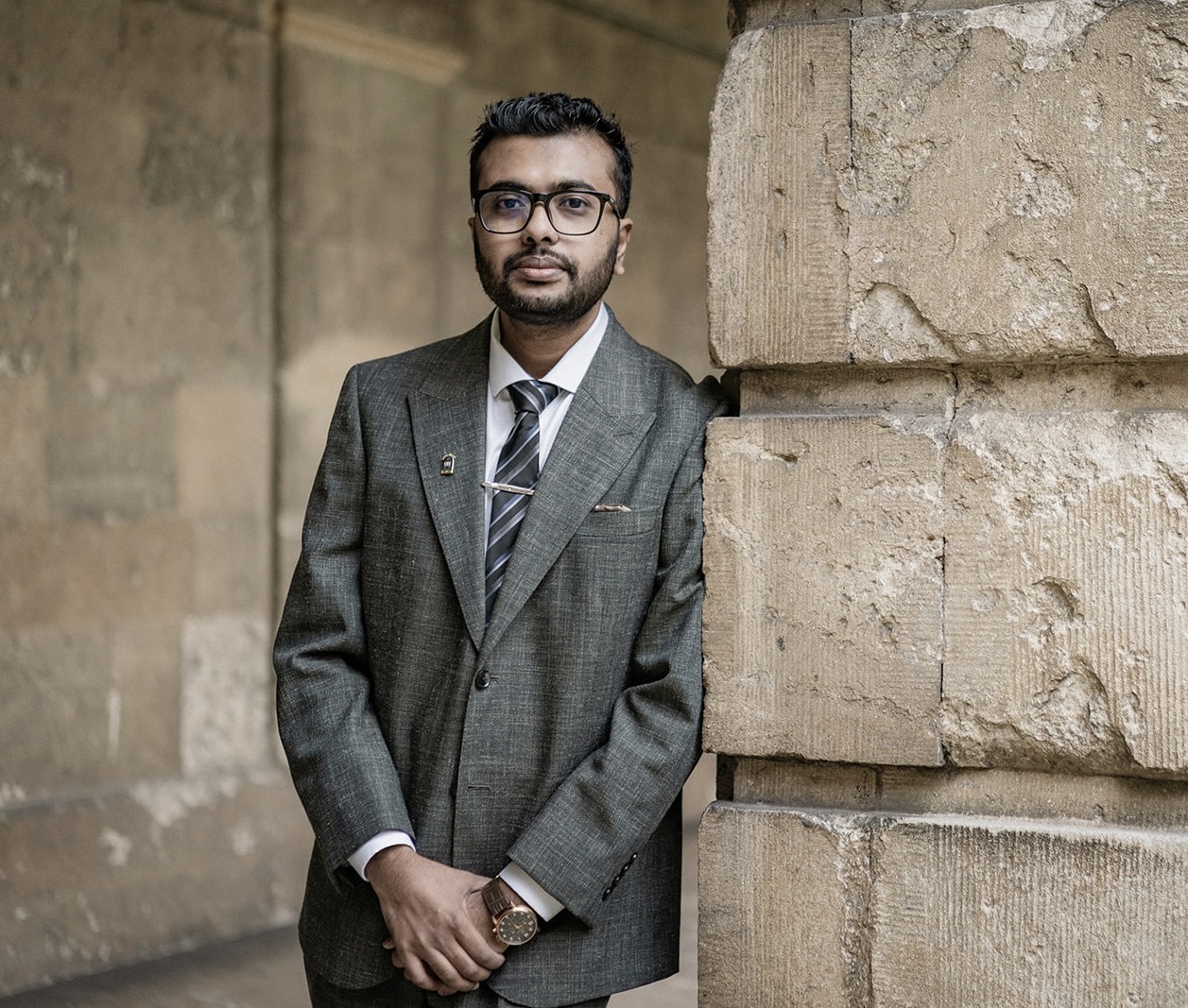
As the first recipient of the Old Member-funded Accomplishment Scholarship, Isaac is already demonstrating the transformative power of postgraduate support at Queen’s. He is pursuing a Master’s in History, with research into student culture in late Victorian Oxford that builds on a longstanding fascination with the University’s past. In this interview, he reflects on the freedom the scholarship has made possible and the enduring importance of independent research.
Could you tell us about your academic journey so far, and what drew you to pursue a Master’s in History?
I had the great opportunity to study at Oxford for my undergraduate degree. I read history at Lady Margaret Hall and was taught by a series of inspirational tutors. My passion for the subject only increased as I began to specialise in modern British history during my final year. One highlight was completing a dissertation on the start of women’s education at Oxford. I found the process of independent research incredibly stimulating and became convinced that it was something I wanted to pursue. I felt there was more to say on my dissertation topic and, having had such an amazing experience during my first degree, applied to stay in Oxford for a Master’s.
Your studies are supported by the Old Member-funded Accomplishment Scholarship; what has that support made possible for you during your time at Queen’s?
I am incredibly proud and grateful to be the inaugural recipient of the Accomplishment Scholarship. Without this support I would not have been able to accept my offer to pursue a Master’s degree. Having the costs of my course met by the scholarship has enabled me to commit myself completely to my studies and really throw myself into College life. Without the anxieties of financial pressure I have been able to say ‘yes’ a lot more and embrace all of the opportunities that Oxford and Queen’s have to offer. Being able to travel for research and purchase key texts has also been essential to ensuring that my dissertation is as good as it possibly can be. I am so thankful for the generosity of The Accomplishment Trust for providing the opportunity to live up to my full potential without costs being a barrier.
Without this support I would not have been able to accept my offer to pursue a Master’s degree.
Can you describe your current research project, and why this particular topic is of interest to you?
My current research uses magazines as a way to investigate student culture in late Victorian Oxford. I was drawn to this topic after writing my undergraduate thesis on the early generations of women students. I became fascinated in how, for these pioneering women, creating a magazine was a way to stake a claim within the University and create a legacy that would endure even after they had graduated. I have become increasingly interested in how student culture differed between colleges. The late nineteenth century was a period of dramatic reform within the university, particularly the establishment of new colleges for women and nonconformists. I think that contemporary magazines can tell us a lot about how the students thought about these changes and navigated their place within the city of dreaming spires.
What has been the most exciting or surprising discovery you’ve made in your research so far?
I have been surprised at just how many student magazines were published during the later nineteenth century. One historian estimated there to be as many as 200 which survive in archives. With all this publishing, I wonder how the students had time to do their degrees! In order to define a workable project, I have had to focus on a handful of examples. I am, however, convinced that the extraordinary volume of magazines from this period remain an underutilised body of primary source material.
How has being part of Queen’s academic community shaped the way you think about history?
Queen’s has a long tradition of excellent historians. I feel lucky to be part of such a stimulating and welcoming academic community. One of the best parts about completing postgraduate study in Oxford is belonging to a tight-knit MCR and the conversations that that brings. I have made close friends within the history cohort and enjoy hearing about projects from a wide range of period and geographic specialisms. It is often the case that your best reflections of what it means to be a historian come from discussions with people with very different research interests.
It is often the case that your best reflections of what it means to be a historian come from discussions with people with very different research interests.
What are your hopes for the future and how do you see your Master’s studies contributing to what you want to do next?
I don’t have a concrete plan for the future, which is equal parts exciting and worrying! I know that I love my subject and love sharing that passion with others. It would be a privilege to pursue a career that allows me to take that passion further. From this I have become very interested in working within the heritage or education sectors. Beyond being intellectually stretching and rewarding in itself, completing a Master’s degree has equipped me with a range of transferable skills. At its core, independent research is all about convincing others that your work is interesting and important. History in particular is based on effective communication and I have enjoyed the opportunity to really hone my writing skills. I look forward to applying these skills in new contexts after graduation.
Beyond being intellectually stretching and rewarding in itself, completing a Master’s degree has equipped me with a range of transferable skills.
What’s your favourite place in College?
It has to be the Upper Library! As a history student how could I say anything else? It is such a stunning room and always the highlight whenever I give guests the College tour.
Can you recommend a book?
Persuasion by Jane Austen is a personal favourite that I would recommend to everyone. For those with an interest in history, Matt Houlbrook’s recently published Songs of Seven Dials is brilliant and absolutely full of insights.