In this blogpost, Queen’s Electrician Nevelle Gahanao tells us how his connection to his home country of Papua New Guinea has inspired work beyond his role in the College. Together with his wife, Ella, he founded Women’s Cancer Prevention PNG, a charity working with remote communities to improve awareness of breast and cervical cancer and, increasingly, access to vaccination and screening.
This Michaelmas Term, Women’s Cancer Prevention PNG is the chosen charity for Queen’s Chapel collections, giving members of the College community an opportunity to support its work.
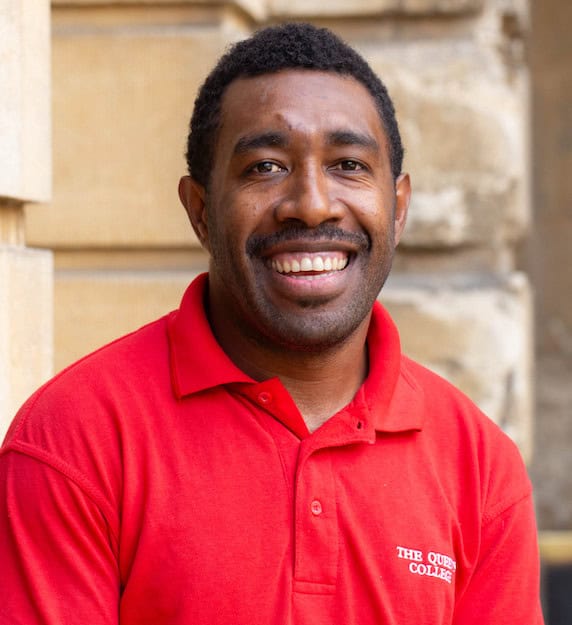
Can you tell us a little about your background in Papua New Guinea and your role here at Queen’s?
I’m originally from Papua New Guinea, and it is very close to my heart – it is where I grew up and all my family are still there. Before coming to the UK, I worked as an engineer on a medical charity ship in PNG, where I met my wife, Ella, who was volunteering as a doctor. We later worked together in a small rural hospital, where I saw first-hand the challenges faced by remote communities in accessing healthcare.
I now live in the UK and have worked at Queen’s as an electrician for nearly two years, but my connection with PNG has always remained very important to me.
What first inspired you and Ella to establish the charity Women’s Cancer Prevention PNG?
The charity grew directly from our experiences working in Papua New Guinea. Ella saw many women presenting with breast and cervical cancer, often when it was already too advanced to treat. This is such a contrast to the UK, where we have established screening services. We knew that many of these deaths could have been prevented through better awareness, screening, vaccination and earlier treatment.
We knew that many of these deaths could have been prevented through better awareness, screening, vaccination and earlier treatment.
Over time, Ella and I both felt that God was calling us to do something about this. We therefore set up Women’s Cancer Prevention PNG. We didn’t know exactly where it would lead, but we felt that this was something we were meant to do, and we are so excited to see how well it has developed and progressed.
Why are breast and cervical cancer such pressing issues for women in remote communities in Papua New Guinea?
Breast and cervical cancer are two of the three most common cancers affecting women in Papua New Guinea. Breast cancer is the leading cause of cancer-related deaths among women, while cervical cancer ranks third in both incidence and mortality. Tragically, many women are diagnosed too late for effective treatment, despite these diseases being largely preventable and, when detected early, highly treatable.
The high burden of breast and cervical cancer in PNG is influenced by a range of interconnected factors, including limited awareness of cancer symptoms, and in some communities, very little understanding of what cancer is or how it can be prevented or treated. Cultural stigma and misconceptions surrounding women’s health, financial barriers, and the challenges of travelling long distances to access healthcare also play a role. As a result, many women delay seeking care and present with advanced disease, when treatment options are more limited.
What does the charity’s work currently look like on the ground, and how do your nurses reach the communities they support?
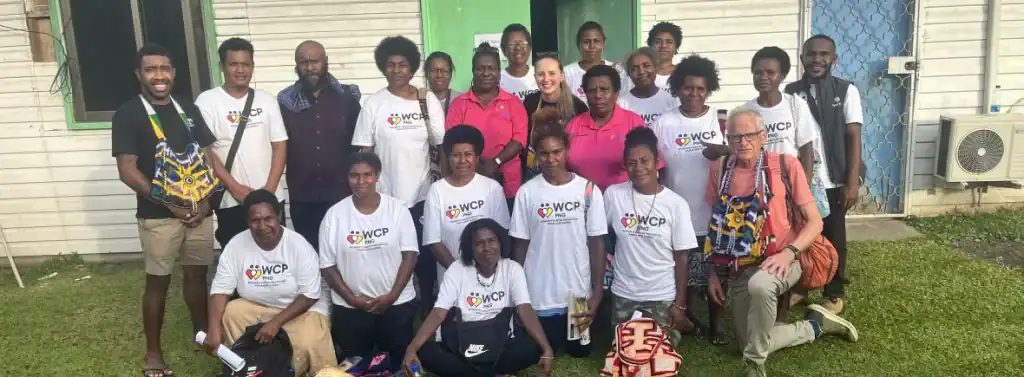
We currently have two nurses working on the ground in Morobe Province, supported by 20 trained WCP Champions. The nurses travel out to remote communities, sometimes spending many hours travelling by boat and then walking to reach villages that are not easily accessible. The WCP Champions are local people who help us build links within their communities and continue the work between visits from the nurses.
Our current work is focused on education and awareness around breast and cervical cancer. The nurses spend time with communities through both small group discussions and larger teaching sessions. This gives people the opportunity to ask questions, talk openly about their concerns and learn about cancer prevention and early detection.
Our current work is focused on education and awareness around breast and cervical cancer.
However, our work goes beyond providing health education. A big part of what we do is getting to know the communities, building trust and understanding their needs and concerns. Through these conversations, we are also learning about the wider challenges communities face and looking at how we can support them with broader community development.
We will soon build on this work by bringing HPV vaccination and breast and cervical cancer screening directly to the communities we work with. Given the response we have already had, we expect there to be a positive uptake of these services.
Are there particular cultural or practical barriers that make health education and cancer screening more difficult to access?
There are both cultural and practical barriers. Many communities are very remote, and simply reaching them can involve long journeys by boat and on foot. Transport can be difficult and expensive.
There are also challenges around awareness and understanding. As we have seen through our work, some women have very little knowledge about cancer, including what it is, what causes it and what symptoms they should be concerned about. Cultural beliefs, misconceptions and stigma can also make conversations about cancer and women’s health difficult.
Screening presents an additional challenge because it is about finding cancer before there are any symptoms. If a woman feels completely healthy, there may be little reason for her to make a long and expensive journey to a health facility, particularly when screening is not routinely available. This is why education is so important. Women need to understand what cancer is, why screening is important even when they feel well, and why finding cancer early can make such a difference. It is also why bringing screening directly to the communities is so important – it removes one of the biggest practical barriers and makes it much easier for women to access screening.
This is also why building trust is a key part of our work. We want women to feel comfortable asking questions and talking openly about their health. Our WCP Champions are particularly valuable because they are local people who understand their communities and culture and can help make conversations about cancer and women’s health more open and accessible.
Building trust is a key part of our work. We want women to feel comfortable asking questions and talking openly about their health.
What difference have you already seen the charity make, either for an individual woman or within a wider community?
Our nurses are currently working with around 60 different villages, and the response from the communities has been very positive. People have been very welcoming and keen to learn, and there is a strong interest in our plans to bring HPV vaccination and breast and cervical cancer screening directly to the villages.
We have not yet started delivering screening ourselves, as this will be the next stage of our work. However, in a few villages closer to the town, where women can access existing health services more easily, we have encouraged women to travel into town for screening. We have seen an increase in the number of women doing this, which is very encouraging and suggests that the education and awareness work is already having an impact.
The response we are receiving also gives us confidence that there will be a positive uptake when we are able to bring HPV vaccination and screening directly to the villages. For us, it is encouraging to see women becoming more willing to talk about cancer, ask questions and take action about their health.
We are still a young charity and there is a lot more we want to do, but seeing communities engage so positively with the programme has been extremely encouraging. It shows us that there is a real need for this work and a willingness within communities to engage with cancer prevention and early detection.
What are your ambitions for the charity over the next few years, and how can members of the Queen’s community find out more and support its work?
Over the next few years, we want to reach more communities across Morobe Province and eventually expand our work into other provinces of Papua New Guinea. We want to provide more women with cancer education and awareness, and bring HPV vaccination and breast and cervical cancer screening directly to the communities we work with.
Ultimately, we want to help prevent women from dying from cancers that can be prevented or successfully treated when detected early. There is a huge amount still to do, but we are excited about what we can achieve and about seeing the programme continue to grow.
We are very grateful for the support we have received from the Queen’s community. Members of the College can find out more about our work through the Women’s Cancer Prevention PNG website, sign up for our newsletter and follow us on Instagram. We are also particularly grateful for the support of the Queen’s Chapel collection, which is helping us develop and expand our work.
There is a huge need for this work in PNG, and we hope that, with the support of the Queen’s community, we can reach more women, improve awareness and make cancer prevention and early detection more accessible to those living in remote communities.
There is a huge need for this work and we hope that, with the support of the Queen’s community, we can reach more women, improve awareness and make cancer prevention and early detection more accessible to those living in remote communities.
Headshot of Nevelle by David Olds
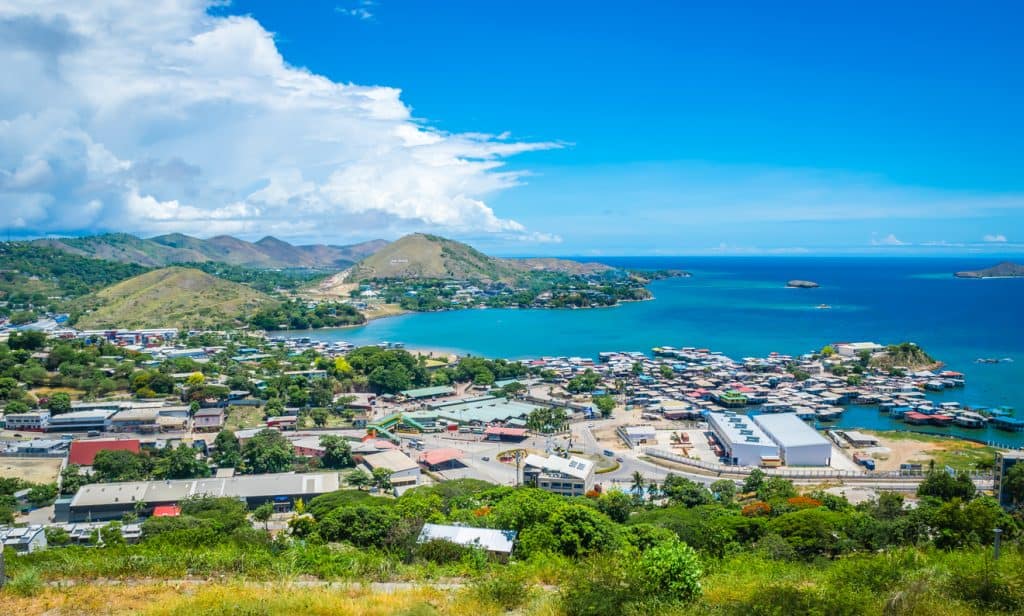
Header photo of Koki in Port Moresby, Papua New Guinea by GenDeschenes