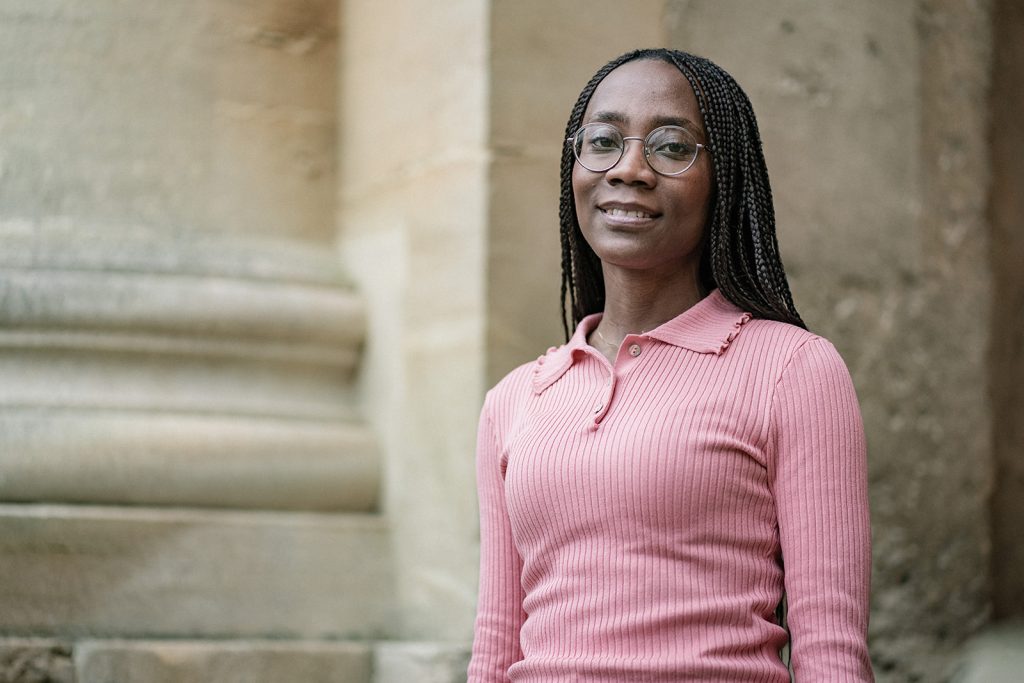
Graduate student Erica holds the the Cyril and Phyllis Long scholarship in partnership with Oxford’s Academic Futures scholarship programme. We asked her about her research into a disease that affects millions worldwide, often without symptoms until serious damage has occured.
Your research looks at Metabolic Dysfunction-Associated Steatotic Liver Disease. Many people will be unfamiliar with this term; can you explain a bit about what it is and how your academic background has led to explore this area?
Metabolic Dysfunction–Associated Steatotic Liver Disease, or MASLD, is the newer term for what was previously called non-alcoholic fatty liver disease (NAFLD). It describes a condition where excess fat builds up in the liver in people who have metabolic risk factors such as obesity, type 2 diabetes, high blood pressure, or abnormal cholesterol. For many people it causes no symptoms, but in some it progresses scarring (fibrosis), and in advanced cases can lead to cirrhosis, liver failure, or liver cancer.
I enjoyed the breath of my Biomedical Sciences degree, particularly anatomy and physiology, and completed my final year project on genetic biomarkers for Duchenne muscular dystrophy. My interests lay in translational research as I think it is inherently interdisciplinary and rewarding to see the potential from bench to bedside. I was subsequently awarded an NIHR MPhil studentship targeting cytomegalovirus in kidneys before transplantation at Cambridge resulting in a Phase 1 trial application. I particularly enjoyed testing for an array of kidney injury biomarkers, histology, and discussions on medical statistics. Although the learning curve was steep, I learned a lot personally and academically and I was encouraged to apply for PhD projects and stumbled on this project which combined my interests in imaging and diagnostics and offers the opportunity to gain skills in statistics.
My interests lay in translational research as I think it is inherently interdisciplinary and rewarding to see the potential from bench to bedside.
Your work explores diagnosis and prognosis using non-invasive tools such as MRI. How does this approach differ from traditional methods, and what advantages does it offer patients?
The gold standard in MASLD diagnosis is liver biopsy which can provide detailed information about inflammation and fibrosis, but it is invasive, uncomfortable for patients, carries small but real risks (bleeding, pain), and samples only a tiny portion of the liver. It’s also not practical for repeated monitoring.
Non-invasive tools like MRI measure liver characteristics across a much larger volume of the organ. Depending on the technique, MRI can quantify fat, detect iron, and estimate fibrosis. This makes it well suited both for diagnosis and for tracking changes over time. We are evaluating how biomarkers change over time and the relationship between these changes and clinical outcomes. Combined with other tests, MRI may help identify people at higher risk of progression earlier, enabling timely referral and targeted follow-up while avoiding unnecessary invasive testing for lower-risk patients.
If your research achieves what you hope it will, how might it change clinical practice or patient outcomes in the next decade?
We hope it could help shift MASLD care from reactive to proactive over the next decade by improving how we identify who is at risk and what happens after we identify them. I hope it can help establish a clear pathway linking primary care and liver clinics. If they are identified earlier, there is a bigger window to address modifiable drivers—weight, glycaemic control, cardiovascular risk—and to introduce liver-directed therapies as they become available. Additionally, it could enable more patient-centred monitoring. Non-invasive measures such as MRI-derived markers are repeatable, so clinicians could track whether risk is improving with treatment or lifestyle changes. This would also make follow-up more efficient by targeting resources to those who need them most.
You hold an Academic Futures scholarship. What has that support enabled you to do, academically or personally, that might otherwise have been more difficult?
This funding, as generously provided for by the Cyril and Phyllis Long scholarship, has allowed me to pursue this project and work alongside leading experts in the field who are just an Oxford email away! The Academic Futures programme has fostered a community of supportive graduate students outside academic and college life and I have already enjoyed the enriching activities on offer be it pottery classes or theatre trips! The Enrichment Fund also encourages scholars to pursue extracurricular activities that otherwise would not be accessible. The team behind this programme have been exceptionally helpful even before moving to Oxford.
Medical Science increasingly relies on collaboration across disciplines. How has your time at Oxford, and at Queen’s in particular, shaped the way you think about interdisciplinary research?
I see interdisciplinary work as lightening the load, speeding up processes, and providing assurance for rigorous research. At the Oxford Centre for Magnetic Resonance (OCMR) where I am based, the team is made of physicists, clinicians, radiographers, and everyone in between and it has highlighted the importance of learning to “translate” across disciplines—being able to explain statistical reasoning to clinicians, or clinical constraints to statisticians, for example. Being at Queen’s has fostered conversations about other people’s research and this has encouraged me to think about research in terms of real-world applications.
The team is made of physicists, clinicians, radiographers, and everyone in between and it has highlighted the importance of learning to “translate” across disciplines.
How would you describe your experience of the Queen’s community alongside the intensity of DPhil research? What does the College add to your academic life?
Queen’s has been a great a community so far. I think there is a genuine supportive and nurturing atmosphere. It has provided the best flatmates, a calm working space outside of the lab, and wonderful people. Being part of Queen’s has provided the space to step back from the detail of my research and appreciate what Oxford has to offer – be it helping with outreach to schools or MCR events.