We are delighted to share our new Anthea Bell Prize Resources Library, which contains over 130 free resources for teaching creative translation of authentic literature in six languages. Teachers can access the library for free by registering here.
Our resources are designed to be integrated into languages teaching throughout the school year, with each resource representing one lesson on translating poetry, fiction or non-fiction from French, German, Italian, Mandarin, Russian or Spanish. This page and our short video tutorial (below) will help you navigate our Resources Library to find materials that suit your teaching and interests.
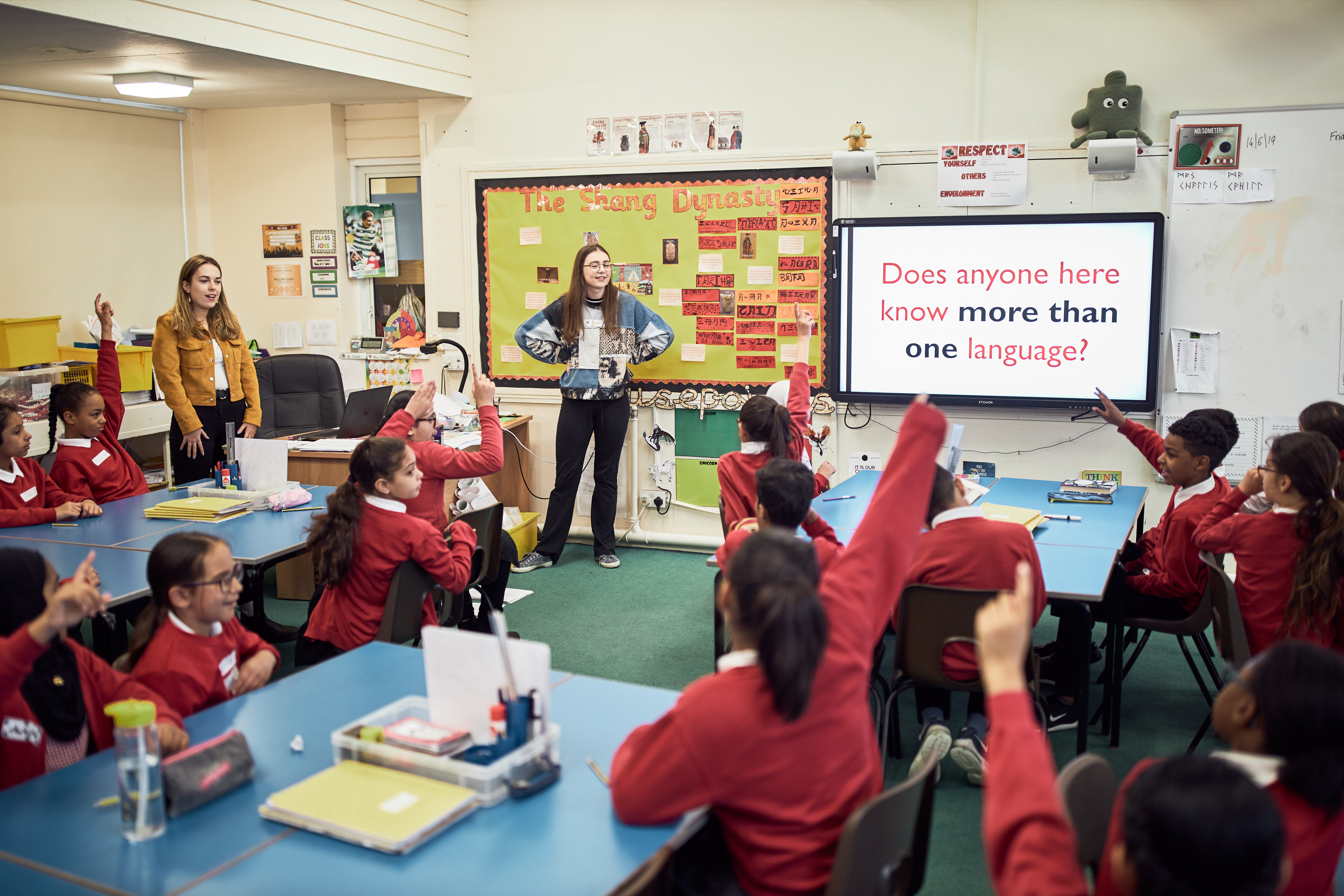
The resources explore works of literature, poetry, theatre, as well as graphic novels, song lyrics, folktales, and street art. They also often include warm-up and extension activities in which, for example, students might be asked to transform their translations of a novel extract into a cartoon strip or a short play. Our resources aim to draw out student creativity and enthusiasm for language learning – no matter their age or level of confidence in the languages classroom – in a way that begins with authentic texts and literature in the target language.
STEP 1 – Select a language
Our resources focus on translating from French, German, Italian, Mandarin, Russian and Spanish into English, and from French, German, and Spanish into Welsh. To start filtering the library, select one of these options in the ‘Language’ bar.
STEP 2 – Select filters
Once you have selected a language, six new drop-down filters will appear. You can select any combination of filters to help you find a resource that will fit specific teaching or curriculum requirements in a given language. The six filters are explained below.
Filter by genre
All resources fall into one of three categories – Poetry, Fiction or Non-Fiction – depending on the text for translation.
Filter by prize level
The resources are available across four levels: Level 1 (Beginner), Level 2 (Intermediate), Level 3 (Upper Intermediate), and Level 4 (Advanced). The Russian strand also includes ab initio or a beginners’ Level, aimed at students in KS5 with no knowledge of Russian. More information on the Prize Levels can be found in our Guide for Teachers.
Filter by topic
All resources can be filtered by the following topics: Arts/Artistic Culture; Culture and Heritage; Decolonising Modern Languages; Life and Relationships; Media and Technology; Politics and History; Social Change; and Travel, Tourism and Geography. These give an indication of the themes and vocabulary that may be included.
Filter by grammar
Each language has its own list of grammar filters, which highlight how resources could be used to help teach or revise certain grammar points. For instance, a poem might include examples of imperatives, or a passage of fiction may help review the conditional tense.
Filter by curriculum
This filter identifies resources that resonate thematically with specific AQA, Edexcel, WJEC and Scottish National curriculum content. Select a module and all related resources will appear.
Filter by date
This filter allows you to find resources by the release date. If you are looking for our newest resources, select ‘2026’.
STEP 3 – Select your resource
Once you have found a suitable resource, click on the title and you will be taken to the resource’s dedicated page on Padlet.
STEP 4 – Download the resource from Padlet
All resources follow the Decode, Translate, Create model for creative translation developed by the Stephen Spender Trust. Each resource contains the same key components:
- Teacher Notes – This is a lesson plan that offers suggestions on how to use the materials in the Padlet, along with some context for the extract for translation and timings for each activity.
- Student Worksheet – This is a handout that includes the extract for translation and a glossary. Words given in these glossaries are suggestions and are there to help students decode the text.
- PowerPoint – All our poetry and fiction resources include a slideshow. These contain an introduction to the extract for translation, a step-by-step guide to the creative translation model, and optional extension activities. They provide useful cultural and linguistic context, and highlight key translation and grammar points for consideration. Non-fiction resources usually come without a PowerPoint.
- Introductory Video – This short clip can be shown to pupils to introduce the Anthea Bell Prize. It includes interviews from an Oxford student and two professional translators talking about their experiences of studying languages at university, and the opportunities that learning languages has opened up for them.
- Curriculum Tags – Finally, this list indicates how the resource could tie in with teaching on specific areas of AQA, Edexcel, Scottish National, and WJEC curricula.
To download the Teacher Notes, Student Worksheet, and PowerPoint, click on the three vertical dots on the top righthand corner of each white box and select ‘Download attachment’. Once you have downloaded the files, we would recommend reading the Teacher Notes first, as these will take you step-by-step through the proposed lesson plan. All resources can be adapted to fit into the time you have available, by removing or including introductory content or extension activities. Print out the Student Worksheets and adapt the PowerPoint as needed. The Video can be shown in class as an introduction.
STEP 5 – Enjoy and keep us posted!
We hope you and your students enjoy exploring our resources and the opportunities they offer for creativity, collaboration and cultural learning in the classroom. We would love to hear how you get on, so please do get in touch or submit your feedback via the button below.