Viewing archives for History and Joint Schools

Introduction

I did my undergraduate education at Princeton University, where I graduated with an AB summa cum laude in History, followed by the University of Edinburgh (MSc) and The Johns Hopkins University (PhD).  I have held or been awarded long-term Fellowships from the John Simon Guggenheim Memorial Foundation, the National Endowment for the Humanities (twice), the Charles Warren Center at Harvard University, the International Center for Jefferson Studies at Monticello in Charlottesville, Va., the Huntington Library in San Marino, Ca., and the Fulbright-Hays Program (UK), which funded my studies at Edinburgh.

Teaching

I teach early American and Atlantic history and the history of the early modern British Empire.  I am currently chairing or serving on committees for a dozen PhD students at the University of New Hampshire.  I have also served on PhD committees at Harvard, Stanford, William and Mary, and the University of Southern California.

Research

My scholarship focuses on the American Revolution, with an emphasis on the entangled history that the United States shared with the rest of the Americas and with Africa, Europe, and the wider world.  My current book project, Peace and Independence (OUP), examines the least studied of the United States’ founding documents: the Anglo-American peace treaty that ended the American Revolutionary War. I am interested how the American quest to be accepted as a “treaty worthy” empire by Europe’s colonial powers shaped thinking about federalism, Native American treaty rights, and slavery and anti-slavery.  My book Among the Powers of the Earth (2012) has been widely praised, including by Noam Chomsky in an editorial on U.S. foreign policy, and has been a key text in a US Supreme Court amicus brief on child slavery in Africa.

Selected publications

Peace and Independence:  The Turbulent History of the United States Founding Treaty, Oxford University Press, in progress.

The Cambridge History of America and the World, vol 1, co-edited with Paul Mapp and Carla Gardina Pestana, Cambridge University Press, 2021.

Among the Powers of the Earth:  The American Revolution and the Making of a New World Empire, Harvard University Press, 2012.

About me

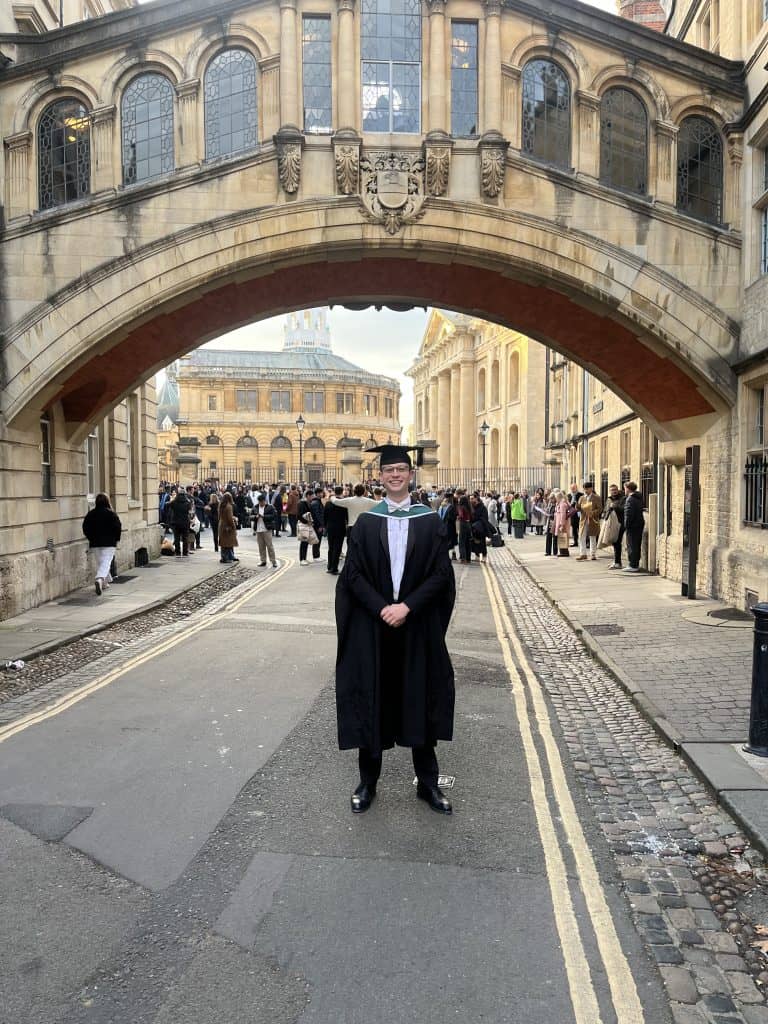
Hello! I’m Kyle, a first-year DPhil History student (although this is not my first year at Queen’s!), and I’m from Kent. Oxford is one of the best places to do History. Not only does it have an amazing Faculty with staff of any specialism you could possibly wish for, but also there’s so much History everywhere. Surely studying in a gorgeous old library naturally makes my work better and more historically informed?

College experience

Eating in Hall is the best thing about Queen’s. Most people eat lunch in Hall everyday (the library literally empties out at 12:30pm). Whilst I – and most people – have a group of people I tend to eat with, the small population of Queen’s means you can always walk into lunch and know you’ll have a nice conversation with someone you know from sports or music or your subject over some good food. Sometimes we’ll sit for over an hour (and get kicked out by the Hall staff) just chatting, and that kind of community over food is by far the best thing about Queen’s, and isn’t something I expected to have.

Oxford life

Anyone who knows me will tell you that my calendar is PACKED. I usually start my day pretty early, and if I don’t have rowing (which is at an unsociable hour of 6:15am), then I usually go straight to the library or College breakfast for about 8:30am. A few hours of work (in the gorgeous College library) or lectures later (often in Examination Schools) and I join the rest of the College for lunch. The afternoon is then either for more work (often I go to the Radcam for a change of scenery), or sometimes we have an EMS meeting (the College’s music society) or an MCR Committee meeting. My evenings are also packed: with choir three times a week, or with other commitments. After choir we always eat dinner together in Hall, and then often make a trip to the college’s Beer Cellar to end the day.

Advice for applicants

Really think about why Oxford is the right place to study your subject, and talk about that in your application and interview as if there’s no other university that can enable your research. Also think carefully when picking your college about what kind of experience you want. Obviously Queen’s is the best, but do your research!

About me

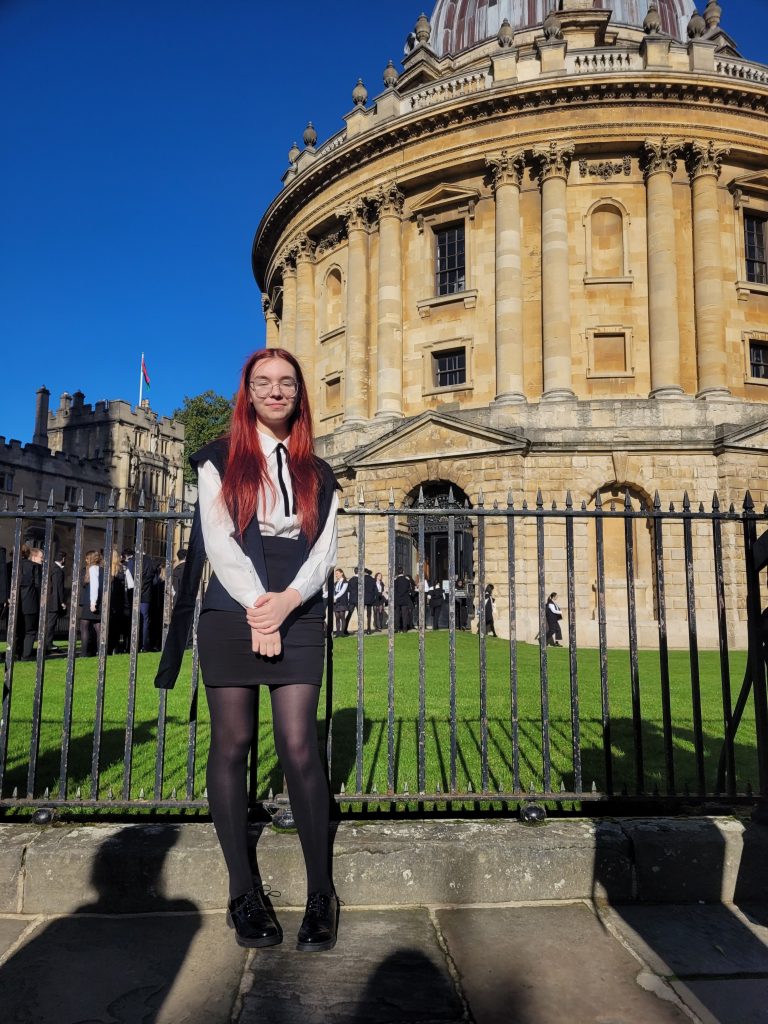
Hey! I’m Heather and I am a first year reading History at Queen’s. I am from Stockport in Manchester, where I studied my A-Levels at a Catholic state college. I chose to study history at Queen’s because of how interdisciplinary the subject is: it has been described by one of my tutors as essentially ‘the humanities course’, as you get to do a bit of everything. Oxford has a wide range of geographic, periodic, and thematic approaches to history which means you can study whatever interests you most.

College experience

My favourite thing(s) about Queens are the people! The college has a very friendly and inclusive environment, with a wide-ranging welfare system.

Life at Oxford

My typical day may start with a lecture on my current paper, the History of the British Isles between 300-1100. I will then spend a few hours in our 24/7 New Library working on my essay, which I will intersperse with meals in our catered hall, or a trip to a cafe with a friend. On Wednesday evenings I will go to Star Wars society, where I have recently become social secretary on the committee, and on Thursday evenings I will go to Dr Who society to unwind and watch an episode with some friends (and snacks).

Advice for applicants

Read! Read around your subject, you will feel more comfortable having conversations with tutors about concepts in the field, and it will be useful to put in your personal statement. For history students, have a read on some works on historiography, something you may not have come across during your A-levels, as it really gets you thinking about the discipline and how it functions.

Introduction

I went to school in Colombo, Sri Lanka and then read for my undergraduate and master’s degrees in history and international relations at the London School of Economics and Political Science. Prior to beginning my doctorate at Brasenose College, University of Oxford, I led the Politics Research practice at Verité Research, a think-tank based in Colombo. Following my doctorate, I founded Itihas, an organisation that advances history education reform in Sri Lanka. I was also a Visiting Lecturer at the University of Colombo. I took up my current academic post at Queen’s in October 2023. 

Research

My research interests are broadly in global and Sri Lankan history. My doctoral research re-opened a neglected chapter in Sri Lanka’s history. It critically re-examined the deeper roots of ethno-religious violence between Sinhalese and Moors and presented a historical narrative of cycles of intolerance and victimisation. I am embarking on a new project that focuses more broadly on shifting Islamic identities in Sri Lanka during the twentieth and twenty-first centuries.

Publications

Some of my recent publications (excluding those under review) include:

‘Centring Conflict: Contemporary Sri Lanka in Perspective’, in Kanchana Ruwanpura, Amjad Mohamed-Saleem and Asha Abeyasekera (eds.) Handbook on Contemporary Sri Lanka (Routledge, forthcoming 2023)

Orthodoxy and Order: The Denial of Religious Liberty to Ahmadis in Colonial Ceylon’, Sri Lanka Journal of the Humanities Vol. 43, Nos. 1 and 2 (July 2022), co-author with Gehan Gunatilleke

‘The Colonial History of Islamophobic Slurs in Sri Lanka’, (7 September 2020) History Workshop Online

‘A Brief History of Anti-Muslim Violence in Sri Lanka’, (22 July 2019), History Workshop Online

A wider selection of publications and interviews are accessible on my personal page www.itihas.lk

Introduction

I am a historian of early modern Europe at the University of Oxford currently finishing my DPhil. Before embarking on doctoral research, I completed an MSt in Early Modern History at Oxford and my undergraduate studies at the University of Bristol.

Teaching

I teach undergraduate students British and European History 1500-1700, historiography and historical methods, and the history of political thought. I also teach master’s students on the strands for Intellectual History and Early Modern History.

Research

My research focuses primarily on the cultural and intellectual history of sixteenth and seventeenth century France. I explore the ways in which people understood the idea of ‘judgement’ and how this shaped different forms of writing in the early modern period such as natural philosophy, history, poetry and essays. More broadly, I am interested in how new ways of describing thought emerged in the context of the intellectual transformation of the Renaissance and the religious upheaval of the Reformation.

Courses

  • BA Ancient and Modern History
  • BA History
  • BA History and English
  • BA History and Modern Languages
  • BA History and Politics

Average intake at Queen’s: 10

The Course

All History courses last for three years, though those studying History and Modern Languages will normally spend an additional year abroad between their second and final years. Most students are taught by tutors within Queen’s during their first year, but in subsequent years students will be taught at other colleges if their choice of papers cannot be catered for at Queen’s. Full details of the History and joint school courses can be found on the History Faculty website.

Teaching

Students in all courses take papers for the Preliminary Examination at the end of the first year, and sit examinations in the Final Honours Schools in their final year. The range of options available within the History syllabus is immensely wide and diverse, and students are encouraged to be adventurous, rather than sticking to areas familiar from school. The University’s ‘rules’ indeed require students in the main History school to choose an outline paper from each of three period blocs – medieval, early modern and modern – and to study papers in the history of the British Isles, Europe, and the wider world during their degree.

These requirements are necessarily somewhat relaxed in the joint schools, where students take fewer History papers, but the range of options available to joint school students is just as broad, and the study of two distinct but related disciplines offers fresh challenges and opportunities:

Ancient and Modern History offers the opportunity to study the ancient world alongside the medieval and modern in a broad, thematic perspective that encourages critical and creative historical understanding. Knowledge of classical languages is not expected in advance, but can be acquired or strengthened during the course.

The History and English degree offers a very productive way of thinking about the creation and use of texts (whether ‘literary’ or not) in a variety of historical contexts. While many of the English papers are period-based and will therefore overlap very directly with parts of the History course, others, particularly in the final year, allow you to compare themes and genres across periods.  Two interdisciplinary papers taught jointly by members of the English and History Faculties enable History and English students to draw together their interests and skills from both sides of the degree.

The History and Modern Languages degree allows you to combine the study of History with a foreign language and literature, which puts you in a good position to make use of source texts and documents not available to others. The one formal way in which the two strands of the course are joined is in the ‘bridge essay’, a compulsory element which encourages you to think about the relations between history and literature. Otherwise, you can either focus on the history of the countries whose language you are studying and align your periods of history with periods of literature, or study the two sides of the course more independently.

History and Politics students can set the study of political science in the context of the historical development of states and societies. Whilst the two subjects naturally overlap extensively in the modern period, there is no assumption of a modern bias on the History side of the course; History and Politics students are required to do one paper on a period before the nineteenth century and the same range of period papers is available to them as to those studying the main History school. A historical approach can enhance the study and understanding of political systems, while an understanding of the theories and techniques of political science can help structure historical analysis.

Each of the courses available offers opportunities for independent assessed study, and in History, Ancient and Modern History, History and Politics and History and English students submit a thesis based on original research on a topic of their own choosing; the ‘bridge essay’ in History and Modern Languages serves a very similar function.

Admissions

We normally admit 10 students per year for History and the History joint school courses. Within this quota, applicants are selected on merit: there is no fixed ratio of main school to joint school admissions and no ‘sub-quota’ for joint schools.

For candidates called to interview in History, you may be asked questions about written work, a sample historical document, a source, or a piece of historical writing. Candidates for joint schools will normally have only one interview in History, and another in their other subject, following broadly the forms specified in the pages for English, Modern Languages and Philosophy, Politics and Economics.

Candidates for History courses have normally studied the subject at school. We therefore look for evidence of an ability to handle historical evidence and to deploy the skills of historical analysis. But we are more concerned to identify the potential for future development. An ability to deal with unfamiliar material, or with unfamiliar approaches to familiar material, is more likely to impress us than a simple encyclopaedic knowledge of your subject.
Introduction

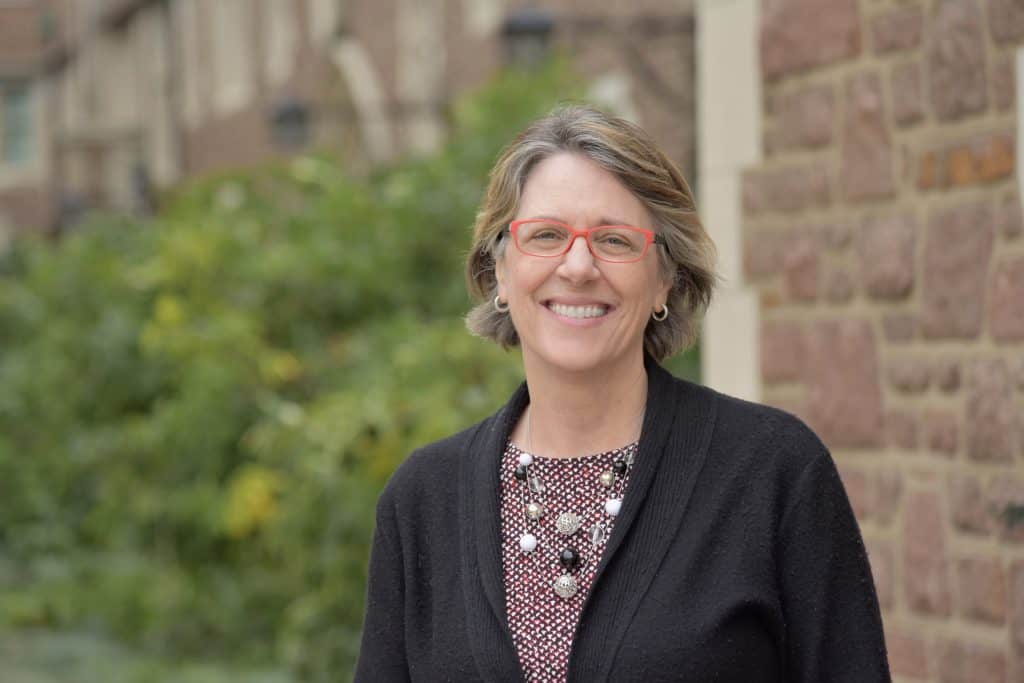
I started my undergraduate degree in history, with a double minor in Caribbean Studies and Cultural Anthropology at the University of Toronto but left after a year to work in community organising and education. Following a six-year hiatus from university, which included traveling and working for several years in Japan, I completed my undergraduate degree and immediately pursued a master’s in history at the University of Victoria, BC.  I was awarded the Social Science and Humanities Research Council Scholarship (SSHRC) to pursue a PhD, which I did at the University of Warwick. My dissertation focused on discourses and practices of sexual-economic exchange in Jamaica and Britain from the late eighteenth century to the late nineteenth century.  Following my PhD, I worked for a year as an Education and Outreach Officer at the Modern Records Office in Coventry before taking up a permanent position in 2016 as Senior Teaching Fellow and Director of Student Experience in the History Department at the University of Warwick.  In October 2021 I took up the position of Associate Professor and Brittenden Fellow in History at the Queen’s College.

Teaching

I teach a series of papers in modern British history. These include undergraduate outline papers, History of the British Isles, covering from 1688 to 1951; Approaches to History (Art, Histories of Race, Histories of Women and Gender);  the optional paper Body and Emotions; and, the special subject paper, Race, Sex and Medicine in the Early Atlantic World​​. I also convene and teach a Further Subject paper, Black Women and British Society, 1750s-1890s. 

I am happy to supervise undergraduate and masters’ projects related to histories of race, gender and sexuality in Britain and the Anglo-Caribbean from the late eighteenth to early twentieth century. However, I will prioritise applications from potential doctoral (PhD) students interested in researching the histories of people of African ancestry in Britain during the eighteenth and nineteenth centuries.

Research

I am a social-cultural historian of race and gender, with a focus on Black women’s histories in Britain and the Anglo-Caribbean. I am interested in the everyday ways people oppressed within society negotiate and navigate structures of power and inequality, as well as the legacies and politics of writing such histories within contemporary society.

I am also interest in community-engaged research practices, as well as creative and Caribbean storytelling methodologies. My current project is a book entitled, My Name is Amelia Newsham: Science, Art and the Making of Race, forthcoming from Viking Books in 2026.

Introduction

I did my undergraduate degree in History and English at Cork in Ireland (where I was born and raised), before coming to Oxford for graduate work. I completed my doctorate on the image of the Jewish temple in the writings of the Anglo-Saxon monk Bede at Queen’s; the subsequent book from this work won the 2017 Best Book Prize from the International Society of Anglo-Saxonists. After Oxford, I held research fellowships at Churchill College, Cambridge, and the Institute of Medieval and Early Modern Studies, Durham, as well as teaching positions at Sheffield and King’s College London. I took up my current post at Queen’s in 2020. 

Teaching

I teach early medieval history, both that of the British Isles and western Eurasia more generally; I convene an Optional Subject ‘Alfred and the Vikings: Culture, Conflict and Identity in the Early Middle Ages’. I also contribute to the teaching of historical methods, theories and approaches within College, while supervising undergraduate and postgraduate research on early medieval topics at a Faculty level.

Research

I have completed my second monograph, The Rise of Christian Kingship in the Early Medieval West (OUP, 2026). Taking a comparative approach that is sensitive to regional variation and the interconnected nature of the post-imperial Latin West, the book traces the slow, complex, and only ever partial way in which the concept of “Christian kingship” arose in the Latin West over the five centuries up to 840. It is the major output of a wider project that explored the possibility of a religion/secular distinction in the early Middle Ages, something about which I have published in Past & Present. My exploration of the interweaving of politics and religion in the early Middle Ages has raised, for me at least, interesting questions about the possible relationship of this theme with environmental history. I hope to explore the early medieval “politics of nature” in the near future.

A separate strand in my research investigates issues of community and identity in the early medieval world, particularly the importance of the idea of the Church. Previously, my publications have focused on the interplay of religious and ethnic identities, but I am currently exploring the importance of group identity in the Insular Easter Controversy. Since much of my teaching continues to focus on early medieval Britain and Ireland, I have begun to plan an introduction to the Insular world between the Romans and the vikings.

Publications

For a list of my publications, see my Academia page