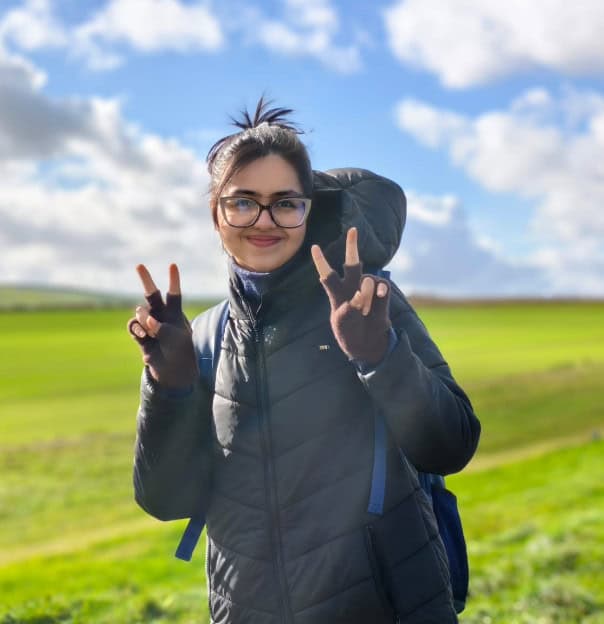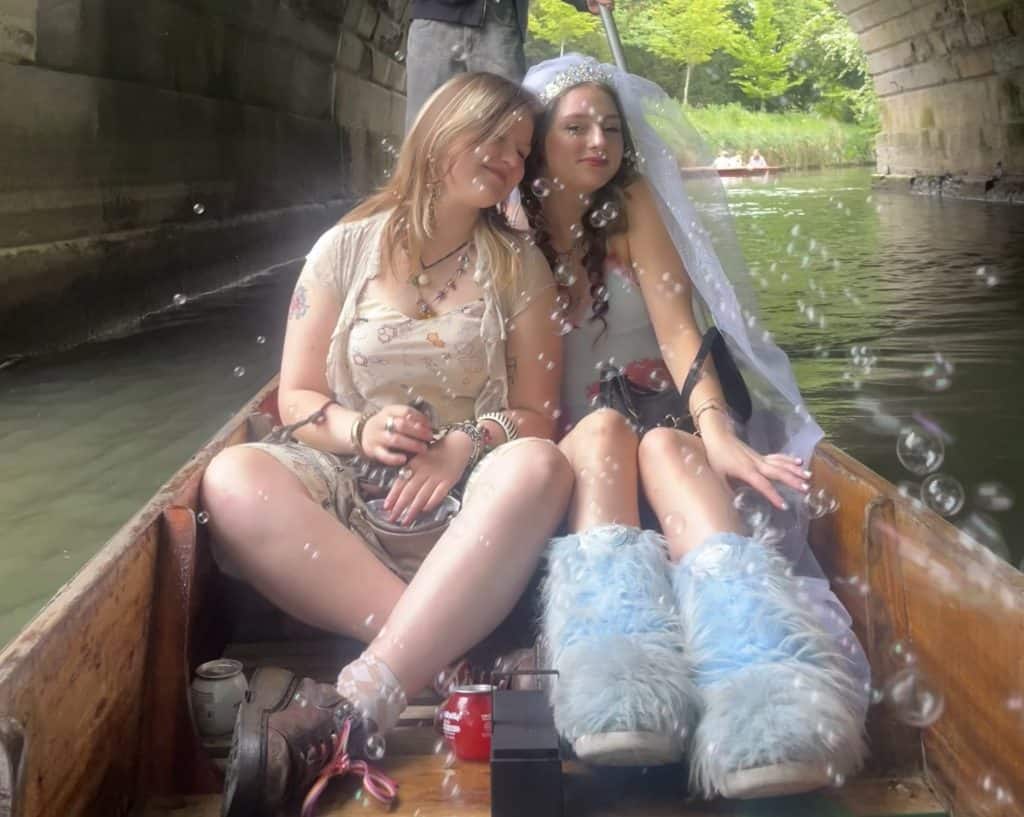
Two first-year Fine Art students at Queen’s are turning the end of their first year into something more than a milestone. Emerging Unrealities, a new student-led exhibition, brings together the work of Rosa and Maia: artists whose practices explore memory and the shifting boundaries between the real and the imagined.
What began as a creative friendship has quickly evolved into a collaborative project. “Meeting on the Oppox residential, we quickly became each other’s closest artistic confidants,” they explain. “Drawn together by our shared interests in the psychological, political and mobilising power of art, we felt that our work was incomplete without an audience.”
The exhibition’s title signals both ambition and uncertainty. “Emerging Unrealities echoes our shared interest in the posthuman debate,” they say. “Our practices imagine landscapes which are sentimental, mythic, cathartic and ineffable… This sense of liminality demands a qualifying status of ‘emergence’, where ideas and worlds are only coming into being, proposed, not solidified.”
Inner worlds, external realities
Although united by shared themes, Rosa and Maia approach them through distinct mediums and methods.
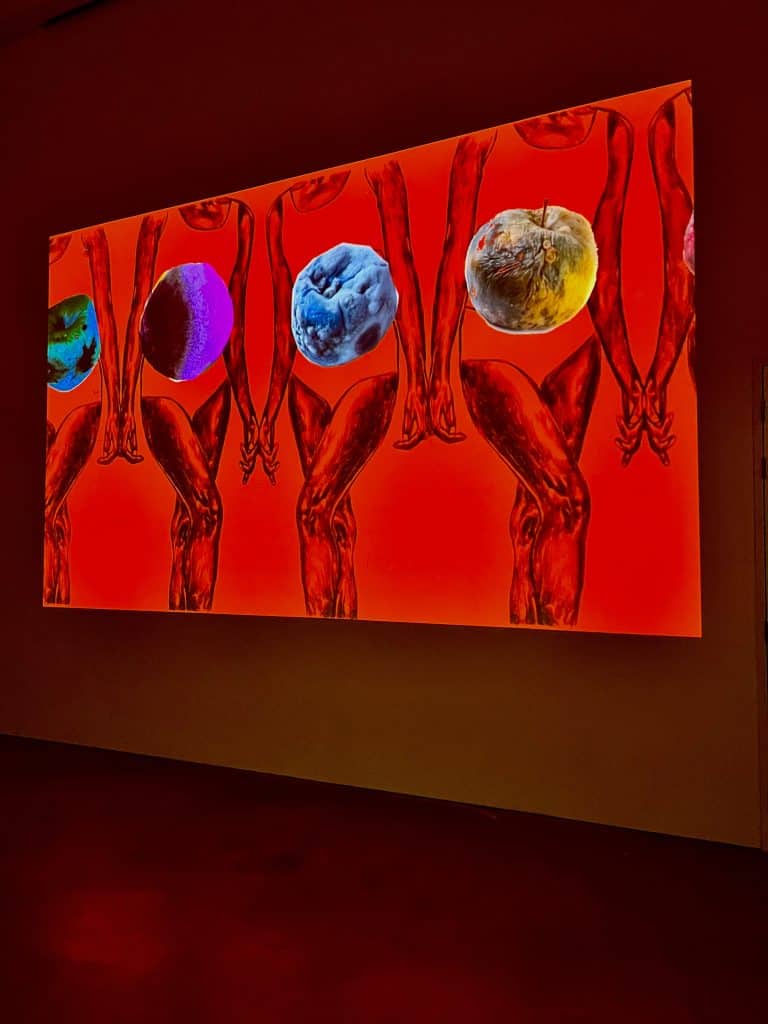
Rosa’s work centres on painting and multimedia, constructing imagined environments as a way of interrogating the self. “My practice explores fantastical spaces and constructed unrealities as manifestations of the psychologically complex self,” she explains. “I examine how internal states both shape and are shaped by external realities.”
Her work draws on a wide range of influences, from philosophy and religion to politics and grief, building what she describes as a “personal mythology of the metabolic nature of life.” Through imagined characters and environments, she traces how “sociopolitical systems infiltrate perception and emotional life,” revealing how ideology becomes embedded in the psyche.
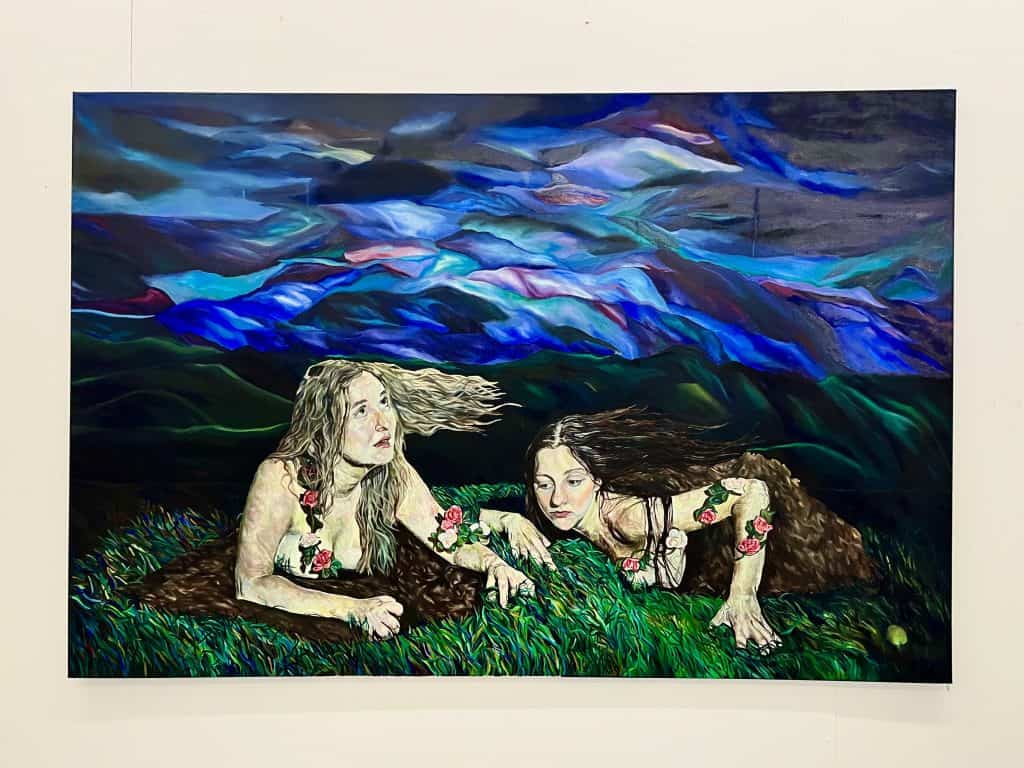
These ideas emerge intuitively. “I envision scenes of unreality in the mind, then materialise them using accessible objects from the physical world,” she says. “Through this act of translation, I navigate the dynamic interplay between the tangible and the metaphysical, the real and the unreal.”
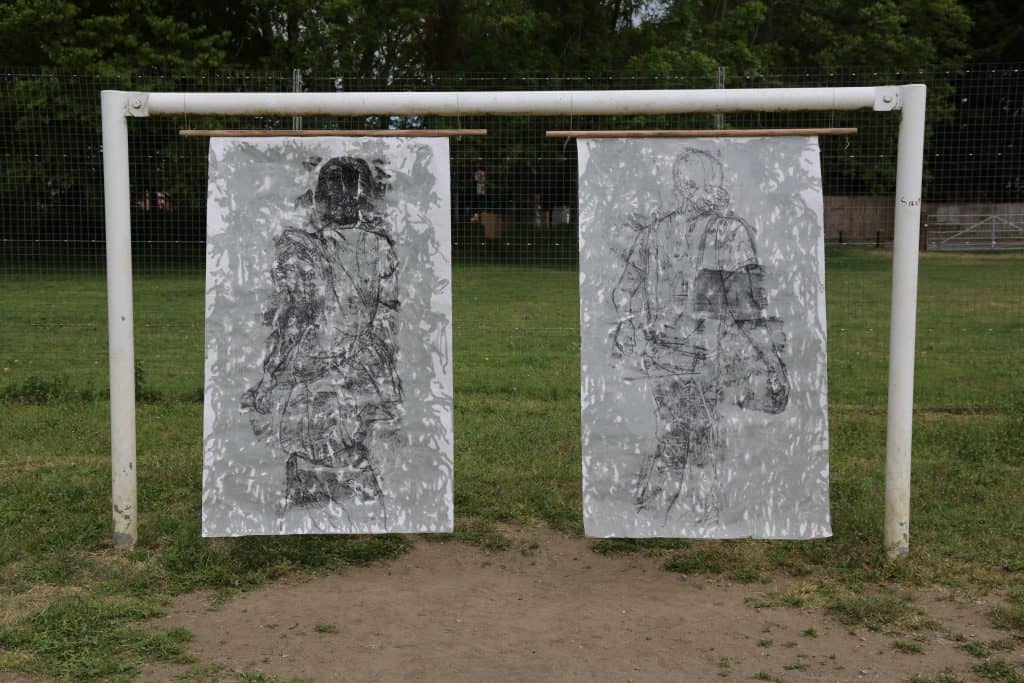
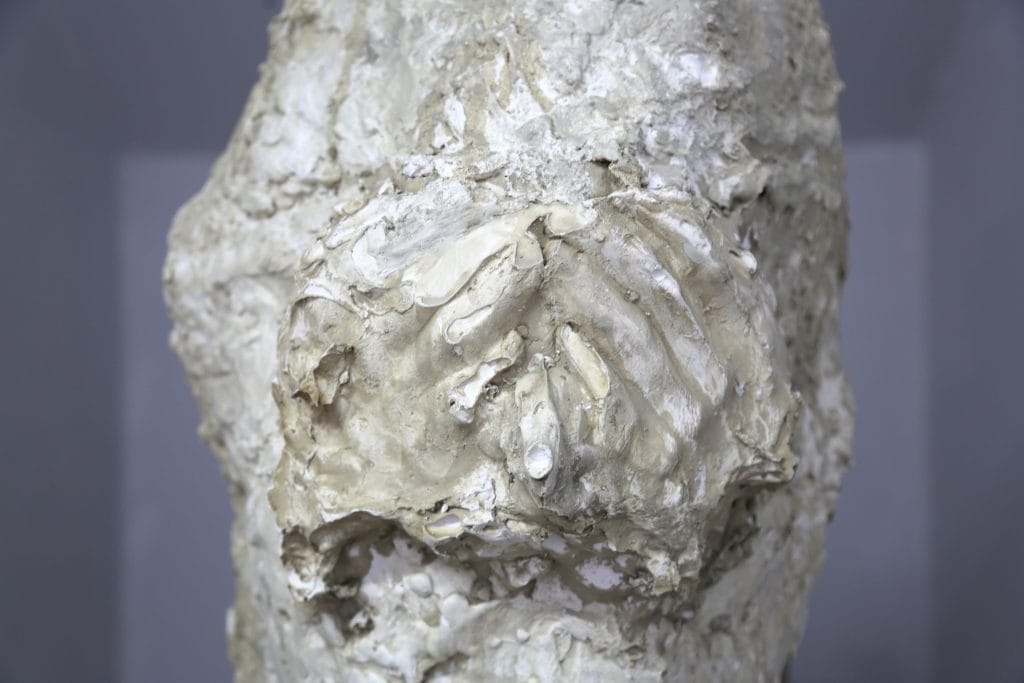
Maia, by contrast, works primarily through sculpture and printmaking, focusing on the instability of memory and materiality. “My practice traces the distortions of memory… particularly through monoprint and plaster casting,” she says. “There is a doubling of touch, where the marks made aren’t necessarily what emerges on the other side.”
This gap between intention and outcome mirrors the unreliability of memory itself. “What we experience as a memory is distanced from the truth by layers of habit, nostalgia and feeling.”
Recent work draws on the Biblical figure of Lot’s wife, frozen as a pillar of salt for looking back. “This visceral image… resonated deeply with my preoccupation with memory,” Maia explains, “as well as imagining possibilities in which this ‘freezing’ is an empowering act: a devotion to the past.”
Material as meaning
For both artists, material is not just a medium but a conceptual tool.
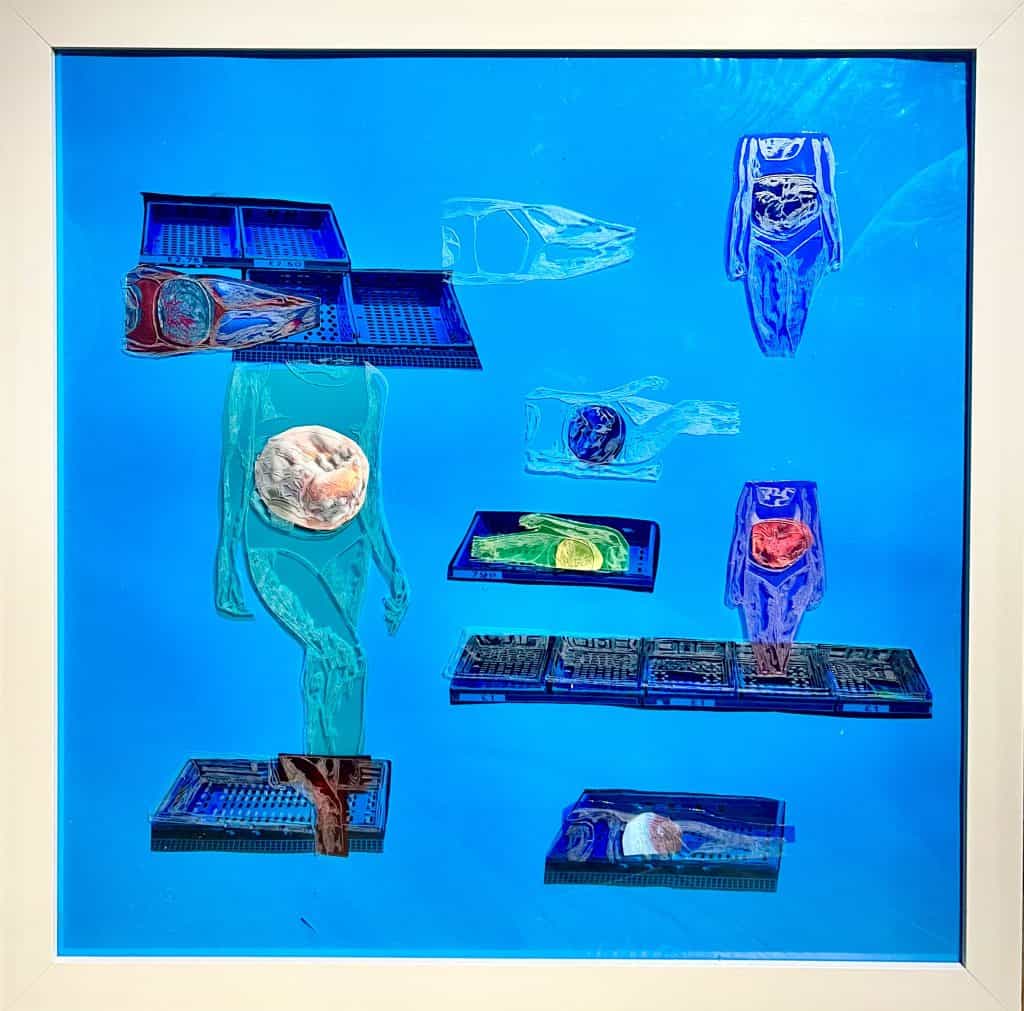
Rosa’s work ranges from painting to drypoint etching and translucent film. “Painting was my gateway to art,” she says, “but my technique disrupts the smooth surface…tracing emotion through anatomy: panic, anxiety, awe.”
Other works explore the tension between biological and digital existence. “Drypoint etching… casts an image through absence,” she explains, describing figures “floating in a digital space, yearning for contact to environments they cannot materially inhabit.” Her use of layered film, partly inspired by time spent in Oxford’s dissection rooms, creates images that blur the boundaries between body, technology, and environment.
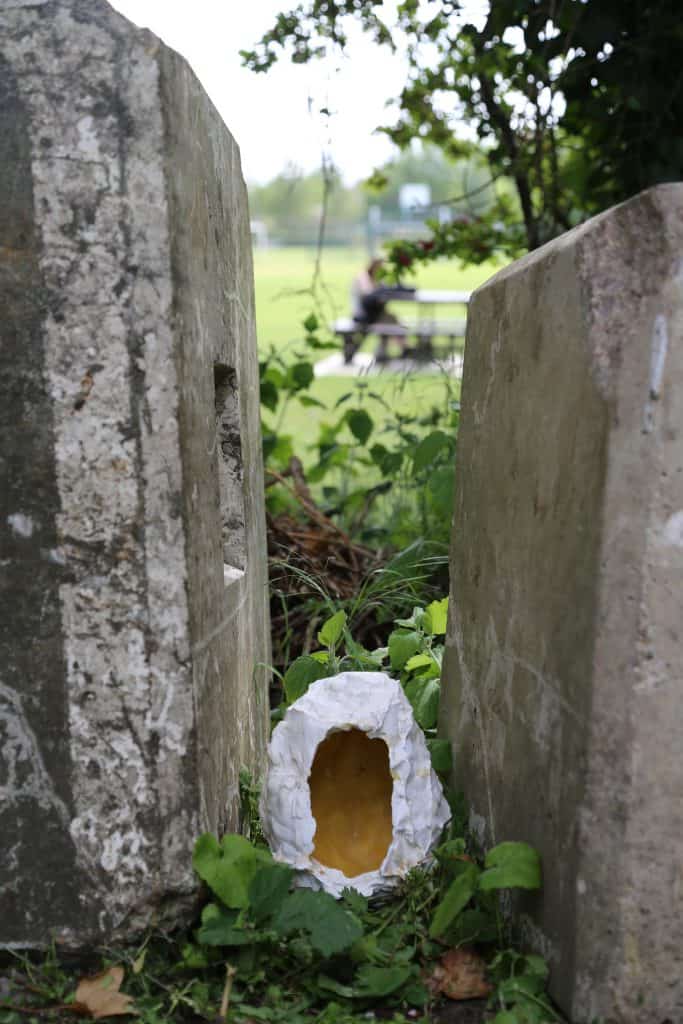
Maia’s materials similarly reflect her themes of memory and transformation. “I have been embracing the appearance of fingers and hands… a reference both to the manual process and the ‘hands of time’ which affect our memories,” she says. Working with clay and plaster, she captures every imprint, resulting in forms that appear “somewhat disturbing, clawing, as if fossilised in memory.”
She repeatedly returns to ideas of “freezing and rupturing”, solid plaster versus molten wax, alongside recurring motifs such as eggs, backs and turning bodies: “Faces emerge and are later obscured as the figure turns and the memory becomes distant.”
Beyond the ‘white cube’
Preparing work for exhibition has shifted how both artists think about their practice. “Exhibition spaces are not simply spaces to present art for a market value,” they argue. “They are places where dialogue, experimentation, critical thought and collective imagination become visible.”
Staging the exhibition at Queen’s has brought its own challenges and opportunities. Without conventional gallery spaces, they have had to rethink how their work is encountered. “Flexibility of presentation…is part of the joy of constructing an exhibition,” they say, “playing with the meanings that emerge when work is placed within this historic backdrop.”
They also credit the support of the College community, particularly Prof Anthony Gardener, Fellow in Fine Art at Queen’s, who “massively motivated us…especially when the organisational demands of the project seemed too much to handle.”
Art, community and new futures
At its core, Emerging Unrealities is as much about community as it is about individual practice. “Universities are not simply places that produce workers for the economy,” they say, “but environments where ethical, emotional and intellectual frameworks for understanding the world emerge.”
Universities are not simply places that produce workers for the economy, but an environment where ethical, emotional and intellectual frameworks for understanding the world emerge.
Their hope is that the exhibition will open up space for reflection and imagination. “We want visitors to open their minds to new ways of thinking,” they explain. “Our works ask the audience to consider how they want the world to be shaped—the possibility of building beautiful ‘unrealities’… the foundations for a new future.”
That thinking has been shaped in part by their studies at the Ruskin School of Art, where practical work is closely tied to critical and theoretical exploration. From anatomy classes, “a confrontation with mortality and the physicality of the human body”, to group critiques and theory seminars tackling issues from colonialism to AI, their work is constantly being tested and expanded.
The result is an exhibition that is both personal and outward-looking: rooted in individual experience, but reaching toward broader questions about memory, identity, and the worlds we might yet imagine.
See more of Rosa’s art on Instagram.
See more of Maia’s art on Instagram.