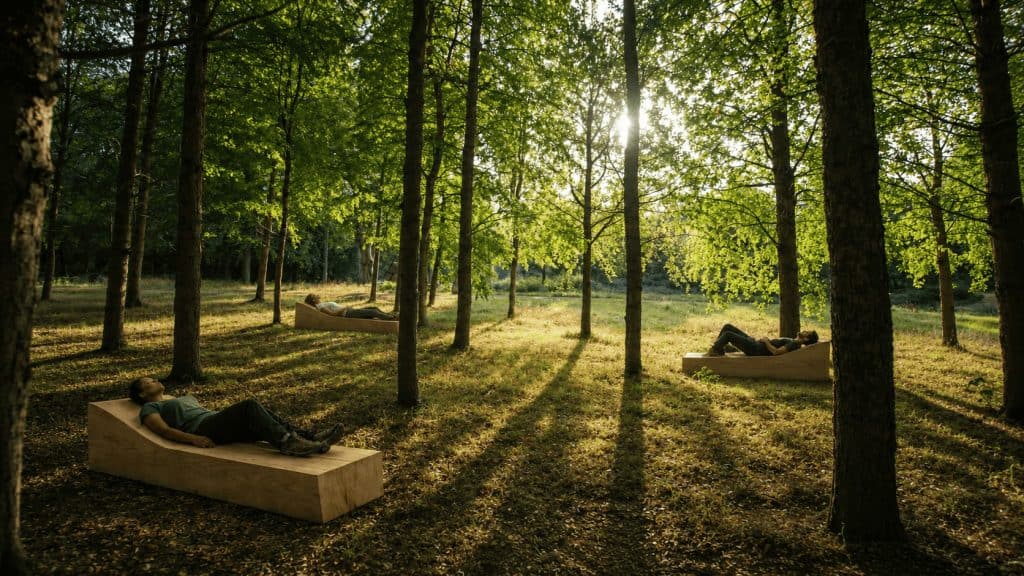
For Queen’s graduate art student Rafael Pérez Evans (DPhil in Fine Art Practice), the horizontal body is not passive. In Horizontals, his year-long exhibition at Wakehurst, Kew Gardens, fallen ash trees become sculptural resting places: part bed, part bench, part invitation.
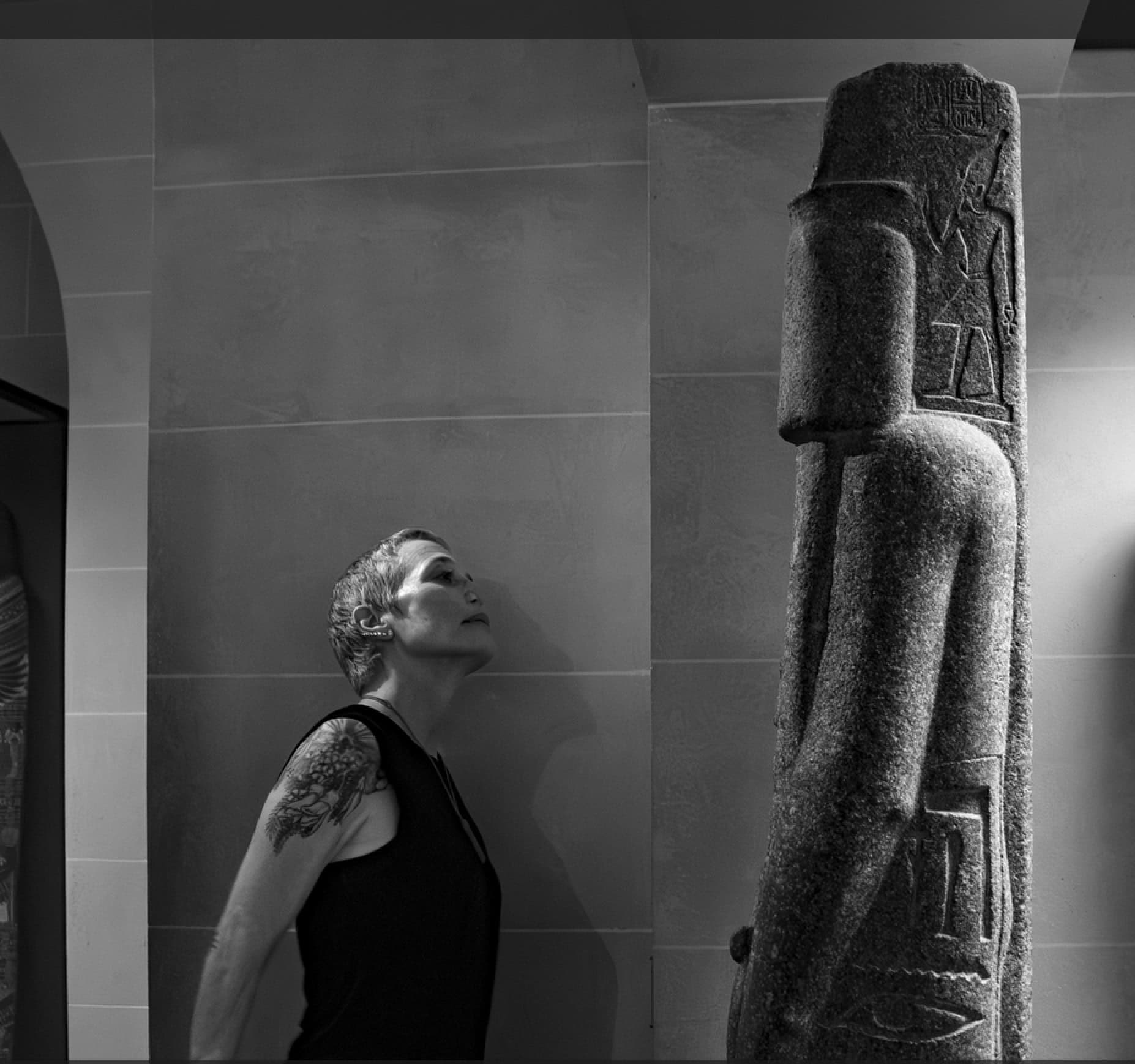
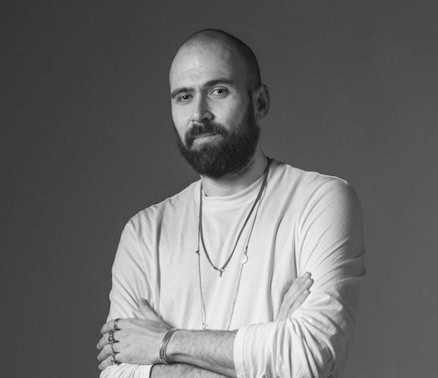
In this interview, Rafael reflects on Henry Moore, burnout, disability, and creating public spaces where exhausted bodies are allowed to simply stop. Artist portrait: photograph by Ricky Adams.
What first drew you to Henry Moore’s reclining figures, and how did that become a starting point for your year-long exhibition at Kew Gardens, Horizontals?
Moore returned to the reclining figure obsessively, but in his work the figure reclines while we stand and look. I wanted to reverse that, to hand the horizontal position back to the visitor. Horizontals take the recline out of representation and turn it into use. The work is then completed by the body lying down, in rest and in contact with the trees above.
‘Horizontals’ take the recline out of representation and turn it into use. The work is then completed by the body lying down, in rest and in contact with the trees above.
Your work asks what kind of pose we hold today. What does the act of reclining mean in the context of burnout and illness?
We tend to read the upright, busy body as the valuable one, and the horizontal, resting body as lazy, even as failure. My wider research argues against care as a reparatory institutional fix, the kind that hurries people back to productivity, and reclining interests me as a refusal of that. Not recovery in order to return to work, but a body that simply stops.
I also wanted to add one more inclination to Moore’s recline: the flat out, fully horizontal body that is burnt out, too tired and can’t hold a pose any more. Working through critical disability studies, I considered bodies that are often bedbound, in hospital, or unable to walk. I think these bodies are often treated as surplus unless they recover or become useful in the expected way. In Horizontals, the body lies down because it is tired, ill, or unable to keep standing. That is the starting point of the work.
I also wanted to add one more inclination to Moore’s recline: the flat out, fully horizontal body that is burnt out, too tired and can’t hold a pose any more.
You describe Horizontals as participatory sculptures. Why was it important that these pieces invite the body in, rather than simply be looked at?
The action is simple: stop, lie down, look up, spend time with the trees. The sculptures are places to stop and rest, not objects to be admired from a safe distance.
The sculptures were made from fallen ash trees within the Wakehurst landscape and carved on site by the arboretum team. How did working with the site and its materials shape the final work?
The timber came from trees that had fallen at Wakehurst because of ash dieback. The sculptures were made in direct relation to that material: its condition and the place it came from. The incredible arboretum team knew the trees, the landscape, and what the wood could do, so their knowledge shaped the final forms. I wanted the pieces to be made with the fewest cuts possible, keeping the wood as close to its original state as we could. The work came out of those practical decisions as much as from my original idea.
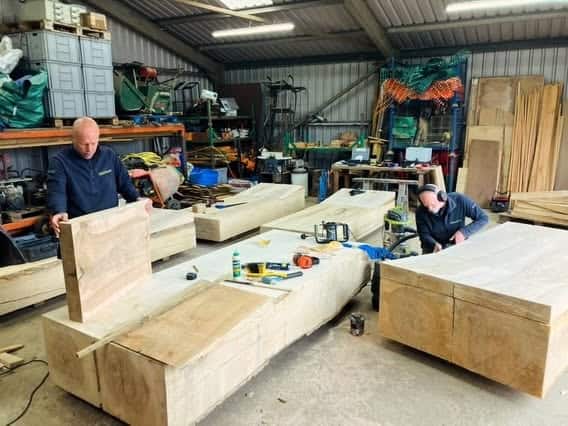
and James from the Arboretum and Landscape team, using ash trees removed due to ash dieback.
Photograph: @gardenermaud
There is a strong tension in the project between rest and permission. What do public spaces allow or discourage when it comes to lying down, pausing, or stopping?
Public spaces often allow movement, but they are much less comfortable with stopping. Sitting is usually accepted, but only in controlled ways, through benches and other forms of hostile or anti-homeless design that decide how long a body can stay, how it can rest, and who is allowed to remain there. Lying down can quickly become suspicious, unless it is clearly framed as leisure. I was interested in that line: when rest is permitted, when it is policed, and who is allowed to appear tired in public. The work openly gives permission to do something public space often makes difficult, to stop, stretch out and take up space horizontally, while also pointing to how hard that simple gesture can be.
The work openly gives permission to do something public space often makes difficult, to stop, stretch out and take up space horizontally, while also pointing to how hard that simple gesture can be.
I would like to continue developing Horizontals as a project about the permission to rest, extending it to other sites and working with hospitals, parks, and universities to create outdoor resting sculptures among existing trees and new planting.
You work with fractured communities, instability, and breakdown. How do those ideas connect to the materials, forms, and atmosphere of Horizontals?
The sculptures are made from ash trees that had fallen because of disease, and I did not want to disguise that. When I first visited Wakehurst, I also learned about a large redwood that had become sick and had to be felled. That stayed with me: a giant vertical tree brought down into a horizontal position. I wanted the work to remain with that movement away from verticality, so the forms stay low, heavy and close to the ground. They come from damaged trees and are made for tired bodies. The link in some way is simple: trees that can no longer stand, bodies that need to lie down, and a landscape
already under pressure.
The work is also indebted to the Historical Materialism Disability Network, whose scholarship and community supported me through a difficult period of the research. Their work helped me think more clearly about disability, labour, and the political conditions that decide which bodies are supported and which are treated as expendable. In Horizontals, that thinking becomes a simple physical proposition: a place where the tired, disabled, sick or exhausted body is not hurried back into use, but allowed to stop, lie down, and be held.
The work is installed within Wakehurst’s National Nothofagus collection, among threatened southern beech species cared for through long-term conservation. What does that setting add to the meaning of the piece?
The sculptures sit within Wakehurst’s National Nothofagus collection, an internationally significant collection of southern beeches that includes threatened species. So the work is not placed in a neutral woodland, it is placed inside a conservation site, among trees whose survival is tied to care, infrastructure, and long-term attention.
Lying down there connects human exhaustion with a wider ecological pressure.
For me, rest also feels like something under threat. Lying down there connects human exhaustion with a wider ecological pressure. You are resting in a place where survival is already being actively managed. At many stages I was thinking of the forest as a kind of hospital of the future, a place to retune our tired bodies and minds.
What do you hope visitors take away from the experience of lying down and looking up in the forest?
I hope visitors feel a change in signal. When you lie down, the forest stops being something you move through and becomes something you tune into. Wakehurst is an incredible place in terms of its capacity to quieten the mind. When you stop, light, branches, birds, movement and weather can come into your senses.
When you lie down, the forest stops being something you move through and becomes something you tune into.
I also hope people leave with the sense that rest can be public, shared and ordinary, not something that has to be hidden away.
How is your time at Queen’s shaping your work?
Queen’s has felt like a monastery to me, and the DPhil a monastic journey, a marathon of deep introspection. I’m grateful the College has held me through it. Without that holding I couldn’t have travelled to the outer edges of my research, into the relationships between economy and labour and how they intersect with disability and madness.
Queen’s has felt like a monastery to me, and the DPhil a monastic journey, a marathon of deep introspection.
What do you enjoy most about being a member of the College?
The people, and the beautiful conversations. The College throws me in with physicists, historians and medics. Given everything my research is about, that contact with other forms of thought, outside the art world, has become a vital part of how I think and work.
Contact with other forms of thought, outside the art world, has become a vital part of how I think and work.
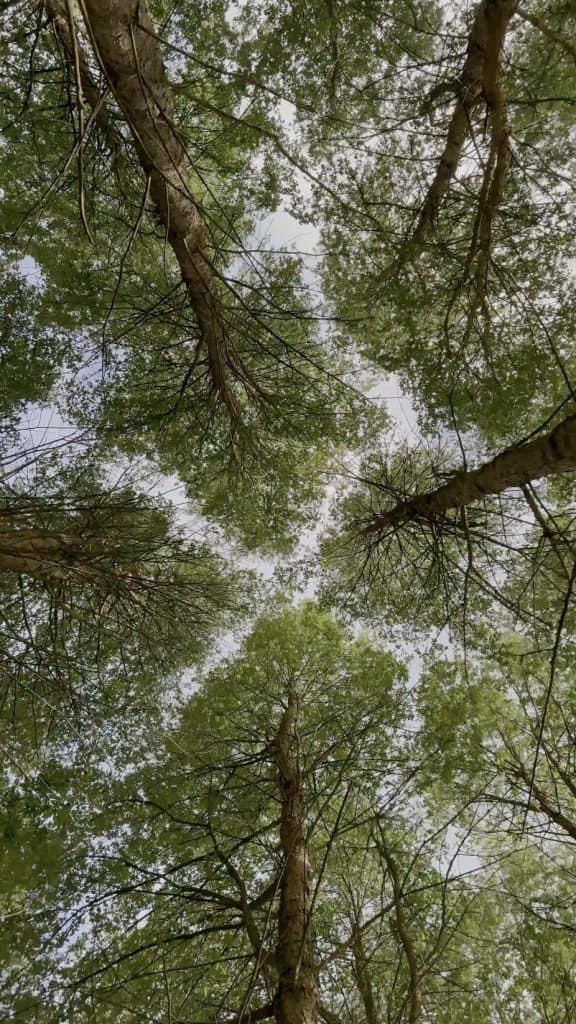
Header image: View from the sculptures in the Nothofagus forest, showing crown shyness: the natural gaps formed where tree canopies avoid touching. Photograph: Flora Westwood.
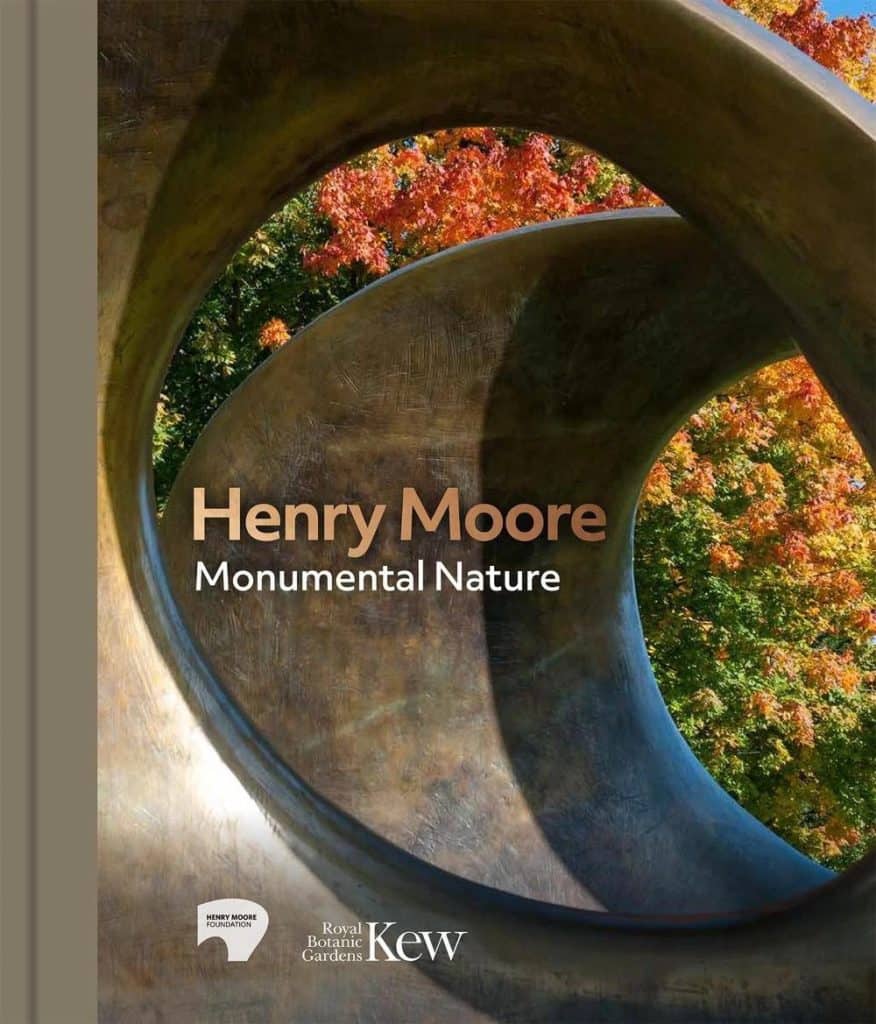
Rafael Pérez Evans is also featured in Henry Moore: Monumental Nature edited by Laura Bruni and published by Kew Publishing in collaboration with the Henry Moore Foundation, 2026.
Pérez Evans works with sculpture, installation and sound to think from and with fractured communities. His practice explores breakdown as both a lived condition and a potential site of liberation, shaped by queer, rural and disabled life. The materials he works with are often unstable, mirroring the degraded lands, voices and bodies that have been devalued and rendered surplus.
Find out more about Henry Moore and More at Wakehurst, Kew, running until 23 May 2027. Installed in Wakehurst’s National Nothofagus collection, also known as the southern beech forest. Curated by Laurence Sillars. Commissioned by Wakehurst, Royal Botanic Gardens, Kew, in partnership with the Henry Moore Foundation.