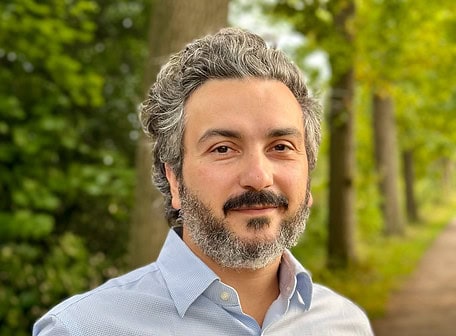
Research led by Queen’s Old Member Professor Svetlana Reilly (DPhil in Cardiovascular Medicine, 2006) has identified a promising new approach to treating atrial fibrillation, a common heart rhythm disorder affecting millions of people worldwide.
Researchers at the University of Oxford, led by British Heart Foundation Senior Research Fellow Prof Svetlana Reilly, have identified a new RNA-based therapeutic strategy that can reverse established atrial fibrosis, a major driver of atrial fibrillation (AF), the most common sustained cardiac arrhythmia worldwide.
Published in Nature Cardiovascular Research and selected for the journal’s cover, the study demonstrates how a targeted RNA-based therapy could pave the way for treatments targeting the underlying fibrotic substrate of atrial fibrillation. The research also highlights the value of interdisciplinary collaboration, with fellow Queen’s researcher Dr David Menassa contributing to the study.
We asked Svetlana to tell us more.
What is the key discovery, and why is it significant?
The key discovery is that microRNA-31-5p is an important driver of atrial fibrosis and acts by suppressing a protective anti-fibrotic pathway mediated by the calcitonin receptor. This is significant because atrial fibrosis is one of the main reasons atrial fibrillation becomes progressively more difficult to treat. Current therapies can help control heart rhythm and reduce complications, but there are no approved treatments that directly reverse the underlying fibrosis. Our study shows that selectively targeting this pathway can reverse established fibrosis in preclinical models.
What could the findings mean for patients in the future?
Atrial fibrillation affects millions of people worldwide and increases the risk of stroke, heart failure, and premature death. Although much more work is needed before any therapy reaches patients, our findings suggest that selective RNA-based medicines targeting the miR-31-5p/CTR pathway could one day provide a disease-modifying precision therapy that tackles the structural changes driving AF, rather than simply treating its consequences.
What are the next steps for the research?
The next stage is to further optimise and develop the RNA-based therapy/drug identified in the study and assess its efficacy and safety in additional preclinical models. More broadly, we are interested in understanding whether the same pathway contributes to fibrosis in other cardiovascular and age-related diseases.
How did your time at Queen’s shape what you do today?
I joined the Queen’s College as a DPhil student in Cardiovascular Medicine (2006) and completed my doctoral research at Oxford (2010). My time at Queen’s played an important role in shaping my interest in cardiovascular science and translational research. Since then, I have established an independent research programme at the University of Oxford focused on understanding the mechanisms driving cardiac fibrosis and arrhythmia, with the aim of developing new therapies for patients with cardiovascular disease.
Since my time at Queen’s, I have established an independent research programme at the University of Oxford focused on understanding the mechanisms driving cardiac fibrosis and arrhythmia, with the aim of developing new therapies for patients with cardiovascular disease.
The paper also includes Dr David Menassa, Lecturer in Neuroscience at Queen’s. David says:
The College offers a fantastic network of individuals from seemingly disparate fields who, once they discuss topics together, can contribute to impactful science and bring their own expertise to the table. That is how Svetlana and I started working together!