Viewing archives for Research

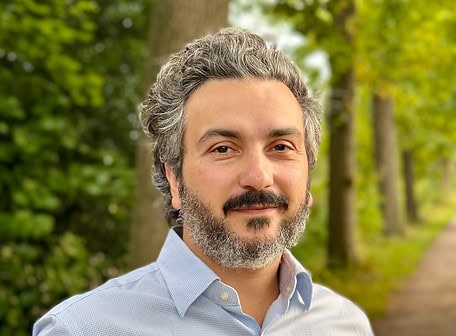
How can we change the chemistry of a precise area of the brain without invasive surgery? Queen’s Extraordinary Junior Research Fellow in Psychology Dr Nima Khalighinejad is developing a pioneering approach using focused ultrasound to allow drugs to reach specific brain regions.

Following a year that has brought a Wellcome Career Development Award, an appointment as Associate Professor, and the growth of his new research group, we spoke to Nima about targeting brain chemistry with greater precision and the power of interdisciplinary research.

This has been a significant year for you; looking back, which moments stand out most?

The transition from being a postdoc to becoming an independent group leader is probably one of the hardest steps in an academic career, so the moment I found out that I had received the Wellcome Career Development Award really stands out. It meant that I could establish my own research group and, importantly, have stable funding for several years to focus on the questions I am most interested in. That sense of independence and security was very special.

Your research develops ways to deliver drugs to the brain using ultrasound. For those without a neuroscience background, can you explain how that works and why it’s an exciting area?

One of the big challenges in neuroscience is that we often have to choose between two imperfect options. We can give a drug systemically, for example as a tablet or injection, but then it reaches many parts of the brain and body at once. Or we can use very precise methods that target one small brain region, but those methods are often invasive.

What we are trying to do is something in between. We use focused ultrasound to temporarily, and very locally, open the blood–brain barrier, which normally acts like a protective filter around the brain. While that small area is open, a drug circulating in the bloodstream can enter that specific part of the brain.

This means that, in principle, we can change the chemistry of one brain region without having to perform invasive surgery. For example, we can target neuromodulators such as serotonin or dopamine to a particular area and then study how behaviour changes. That gives us a much more precise way of asking what different chemicals are actually doing in different parts of the brain.

What kinds of conditions or scientific questions could non-invasive control of brain chemistry help us tackle?

Serotonin is a good example because it is strongly linked to depression and is also the target of many antidepressant drugs. But serotonin does much more than regulate mood. It is involved in motivation, learning, patience, decision-making and many other aspects of behaviour.

At the moment, when we give a serotonergic drug, it affects serotonin throughout the brain, so it is difficult to know which brain regions are responsible for which effects. A more targeted approach could help us separate these different functions.

The same is true for other neuromodulators such as dopamine, noradrenaline, and acetylcholine. These chemicals influence many different cognitive processes, but we still do not fully understand how their effects depend on where in the brain they are acting. Being able to manipulate them locally gives us a much better tool for answering those questions.

In the longer term, understanding these mechanisms could also help us think more precisely about psychiatric and neurological conditions in which these systems are disrupted.

Your lab has grown considerably this year. How has the transition from leading a small research group to building a larger team changed the way you work?

When your group is small you are still mostly a scientist working directly on experiments, analysis, and papers. As the group grows, you also become a manager and a leader.  You spend more time thinking about how different projects fit together, how to support people at different stages of their careers, and how to make sure everyone has what they need to do their best work. I still very much enjoy being involved in the science itself, but I have had to learn that running a lab is not just about having good research ideas. It is also about helping other people develop their own ideas and careers.

You were involved in several papers published in journals, including as senior author for papers in Nature Human Behaviour and Nature Communications. How important is collaboration in modern neuroscience, and what does it make possible?

Collaboration is absolutely essential in modern neuroscience. The field has become so broad and technically sophisticated that no one person can be an expert in everything. For example, our recent work on targeted neuropharmacology brought together expertise in neuroscience, engineering, pharmacology, ultrasound physics, and neuroimaging. Each part of the project required a different type of knowledge.  That is one of the things I enjoy most about neuroscience. You can have a question about behaviour, but answering it may require working with an engineer, a physicist, a pharmacologist, and a computational neuroscientist. The final science is often much stronger because different people bring completely different ways of thinking about the same problem.

Collaboration is absolutely essential in modern neuroscience.

Alongside your research, you’ve represented early career researchers on the College’s Academic Committee. Can you tell us a bit about this experience?

Being part of the Academic Committee gave me a much better understanding of how the College works behind the scenes. As researchers, we often focus very narrowly on our own projects, but there are many decisions being made about teaching, research, recruitment, and the wider academic life of the College.

It was also a useful opportunity for me to represent the perspective of early career researchers and to contribute to discussions beyond my own discipline. I think experiences like this are important because, as you become more senior, your role is not only to lead your own research but also to contribute to the wider academic community. For me, it was an important step towards taking on more leadership responsibilities in the future.

What do you enjoy about being part of the Queen’s community?

One of the things I enjoy most is talking about my research with Fellows from completely different disciplines and, equally, hearing about their work.  Within a department, you can easily end up living in quite a narrow academic bubble, surrounded by people who use the same terminology and think about similar problems. Queen’s gives me the opportunity to step outside that bubble.  You might have lunch with someone working on history, economics, literature or mathematics, and suddenly you are thinking about your own research in a completely different way. I really value that broader intellectual environment.

What advice would you give to a student who is fascinated by the brain and is thinking about a career in neuroscience research?

I think the brain is not only the most fascinating organ in the body, but one of the most fascinating things we can study. Everything we do – our decisions, emotions, memories, movements, and sense of who we are – emerges from activity in the brain. So in trying to understand the brain, we are also trying to understand what makes us human. Neuroscience is also incredibly interdisciplinary. You do not have to start with a neuroscience degree. People come into the field from psychology, medicine, biology, engineering, physics, mathematics, computer science, and many other backgrounds.  That diversity is becoming even more important with the growth of artificial intelligence. Many ideas in AI, including neural networks, were originally inspired by the brain, and now AI is also giving us new tools to understand the brain.  So my advice would be to build strong skills in whatever discipline you are currently in, and do not worry too much about following one fixed route. There are many ways into neuroscience.

In trying to understand the brain, we are also trying to understand what makes us human.

When Royal & Derngate Theatre staged Breaking the Code, the acclaimed play about Alan Turing’s life and legacy, they turned to Senior Research Fellow Dr Christopher Hollings for expert guidance.

As historical adviser on the production, he helped the cast navigate the mathematical ideas at the heart of Turing’s groundbreaking work, helping to ensure that one of the twentieth century’s greatest minds was portrayed with both intellectual rigour and human authenticity. We asked him to tell us more about the experience.

How did you become involved with Breaking the Code at the Royal & Derngate Theatre?

I received an email out of the blue from a producer at the theatre, asking whether I’d be interested in coming to talk to the cast about Turing.  I think they must have found me online, not as someone who has ever worked on Turing (I haven’t), but as someone who has worked on the history of twentieth-century mathematics and could provide some context for Turing’s work.

What did your role as mathematical adviser to the theatre production involve?

I went to Northampton and spent a couple of hours answering questions and discussing the historical and mathematical background with the cast, starting with the things going on immediately around Turing, and gradually expanding outwards into other developments in early twentieth century mathematics.

What aspects of Alan Turing’s mathematics or working methods did you help the production portray accurately?

Parts of the play, including one long speech, deal with the Entscheidungsproblem (decision problem), which was a question posed by the German mathematician David Hilbert in the early twentieth century.  It asks whether there is a mechanical process whereby we can prove that any given mathematical statement is true.  Hilbert thought yes, but in 1936 Turing showed that the answer is in fact no (this was also proved, independently, by the American mathematician Alonzo Church around the same time). 

Turing did this using what we now call a Turing machine – a hypothetical device that models processes of computing.  I explained some of these ideas to the cast in general terms, and also answered other questions – for example, some members of the cast wanted to know how familiar their character would have been with the ideas or people involved in the mathematics.

Were there any moments where theatrical storytelling and mathematical or historical accuracy were in tension? If so, how were those resolved?

Not as such, as far as I can think.  The play takes some of the ideas surrounding the Entscheidungsproblem and reframes them beyond mathematics as relating to questions of telling right from wrong in more of a moral setting.  Arguably, that stretches the mathematics a bit, but it fits well with the overall themes of the play!

Did working closely on a production about Alan Turing change your own perspective on him or his legacy?

I think that rather than changing anything in my perspective on Turing, it emphasised his particular approach to mathematics, as this is something that the cast were keen to understand and convey.  In contrast to Hilbert, who famously viewed mathematics as a pursuit conducted according to strict rules, regarding mathematics as a part of formal logic, Turing advocated for a more flexible approach to mathematics, where intuition has a much greater role to play.  I was also pleasantly surprised by Turing’s 1936 paper, which I read properly for the first time by way of preparation – I was struck by how readable it was, and how Turing didn’t just fill the page with mathematical formalism but often tried to present the reader with a heuristic approach to the material.

Turing advocated for a more flexible approach to mathematics, where intuition has a much greater role to play. 

What was it like seeing your advice brought to life on stage? Was there a particular scene or detail that stood out?

I can’t take much credit, as the cast – and, in particular, the actor playing Turing – was already very engaged with and knowledgeable about Turing’s story.  I hope that I managed to add a little to their understanding of some of the historical background and the mathematical ideas.  The over-simplified way in which mathematics is sometimes conveyed in fiction can make mathematicians cringe, but I thought that the mathematical discussions in the play sounded completely plausible – in particular, in the speech about the Entscheidungsproblem mentioned above.

As an historian of mathematics, what do you think theatre can offer that books or lectures cannot when it comes to communicating the lives of mathematicians?

If it’s done well (as it was in this case), I think theatre can tell the story with much more immediacy and really bring out the human element.

The production doesn’t just celebrate Turing’s genius; it also explores the injustice he faced after the war. As a historian of mathematics, do you think understanding the people behind the mathematics is as important as understanding their discoveries?

Definitely, because who people were, what they experienced, who else they interacted with, etc. shaped the mathematical work they did.  This link is sometimes denied by people who want mathematics to be something pure and high-level, separated from everyday life, but I think this stems from the misconception that understanding the person behind the mathematics must necessarily entail strictly logical deductions such as ‘person X proved theorem Y because of event Z’. 

The path to a mathematical development is rarely so clear – the influence of a mathematician’s individual circumstances on their work will usually be much more subtle, but it is still there.

What if rhyme is not merely decorative, but a force that shapes what poetry can say?

Lecturer in English Dr Amanda Holton’s latest research turns a data-driven lens on centuries of English love poetry, drawing on a database of nearly 1,000 lyrics produced between 1300 and 1579.

Her work asks a deceptively simple question: what happens when rhyme does more than embellish a poem? In this interview, she explains how the limits of English rhyme could steer poets towards particular ideas, why “pain” became such a dominant rhyme-word, and what medieval lyrics might have in common with Large Language Models.

Your book is underpinned by a database of nearly one thousand love lyrics produced between 1300 and 1579. What led you to take a data-driven approach to poetry which is traditionally viewed as a more qualitative discipline?

I am interested in poetics, which aims primarily to provide objective description of texts rather than focusing mainly on their interpretation and contexts. A data-driven approach is a good way of furthering that aim. It means I can feel confident that the basis of the conclusions I reach are not impressionistic but are supported by evidence. 

You argue, controversially, that rhyme doesn’t just decorate meaning but actively shapes it, limiting what can be expressed. Can you give an example of how a rhyme group changes what a poem is able to say?

Yes. Say a poem needs 10 rhymes for the word ‘pain’. There aren’t endless words available in the language which actually rhyme with ‘pain’, and some of those will be ruled out as unsuitable for the subject-matter. To find 10 rhymes, the poet is going to have to use quite a large proportion of this fairly small group of words.

This means, for example, that the poet is unlikely to avoid using at least one word connected with the idea of getting, whether this is ‘attain’, ‘obtain’, or ‘gain’.  This inexorably leads the poem into the idea that pain is a currency, and that the lover’s pain has earned him the right to the lady – or at least to her attention. This is an idea which would not necessarily be so prevalent without the prompting of the rhyme. 

You suggest that certain clusters of ideas become almost inevitable because of the limits of English rhyme. Does that mean poets have less creative freedom than we tend to assume and, if so, what do you think is the impact of this?

We tend to think people have ideas and selves which exist before and independently of language, and are subsequently expressed through language, rather than seeing language as a factor which actually shapes our selves, our ideas and our experiences. We don’t wield language with quite the level of autonomy we feel we do.

We don’t wield language with quite the level of autonomy we feel we do.

This is intensified when writing formal poetry because there are further constraints; not only is the writer negotiating with pre-existing words, structures and assumptions inherent in the language but also with factors such as rhyme, meter, stanza structure, each of which narrows the choices available. But I’m not sure it’s helpful to imagine this as a limitation on what would otherwise be complete creative freedom – and indeed in the Middle Ages we don’t see the same prizing of novelty and personal originality which became the norm later on.

It is perhaps more helpful to see poets working with their tools as part of a shared cultural experience and inheritance, the current inhabitors of a workshop which others have worked in before and will continue to work in in the future. (I show in the book that some of the rhyme-groups fundamental to my book persist strongly, with the Beatles, for example, using ‘heart: apart’ rhymes in a very similar way to earlier poets.) 

Were there any patterns that surprised you when you started analysing the data?

I was surprised by the margin by which ‘pain’ was the commonest rhyme-word.  

I was surprised by the margin by which ‘pain’ was the commonest rhyme-word.  

Your work suggests that structure can generate meaning. Do you see any parallels with how Large Language Models operate and what might be the effect of these constraints in the way people express themselves today?

That is an interesting question. Yes, there is a parallel because LLMs predict text based on pre-existing models, and rhyming poems (especially those whose genre requires a particular register) also work with pre-existing linguistic and stylistic features. (There are set phrases as well as set rhyme groups which appear regularly across poems.)

There are differences, though. While it is true that many of the poems I discuss are entirely conventional and probably could have been constructed by an LLM, there are also many which handle the conventions with scepticism, humour or irony, confronting their inheritance and making it textured and visible. This is certainly in contrast to the blandness of the writing I have personally seen produced by LLMs.  

After spending so much time analysing patterns, has it changed how you read, or enjoy, poetry?

Patterning has always been one of my main interests and sources of pleasure in poetry, but certainly a klaxon goes off now every time I see a pain, woe or heart rhyme group!

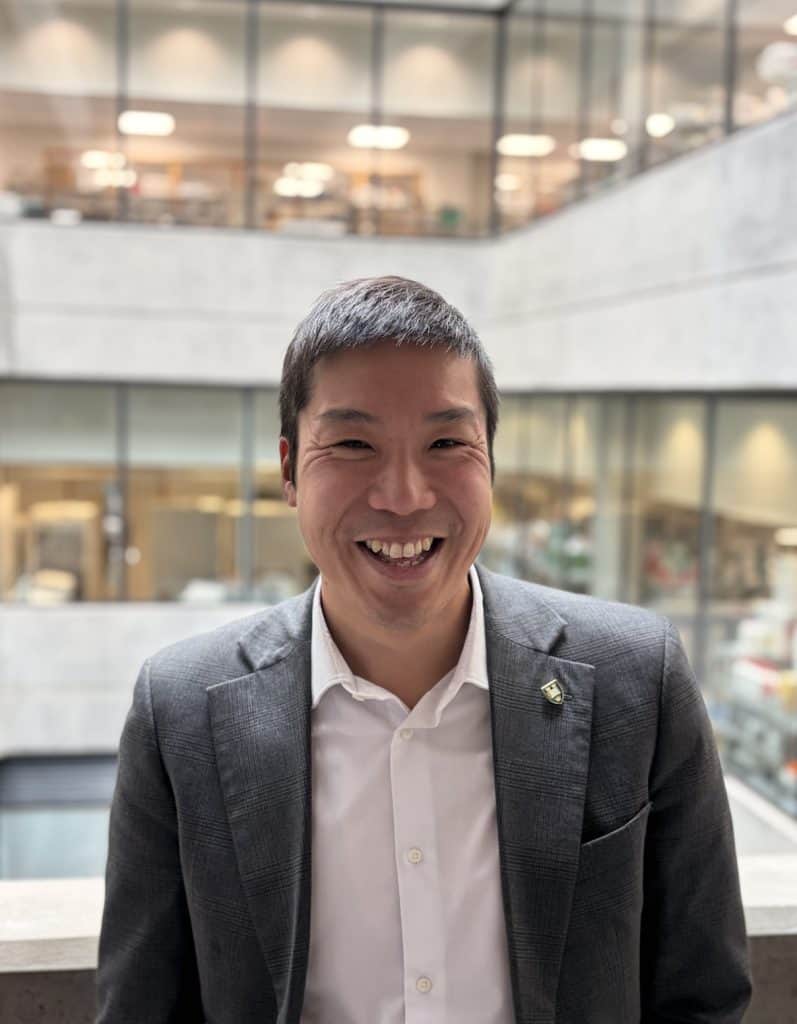
Old Member Dr Lennard Lee (Medicine, 2005) has built a career at the intersection of medicine, technology, and public service, and is now helping to lead a pioneering project using AI and supercomputing to accelerate the development of personalised cancer vaccines. In this interview, he reflects on the promise of faster, more precise cancer therapies, the role of sovereign AI infrastructure in UK science, and his experiences at Queen’s that shaped his belief in teamwork and ambitious collaboration.

You are leading the UK Cancer Vaccine AI Scientist and Supercomputing Project, which combines cancer research with AI and supercomputing. Can you explain the challenges in cancer treatment that this programme is trying to address?

The opportunity we are trying to realise comes from the remarkable achievements of the Oxford-AstraZeneca vaccine and vaccine investment programmes around the world. Vaccines can now be produced relatively cheaply and efficiently. There is the potential to use this technology to create cancer therapies that are affordable, straightforward to manufacture, and able to direct a patient’s own immune system to control or even eradicate cancer.

When speaking about cancer treatment, people are perhaps less familiar with the term ‘cancer vaccine’ than they are with other treatments. Can you explain how immunotherapy treats cancer?

Immunotherapy works because it enables a patient’s own immune system to control or eradicate their cancer. Around half of people will never develop cancer during their lifetime. For those who do, factors that affect immunity, including smoking, obesity and aspects of lifestyle, can contribute to risk.

Immunotherapy has transformed outcomes for some cancers, such as melanoma, where complete eradication can occur. For many patients, however, it leads to a period of disease control before the cancer evolves mechanisms to escape immune recognition.

Cancer vaccines build on the same principles as vaccine technologies used during the pandemic.

Cancer vaccines build on the same principles as vaccine technologies used during the pandemic, including adenoviral and mRNA platforms. They aim to direct the immune system towards abnormalities that are unique to an individual’s cancer, creating a more precise and targeted immune response.

What has changed technically or scientifically that makes it possible to move much faster from AI prediction to real-world personalised drug development?

AI. Quite simply, this technology has removed much of the friction from medical research.

We started with the premise that AI could analyse genetic data faster than any human. Initially, this was challenging because we needed to build our own specialised GPT models. That required access to the UK’s sovereign AI supercomputer, DAWN, as well as learning how to develop entirely new AI systems.

It worked. The models generated high-quality predictions at remarkable speed. In much the same way that ChatGPT or Gemini transformed language tasks, our model allows us to ask questions such as: ‘What should be included in a cancer vaccine for this patient?’ or ‘Which features of this person’s cancer should we direct the immune system towards?’

It was a genuine step change. Analyses that once took six months can now be completed in around 72 hours. We’ve learned that these systems depend upon large, high-quality datasets, which is why we have trained our cancer vaccine designer using more than two billion data points, securely stored within the UK.

Analyses that once took six months can now be completed in around 72 hours.

The AI scientist platform CIARA sits at the centre of the work. Can you describe what CIARA does, and how this supports human researchers?

CIARA is an AI agent and the United Kingdom’s first prototype AI Scientist. She is an autonomous system capable of reasoning, planning and helping to execute experiments designed to improve cancer vaccine development.

Most current AI systems, such as ChatGPT, Gemini and Grok, exist solely in the virtual world. They can generate ideas, although they cannot directly influence the physical world. Across the globe, researchers are now exploring how AI systems can bridge that gap.

In Oxford, we are taking a distinctive approach. Rather than focusing on defence or entertainment applications, we are applying these technologies to scientific discovery.

In Oxford, we are taking a distinctive approach. Rather than focusing on defence or entertainment applications, we are applying these technologies to scientific discovery.

CIARA, which stands for Centre for Immuno-Oncology Research Assistant, has been given supervised access to robotic laboratory equipment. We are piloting her use in performing ELISpot experiments to determine whether predicted cancer vaccines generate measurable immune responses.

For the first time, an AI Scientist is helping to deliver real laboratory experiments. We are doing this thoughtfully, with full human oversight, while studying how researchers and AI systems work together. CIARA has never been designed to replace scientists. She has been designed as an assistant, helping researchers become more productive and accelerating the rate of discovery.

Why is access to UK sovereign AI systems such as the DAWN and ISAMBARD-AI supercomputers important for this research?

AI supercomputers are very different from conventional computing systems. They contain vast numbers of graphical processing units, or GPUs, which are essential for training and operating modern AI models.

We have moved well beyond simpler approaches that could run on traditional university clusters. Sovereign AI infrastructure, such as DAWN and ISAMBARD-AI, provides the computational power needed to compete internationally.

These facilities are today’s equivalent of the coal networks that powered the industrial revolution. They are precious national assets.

In many ways, these facilities are today’s equivalent of the coal networks that powered the industrial revolution. They are precious national assets. Only a limited number of countries possess them, and they are now supporting programmes such as the UK Cancer Vaccine AI Scientist and Supercomputing Project. Without access to this infrastructure, UK science would struggle to compete on the world stage.

Funding from the Medical Research Council is being used for the next stage, including manufacturing experimental cancer vaccines and testing predictions in patient samples. What do you expect to happen over the next year?

We hope that, for the first time, an AI system will have designed and enabled the manufacture of a cancer vaccine in the UK, demonstrating a working prototype of this new approach.

At present, manufacturing often depends upon overseas organisations. One of the important questions we should ask is why the UK no longer makes more of these advanced therapies itself. If cancer vaccines can be developed and manufactured here, why should we stop at discussing the opportunity rather than delivering it?

I am enormously grateful to the Medical Research Council for investing in this work and giving us the chance to explore what is possible over the next year.

Patients often ask whether AI will genuinely make a difference for people with cancer. What is your answer to them at the moment?

I believe AI has the potential to transform healthcare. Anyone who has recently used the NHS may have wondered why information is repeated so often, why there is so much paperwork, or why doctors and nurses have so little time available for direct patient care.

I believe AI has the potential to transform healthcare.

Used thoughtfully, sovereign AI technologies could help address many of these longstanding challenges.

Through the UK Cancer Vaccine AI Scientist and Supercomputing Project, we are starting by focusing on people living with cancer, aiming to develop safer, more precise and more effective therapies. The opportunity extends much further than that.

You founded the award-winning UK Coronavirus Cancer Monitoring Project, linking data from 90 hospitals to understand outcomes for cancer patients during the Covid-19 pandemic. What did that period teach you about urgency in medical research?

It taught me that one of the most important ways doctors can serve their patients is through research.

One of the most important ways doctors can serve their patients is through research.

During 2020, there were serious concerns that cancer patients should avoid hospitals altogether. We rapidly established the UK Coronavirus Cancer Monitoring Project, linking data across almost 90 cancer centres.

Within 100 days, we had generated evidence showing that greater harms would result from stopping cancer treatments. By the second wave, research led by Oxford helped ensure that cancer services remained open and patients around the world continued receiving treatment.

We learned that, even during a global pandemic, cancer care must continue. More harm occurs when people are denied effective treatment. I remain enormously proud of what that collaboration achieved.

Looking back on your time at Queen’s, how did your experience there help to shape the way you work now?

Queen’s was an enriching environment. It encouraged us to develop skills that extended beyond academic knowledge.

I captained the University swimming team. We rowed from Oxford to Tower Bridge. We swam the Strait of Gibraltar and achieved a UK world record.

Those experiences taught me that success is fundamentally about teams. Can you inspire people to aim for something bigger than their everyday responsibilities? Can you bring together groups of talented individuals to achieve something ambitious, bold and genuinely transformative?

Success is fundamentally about teams.

Queen’s taught me that.

What other experiences outside formal study proved unexpectedly important to your career?

Swimming the English Channel.

If you persist long enough, and if you have the right people supporting you, extraordinary things become possible. Even as a young adult, you can swim to France, navigating jellyfish, shipping lanes, cold water, and challenging conditions.

That experience taught me resilience and the importance of community.

The image features a large ship sailing on the sea with a swimmer in the foreground
Lennard Lee swimming the English Channel

What qualities do you think student researchers need to develop now?

Overcoming cynicism.

It is easy to assume that problems belong to someone else or that solutions do not exist. Yet, if you try, you often achieve far more than you imagined possible.

Bring people together. Identify their strengths. Accept offers of help. Work towards changing the world.

Today, it can feel tempting to disengage from institutions such as the NHS or from public service more broadly. Yet, throughout history, progress has depended upon talented people choosing to contribute. Great things happen when bright minds decide to serve.

Throughout history, progress has depended upon talented people choosing to contribute. Great things happen when bright minds decide to serve.

Your work spans medicine, technology, policy and public communication. What personal qualities have helped you move between those worlds?

Positivity.

The ability to bring people together and help them recognise their own importance. To remind them that they are capable of much more than they realise.

I often say that it only takes six people to change the world. From there, you build teams capable of extraordinary things.

That philosophy helped us keep cancer treatment available during the pandemic, expand access to testing, deliver some of the largest studies undertaken within the NHS, and now explore how AI could help create the next generation of cancer therapies.

Small teams of talented people can achieve outsized impact.

Small teams of talented people can achieve outsized impact.

AI cancer vaccine team

For Queen’s graduate art student Rafael Pérez Evans (DPhil in Fine Art Practice), the horizontal body is not passive. In Horizontals, his year-long exhibition at Wakehurst, Kew Gardens, fallen ash trees become sculptural resting places: part bed, part bench, part invitation.

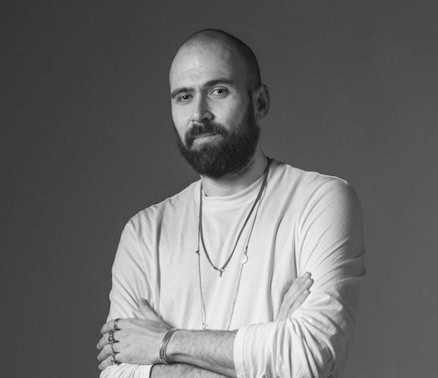
In this interview, Rafael reflects on Henry Moore, burnout, disability, and creating public spaces where exhausted bodies are allowed to simply stop. Artist portrait: photograph by Ricky Adams.

Rafael black and white profile photo

What first drew you to Henry Moore’s reclining figures, and how did that become a starting point for your year-long exhibition at Kew Gardens, Horizontals?

Moore returned to the reclining figure obsessively, but in his work the figure reclines while we stand and look. I wanted to reverse that, to hand the horizontal position back to the visitor. Horizontals take the recline out of representation and turn it into use. The work is then completed by the body lying down, in rest and in contact with the trees above.

‘Horizontals’ take the recline out of representation and turn it into use. The work is then completed by the body lying down, in rest and in contact with the trees above.

Your work asks what kind of pose we hold today. What does the act of reclining mean in the context of burnout and illness?

We tend to read the upright, busy body as the valuable one, and the horizontal, resting body as lazy, even as failure. My wider research argues against care as a reparatory institutional fix, the kind that hurries people back to productivity, and reclining interests me as a refusal of that. Not recovery in order to return to work, but a body that simply stops.

I also wanted to add one more inclination to Moore’s recline: the flat out, fully horizontal body that is burnt out, too tired and can’t hold a pose any more. Working through critical disability studies, I considered bodies that are often bedbound, in hospital, or unable to walk. I think these bodies are often treated as surplus unless they recover or become useful in the expected way. In Horizontals, the body lies down because it is tired, ill, or unable to keep standing. That is the starting point of the work.

I also wanted to add one more inclination to Moore’s recline: the flat out, fully horizontal body that is burnt out, too tired and can’t hold a pose any more.

You describe Horizontals as participatory sculptures. Why was it important that these pieces invite the body in, rather than simply be looked at?

The action is simple: stop, lie down, look up, spend time with the trees. The sculptures are places to stop and rest, not objects to be admired from a safe distance.

Peaceful forest with sunlight filtering through trees and benches for relaxation.
Rafael Pérez Evans, Horizontals, Wakehurst, Kew Gardens, 2026. Six fallen ash trees, carved wood. Approx. 250 × 120 cm each. Image: Rafael Pérez Evans.

The sculptures were made from fallen ash trees within the Wakehurst landscape and carved on site by the arboretum team. How did working with the site and its materials shape the final work?

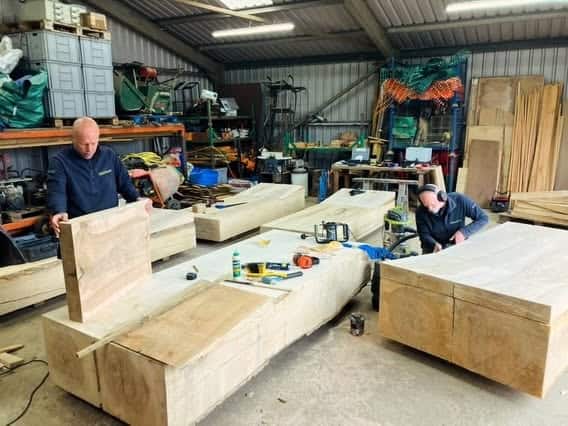
The timber came from trees that had fallen at Wakehurst because of ash dieback. The sculptures were made in direct relation to that material: its condition and the place it came from. The incredible arboretum team knew the trees, the landscape, and what the wood could do, so their knowledge shaped the final forms. I wanted the pieces to be made with the fewest cuts possible, keeping the wood as close to its original state as we could. The work came out of those practical decisions as much as from my original idea.

Two craftsmen working on large wooden furniture pieces in a workshop.
Production stills from the making of Horizontals at Wakehurst, Kew Gardens. Produced with Russell
and James from the Arboretum and Landscape team, using ash trees removed due to ash dieback.
Photograph: @gardenermaud

There is a strong tension in the project between rest and permission. What do public spaces allow or discourage when it comes to lying down, pausing, or stopping?

Public spaces often allow movement, but they are much less comfortable with stopping. Sitting is usually accepted, but only in controlled ways, through benches and other forms of hostile or anti-homeless design that decide how long a body can stay, how it can rest, and who is allowed to remain there. Lying down can quickly become suspicious, unless it is clearly framed as leisure. I was interested in that line: when rest is permitted, when it is policed, and who is allowed to appear tired in public. The work openly gives permission to do something public space often makes difficult, to stop, stretch out and take up space horizontally, while also pointing to how hard that simple gesture can be.

The work openly gives permission to do something public space often makes difficult, to stop, stretch out and take up space horizontally, while also pointing to how hard that simple gesture can be.

I would like to continue developing Horizontals as a project about the permission to rest, extending it to other sites and working with hospitals, parks, and universities to create outdoor resting sculptures among existing trees and new planting.

You work with fractured communities, instability, and breakdown. How do those ideas connect to the materials, forms, and atmosphere of Horizontals?

The sculptures are made from ash trees that had fallen because of disease, and I did not want to disguise that. When I first visited Wakehurst, I also learned about a large redwood that had become sick and had to be felled. That stayed with me: a giant vertical tree brought down into a horizontal position. I wanted the work to remain with that movement away from verticality, so the forms stay low, heavy and close to the ground. They come from damaged trees and are made for tired bodies. The link in some way is simple: trees that can no longer stand, bodies that need to lie down, and a landscape
already under pressure.

The work is also indebted to the Historical Materialism Disability Network, whose scholarship and community supported me through a difficult period of the research. Their work helped me think more clearly about disability, labour, and the political conditions that decide which bodies are supported and which are treated as expendable. In Horizontals, that thinking becomes a simple physical proposition: a place where the tired, disabled, sick or exhausted body is not hurried back into use, but allowed to stop, lie down, and be held.

The work is installed within Wakehurst’s National Nothofagus collection, among threatened southern beech species cared for through long-term conservation. What does that setting add to the meaning of the piece?

The sculptures sit within Wakehurst’s National Nothofagus collection, an internationally significant collection of southern beeches that includes threatened species. So the work is not placed in a neutral woodland, it is placed inside a conservation site, among trees whose survival is tied to care, infrastructure, and long-term attention.

Lying down there connects human exhaustion with a wider ecological pressure.

For me, rest also feels like something under threat. Lying down there connects human exhaustion with a wider ecological pressure. You are resting in a place where survival is already being actively managed. At many stages I was thinking of the forest as a kind of hospital of the future, a place to retune our tired bodies and minds.

What do you hope visitors take away from the experience of lying down and looking up in the forest?

I hope visitors feel a change in signal. When you lie down, the forest stops being something you move through and becomes something you tune into. Wakehurst is an incredible place in terms of its capacity to quieten the mind. When you stop, light, branches, birds, movement and weather can come into your senses.

When you lie down, the forest stops being something you move through and becomes something you tune into.

I also hope people leave with the sense that rest can be public, shared and ordinary, not something that has to be hidden away.

How is your time at Queen’s shaping your work?

Queen’s has felt like a monastery to me, and the DPhil a monastic journey, a marathon of deep introspection. I’m grateful the College has held me through it. Without that holding I couldn’t have travelled to the outer edges of my research, into the relationships between economy and labour and how they intersect with disability and madness.

Queen’s has felt like a monastery to me, and the DPhil a monastic journey, a marathon of deep introspection.

What do you enjoy most about being a member of the College?

The people, and the beautiful conversations. The College throws me in with physicists, historians and medics. Given everything my research is about, that contact with other forms of thought, outside the art world, has become a vital part of how I think and work.

Contact with other forms of thought, outside the art world, has become a vital part of how I think and work.

Header image: View from the sculptures in the Nothofagus forest, showing crown shyness: the natural gaps formed where tree canopies avoid touching. Photograph: Flora Westwood.

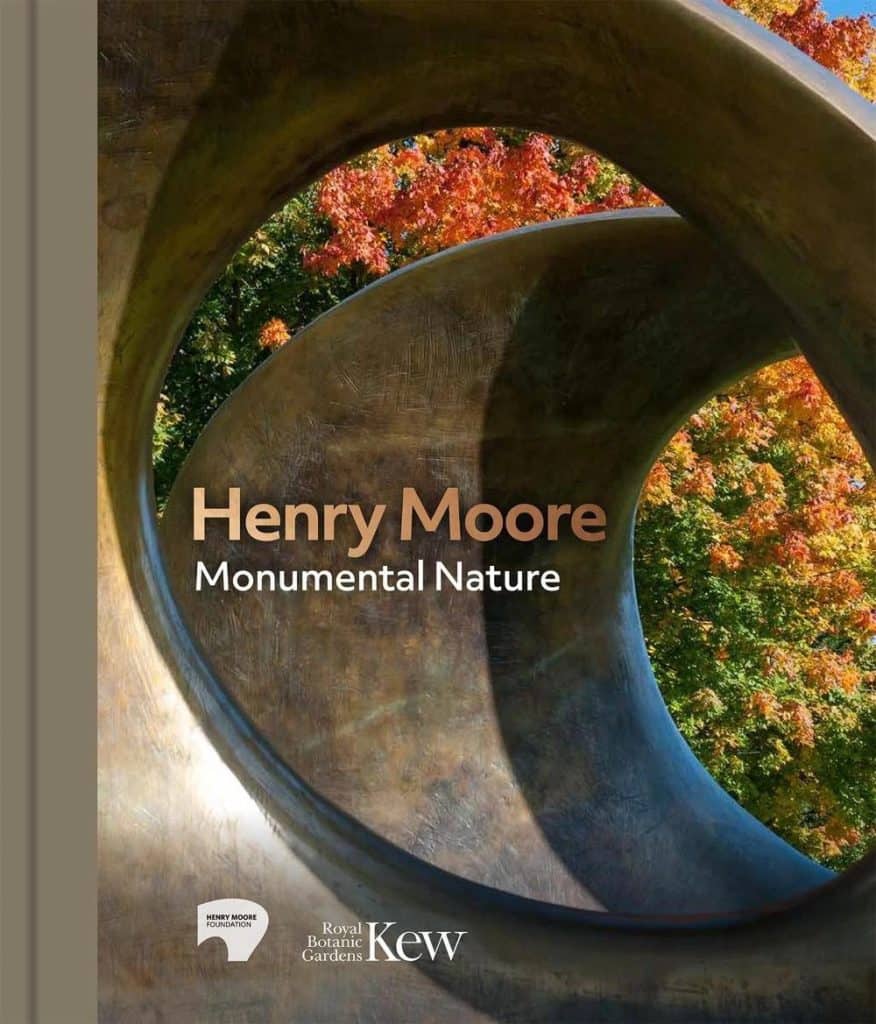
Rafael Pérez Evans is also featured in Henry Moore: Monumental Nature edited by Laura Bruni and published by Kew Publishing in collaboration with the Henry Moore Foundation, 2026.

Pérez Evans works with sculpture, installation and sound to think from and with fractured communities. His practice explores breakdown as both a lived condition and a potential site of liberation, shaped by queer, rural and disabled life. The materials he works with are often unstable, mirroring the degraded lands, voices and bodies that have been devalued and rendered surplus.

www.rafaelperezevans.com

Find out more about Henry Moore and More at Wakehurst, Kew, running until 23 May 2027. Installed in Wakehurst’s National Nothofagus collection, also known as the southern beech forest. Curated by Laurence Sillars. Commissioned by Wakehurst, Royal Botanic Gardens, Kew, in partnership with the Henry Moore Foundation.

Close-up of Henry Moore's abstract sculpture with autumn trees in background.

Queen’s Germanists reflect on language, collaboration, and bringing Ingeborg Bachmann into English.

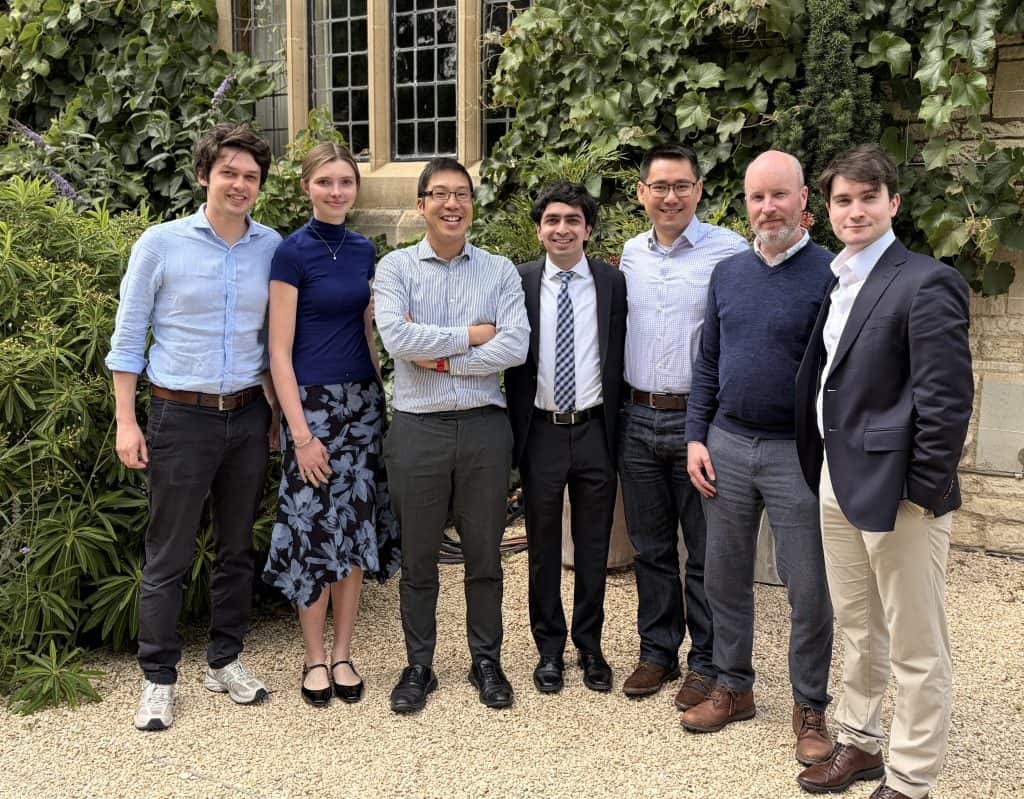
Four Queen’s students are among a group of Oxford Germanists whose translations of unfinished texts by the renowned Austrian writer Ingeborg Bachmann will shortly be published by Taylor Editions. Elizabeth Dallosso, Sam Edwards, Anna Standish, and Adesh Takhar, all second-year Germanists at Queen’s, have contributed to Fragmented: A New Translation of Selected Unfinished Todesarten Texts, a new volume bringing together translated fragments by renowned Austrian woman writer Ingeborg Bachmann. They worked alongside two students from Somerville College, with the volume edited by Dr Isabel Parkinson, Lecturer in German at Queen’s.

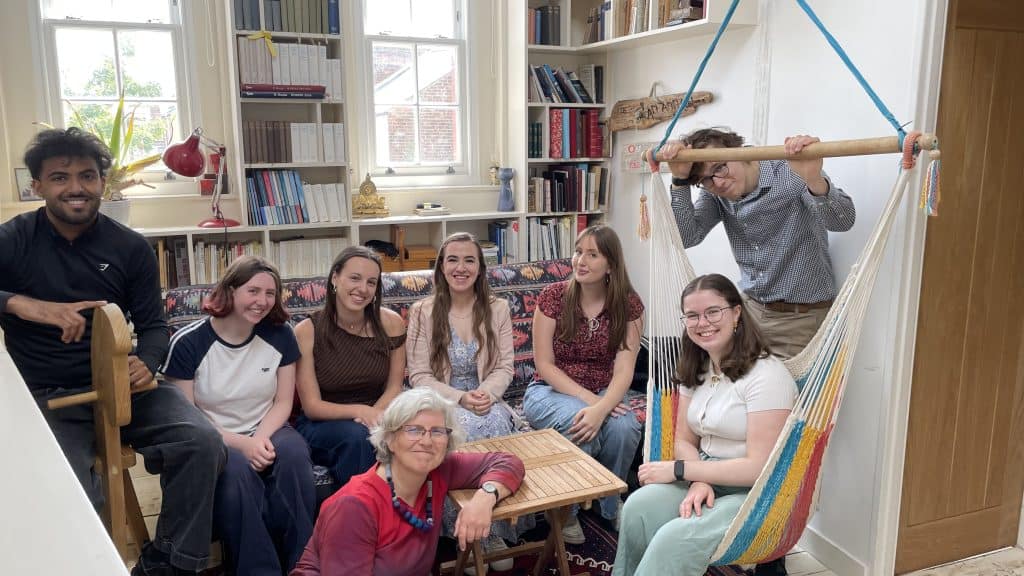
team photo for 'Fragmented A New Translation of Selected Unfinished Todesarten Texts'
Team photo

Bachmann is widely regarded as one of the most significant German-language writers of the twentieth century. Her Todesarten project, often translated as “Ways of Dying”, remained unfinished at the time of her death, leaving behind a body of fragmentary and complex prose. For the student translators, this incompleteness became central to the intellectual and creative task of the project.

Creative translation

The group described the work as “a welcome opportunity to explore and enjoy translation in a more creative and experimental manner”, following a first year in which their translation work had focused mainly on shorter pieces and exam preparation. Unlike the individual translation exercises more familiar from their course, this project required sustained collaboration and close debate.

The students said: “Our emphasis remained very centrally on collaboration throughout the whole process, ensuring every sentence had multiple voices and interpretations. This decision stemmed primarily from the nature of Bachmann’s writing. Unlike the texts from our first year, we were immediately struck by the complexity and ambiguity of the writing.”

That complexity often led to long discussions over individual words, sentence structures, and competing interpretations. The group found that the most challenging passages were frequently the most rewarding.

We learnt how to approach these conversations productively and it was often the most debated sections of the texts which produced the most satisfying resolutions for everyone involved.

The role of human translation

The project also prompted the students to think carefully about the role of human translation at a time when AI translation tools are increasingly common. The students were clear that no generative AI was used in producing the translation. Instead, they emphasised the value of first-hand linguistic judgement, and shared interpretation.

“In a world increasingly relying on AI translation as a quick, convenient, cheaper method of translation, projects such as this are essential in preserving the importance of first-hand translation,” they said.

Having only briefly encountered Bachmann’s writing before, the students found themselves engaging with her work primarily through the act of translation. This brought an unusually intense attention to word choice, rhythm, style, and structure.

Rather than trying to translate as quickly as possible with little external help, as we would for our usual exam practice translations, we exhausted the resources at hand because we all wanted the translation to be as good as it could be.

The value of collaboration

As well as translating the texts themselves, the students have written their own translators’ introduction for the volume, reflecting on their process, their collaborative approach, and the significance of having their work published while still undergraduates.

For the Queen’s students, the project has offered an opportunity to contribute to a published literary translation and to take part in a wider conversation about creativity, authorship, and the continuing importance of language study.

The students said: “Translating for the Taylorian Editions Writers in Residence series has broadened our perspective on the use and importance of translation as a still very much relevant and important skill. We have enjoyed the creative challenges and the opportunity to use our imagination to create something that we hope reflects the innovation of Bachmann’s writing.”

They added:

Knowing that this project will be published makes all the hard work we’ve put into this, hours spent debating individual words, staring at a screen trying to figure out what Bachmann meant, and reading around the text, incredibly worth it. We cannot wait to get a copy of the published work.

Editor’s comments on human translation in an age of AI

Editor Dr Parkinson noted that: “For every one word that has ended up in the final volume, at least twice the number of alternatives was discussed by the translators. In slowness, debate, friction, puzzlement, we found connection, humour, sometimes distaste, resonance. I hope that this thought process is visible in the finished work. I hope that it does not read like something flatly perfect generated in minutes by AI. I hope it has character, idiosyncrasies, that it invites conversation.”

In the era of AI translation and LLMs, this edition seeks to explore afresh how a human mind and voice are presented in text, how prose is constructed and translated by human minds, and what may be individual, creative, and distinct about work written and processed by humans.

The fragments and drafts of the Todesarten are extraordinarily wide-ranging, and the selection and order of texts here does not intend to represent a definitive interpretation, and certainly not to constitute an exhaustive collection of Bachmann’s thinking about, and experiments with, a mind in text. Instead, its purpose is to allow our own minds to enter into and participate in the text, as readers, thinkers, and translators – and, of course, to offer more Anglophone readers the chance to encounter Bachmann. It is a testament to the broad themes of her works, to her characteristic voice, and her absorbing narrative threads, that they can be slotted together in a new order and open up fresh resonances. As will be seen, part of the question which I and the other translators asked ourselves was what we discover about the original texts precisely by re-ordering and translating them, especially in translating different versions of the same text.

This is the heart of my own thinking on translation: what happens when we treat the process of translation – or, as in this bilingual edition, the process of comparative reading – as a distinct literary lens in itself? What do we learn about the author, about German, about English, about ourselves?

Fragmented: A New Translation of Selected Unfinished Todesarten Texts will be published by Taylor Editions as part of the Taylorian Editions Writers in Residence series.

Header image: cover artwork for the book by Queen’s third-year student Emily Dicker.

Queen’s students take on a global pollinator threat

A student-led iGEM team at Queen’s is working on an ambitious synthetic biology project with real-world consequences: protecting honeybees from the devastating Varroa mite. Blending biology, biochemistry, chemistry, engineering and biomedical science, the team is developing an RNA-based treatment designed to last longer, target the problem more precisely, and offer a more sustainable alternative to existing controls. Their work shows how Queen’s students are turning interdisciplinary ideas into practical science with the potential to support pollinators, agriculture and environmental health. We asked the team to tell us more.

For those unfamiliar with iGEM, what is the competition and what makes it a distinctive opportunity for students?

igem team member Lisa's profile photo
Lisa

Lisa (1st year Biochemistry): iGEM is the world’s largest synthetic biology competition, bringing together over 400 student teams each year to tackle pressing global challenges through science and innovation.

Teams conduct laboratory research, fundraise for their projects, and engage with stakeholders and experts, developing their ideas with the design-build-test-learn cycle in engineering. The competition culminates in the annual iGEM Grand Jamboree, where teams around the world showcase their projects to leaders in academia, biotechnology, and industry, competing for medals and special prizes.

Since its founding in 2003, the competition has built an international community of over 100,000 ‘iGEMers’. Teams can access a registry consisting of genetic parts, data, and tools shared by past iGEM teams, whilst contributing their own resources, fostering a culture of collaboration.

What makes iGEM particularly distinctive is its emphasis on multidisciplinary collaboration and real-world impact. Alongside scientific research, teams incorporate diverse perspectives from different disciplines, and consider the ethical, social, and environmental implications of their work through Human Practices. This ensures that projects are not only scientifically innovative, but also safe, feasible, and responsible. As a result, hundreds of iGEM projects have led to real world startups, demonstrating the lasting impact that student research can create.

Hundreds of iGEM projects have led to real world startups, demonstrating the lasting impact that student research can create.

Your project focuses on honeybees and Varroa mites. Why does this problem matter globally, and what impact could a solution have?

Lisa (1st year Biochemistry): Honeybees are among the world’s most important pollinators, it is estimated that one in every three bites of food we take depends on pollination. However, honeybee populations face a growing threat from the Varroa mite, a parasite that has devastated colonies worldwide. In the US alone, Varroa has been involved in 60% of honeybee colony losses. Their recent spread to Australia further spotlights the severity of the challenge: the parasite was first detected in 2022, and merely a year later, New South Wales declared that ‘Varroa eradication was no longer feasible’.

It is estimated that one in every three bites of food we take depends on pollination.

Varroa mites impair bee survival by feeding on their fat tissues, important for immune function and metabolic health. Furthermore, Varroa can transmit honeybee viruses, most notably deformed wing virus (DWV), significantly reducing their lifespan. Combined, these effects can exacerbate colony health, and ultimately, lead to colony collapse. Besides, a key Varroa control method is acaricides (pesticides used against mites and ticks). While these may be effective in the short run, acaricides need to be repeatedly applied, some acaricides negatively impact bee behaviour and health, and some mite populations have already developed resistance towards synthetic acaricides. Acaricide residues have also been detected in the environment and bee products (e.g. beeswax, honey), raising concerns on human and environmental health.

Altogether, this calls for a solution that is affordable, non-toxic and effective, providing long-term protection for honeybee colonies with minimal off-target effects. Such a solution would have profound impacts in supporting agricultural industries, strengthening food security, and safeguarding the wider environment.

Can you explain your project in simple terms and what makes your approach innovative?

igem team member Freddie's profile photo
Freddie

Freddie (1st year Biology): Our iGEM project is developing a treatment using RNA-based technology to protect bees more effectively and for longer than anything currently available. The most promising existing product works by delivering a molecule called dsRNA (double-stranded RNA), which disrupts the mite’s biology by specifically targeting a gene involved in reproduction. While this reduces mite numbers by 30–40%, the effect is short-lived. Within six weeks, mite populations bounce back to pre-treatment levels. There’s also a critical blind spot: mites do their most serious damage to bee larvae, yet most treatments are consumed by adult worker bees, meaning the drug rarely reaches where it’s needed most.

We’re tackling this in two ways. The first involves a gut bacterium called Snodgrassella alvi, which naturally lives inside bees. By genetically engineering this bacterium to continuously produce dsRNA, we can create a self-sustaining treatment that doesn’t need constant reapplication—a living medicine that travels with the bees themselves. To make this work well, we’re identifying strong genetic “switches” (promoters) that maximise how much dsRNA the bacterium produces, and we’re exploring ways to make the modification permanent within the bacterium’s DNA.

We can create a self-sustaining treatment that doesn’t need constant reapplication—a living medicine that travels with the bees themselves.

The second approach targets the larvae directly. Nurse bees—who care for developing larvae—feed primarily on a protein-rich food called bee bread. We plan to engineer yeast to produce dsRNA, then incorporate this yeast into “pollen patties”, a common hive supplement. Nurse bees eating these patties would absorb the dsRNA and pass it on to larvae during feeding. Research has already shown this kind of transfer can happen naturally, so we’re building on an existing biological pathway. Rather than just suppressing reproduction, our dsRNA treatment is designed as a combined cassette hitting three targets: mite reproduction, direct mite killing, and DWV.

We’re fortunate to have access to the Oxford Bee Laboratory, which can test our treatments in real hives and controlled environments—giving us the chance to see how our approach performs in living colonies.

What has it been like working as an interdisciplinary student team across biology, biochemistry, biomedical sciences, chemistry, and engineering?

Freddie (1st year Biology): The interdisciplinary nature of iGEM projects requires a broad range of scientific expertise, creating valuable opportunities for team members to learn from one another. This was especially evident during the project selection process, when the team came together to explore and debate ideas ranging from synthetic microbial communities for Mars to bacterial amino acid production factories. Working in such an interdisciplinary environment is highly motivating, as it provides a platform for transforming innovative biological concepts into solutions that can be implemented to address real-world challenges.

Working in such an interdisciplinary environment is highly motivating, as it provides a platform for transforming innovative biological concepts into solutions that can be implemented to address real-world challenges.

For many of the first-year students on the team, iGEM also represents their first opportunity to participate in a substantial research project. Doing so alongside students who have already contributed to scientific publications, as well as PhD researchers nearing completion of their theses, has provided unparalleled access to a highly motivated and engaging research community. The breadth of our project, combined with the need to consider the societal and ethical dimensions of honeybee therapeutics, continues to create valuable connections both within Oxford’s scientific community and with collaborators further afield.

How has your experience at Queen’s helped support or shape your involvement in a project like this?

igem team member Michael's profile photo
Michael

Michael (2nd year Biomedical Sciences): Throughout my two years at Oxford, Queen’s has always been a multidisciplinary environment rich with insightful conversation. I often found myself engaged in scientific discussion, with the dining hall as a familiar backdrop. My friends and tutors at Queen’s always gave me freedom to fire off any idea I had, moulding my curiosity and refining my ideas. That said, my curiosity often drifts outside the bounds of science, and I wanted to do something that could have an immediate impact and reach more people.

I often found myself engaged in scientific discussion, with the dining hall as a familiar backdrop.

I first heard of iGEM from a friend in Medicine, and it was ultimately advice from an upper-year student at Queen’s that convinced me to take part. The first stage of iGEM was a project pitch, a perfect place to actualise the crazy ideas I’d thought up at dinner tables. The following stages involved experimentation, and lots of fundraising and outreach. Beyond the science, Queen’s has played a key role in supporting our project. From the little things, like the outreach opportunities I’ve been able to glean from my conversations with fellow Queen’s students; to the huge things, like the funding support, and the enormous contributions of my two first-year team members at Queen’s. Even now, the College is helping out by spreading our story. I hope that this article can spur enthusiasm for more student-run projects at Queen’s, and that more people learn about the amazing work our iGEM team has done.

What have you found most exciting or challenging about taking part in iGEM so far?

Lisa (1st year Biochemistry): For me, the level of independence that we have over our project is both the most exciting and most challenging aspect of iGEM. iGEM provides us with the opportunity to shape every stage of the process, from start to finish: identifying a problem, pitching our ideas, fundraising, engaging with stakeholders and experts, designing a solution, creating social media and website content…

There is so much that we could possibly do, and the freedom to explore is incredibly exciting. But, this also comes with responsibility. With limited time and resources, we had to make numerous decisions, such as which global issue to tackle, which experiments to run, and how to best develop our project. Reaching a consensus with such a large, multidisciplinary team can sometimes be challenging, especially when deciding on whether we should pivot or stop pursuing certain ideas, but those difficult discussions often led to stronger outcomes.

While exciting and challenging, iGEM has become a genuine passion project for our team. We dedicate time outside our studies to visit labs and hives, meet up to exchange our ideas, and hop on calls with sponsors, experts or stakeholders outside working hours. What makes this experience so rewarding is the special sense of ownership that we gain from leading different parts of the project, and we are really excited to see how our idea develops over the coming months.

Student-led research projects like iGEM depend on practical resources, from laboratory reagents and consumables to modelling tools and competition costs. What does it take behind the scenes to turn an idea like this into a working scientific project?

Michael (2nd year Biomedical Sciences): A lot of planning and coordination go into procuring resources for the project. The team first has to come up with a rough budget estimate, covering participation fee, accommodation, scientific tools, and outreach costs. This budget is then categorised and refined by individual teams. For example, the R&D team devises the needed protocols and tools for experimentation, then the budget is updated accordingly.

Once an estimated budget and required tools are specified, the amazing Fundraising team works its magic, setting fundraising goals and turning cold emails into cold cash. Fortunately, there are a wealth of sponsors eager to support iGEM projects, including former iGEM participants, funds for junior researchers, and prominent lab equipment companies who are the mainstays of many iGEM sponsor lists.

Whilst the process may seem straightforward, our funding was a result of meticulous planning from the R&D and Human Practices team, followed by the tireless efforts of the Fundraising team. On a more abstract level, the process is driven by a shared scientific enthusiasm between the team and the sponsors. All our planning and outreach are driven by this enthusiasm, which is then felt and reciprocated by our sponsors. The fundraising process is still in full force, and anyone interested in donating is more than welcome to contact us via the College!

What are your hopes for the project, both scientifically and in terms of the impact it could have beyond the competition?

Lisa (1st year Biochemistry): While the competition concludes in autumn, we hope that our project can be applied to protect honeybees in the real world. Moreover, we hope that our project’s impact can extend much further through the scientific knowledge we discover, the skills that we develop, and the interest in honeybee protection we spark across academia, industry, and the wider community.

Scientifically, we are excited to run experiments and explore approaches that have not yet been done before. We seek to generate genetic parts, data, and insights that can be built upon by other iGEM teams, academics, and companies working on related RNA-based technologies and honeybee protection.

Beyond the laboratory, we aim to produce a solution that is not only scientifically effective, but also acceptable by beekeepers and deployable in the real world. Conversations with beekeepers and industry councils have exposed us to the severe challenges that Varroa poses, with spillover effects beyond beekeeping. Our goal is therefore to safeguard honeybee colonies to support the apicultural and agricultural sectors, whilst promoting environmental sustainability.

Finally, we are eager to engage the wider community through two-way dialogue and outreach events, through raising awareness on honeybee health, RNA-based technologies, and the use of synthetic biology in an ethically responsible manner. By presenting science in an accessible manner, we look forward to promoting scientific literacy and inspiring the next generation of scientists and innovators.

The fundraising process is still in full force, and anyone interested in donating is more than welcome to contact us via the College: news@queens.ox.ac.uk.

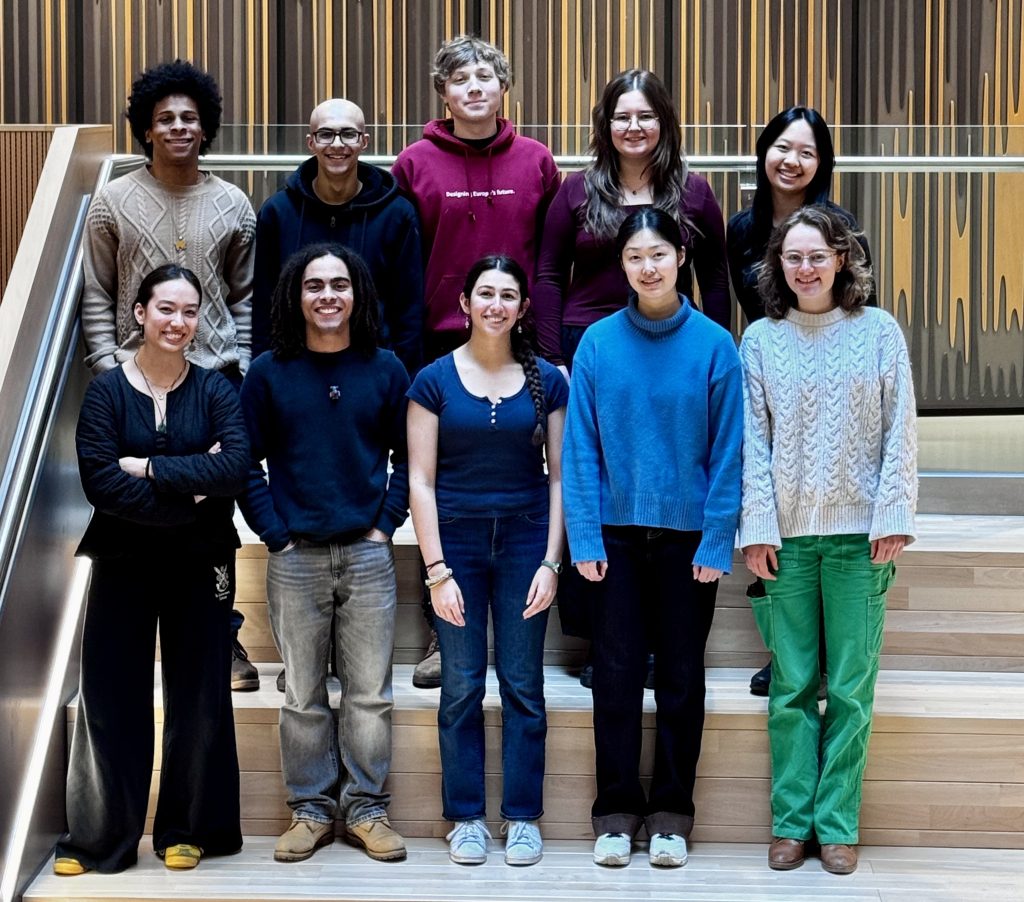
igem team photo showing ten students lined up in two rows on some stairs
iGEM team photo

Researchers at Queen’s are playing a leading role in a new £6.7 million ARIA-funded project to rethink how we grow food. Bringing together expertise from medicine, biology, and industry, the interdisciplinary team, including Queen’s Professors Chris O’Callaghan and Steve Kelly, is developing a new synthetic biology approach to improve the yield and resilience of staple crops, such as potato and wheat, in the face of climate change and rising global demand. Prof O’Callaghan tells us more.

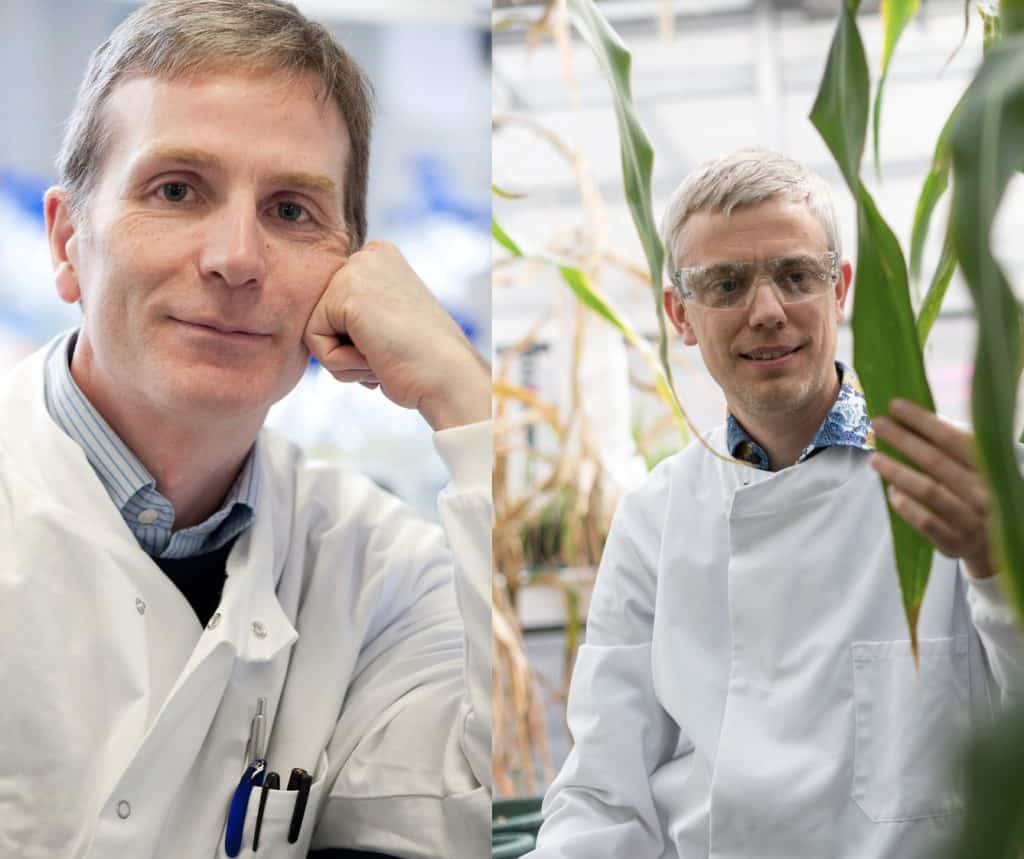
Professors Chris O’Callaghan (left) and Steve Kelly (right)

Chris O'Callaghan profile photo wearing a lab coat and Steve Kelly profile photo taken in the lab surrounded by plant samples

Your lab developed the DNA assembly platform being used in this project. Can you describe what the platform does and why it’s so significant for plant biology?

Scientists have been able to make short stretches of DNA relatively easily for several decades. However, at present it is not possible to synthesise long DNA molecules directly. Therefore, to make long stretches of DNA it is necessary to stitch together multiple shorter DNA fragments. Over time various methods have been developed to do this, but they have a series of drawbacks that have limited the creation and application of long DNA molecules. Key challenges have included the need to avoid certain problem sequences when assembling the shorter DNA fragments and the insertion of unwanted ‘scar’ sequences between the fragments that are being assembled. The techniques have also been relatively complex requiring large numbers of DNA hosts during the assembly; this in turn leads to inflexibility in the design of the assembly. This is a particular limitation in situations where it might be desirable to test for differences in the properties of DNA molecules with variations in their sequence as might, for example, occur between individual members of a single species. 

Our method, known as UniClo, allows us to assemble any DNA sequence without restrictions on that sequence. It does not leave any unwanted scars between the DNA molecules being assembled and it does not require multiple DNA hosts, making it very easy to use and conferring great flexibility in the design of the assembly.

What are the biggest technical challenges involved in building and then replacing an entire chloroplast genome in a crop like potato or wheat?

Our assembly method works well now, so the main technical challenge will not be the assembly itself, but our ability to obtain the right fragments to assemble. We aim to assemble the genome from DNA that has been synthesised directly, but some DNA sequences can be challenging to synthesise, for example, if they fold up on themselves in particular ways. There is also a possibility that when the DNA is made and assembled it may undergo a process known as recombination which can alter the sequence of the DNA through process such as the deletion or shuffling of the order of sections of the DNA.

Coming from the field of medicine, how did you find yourself part of a project on plant biology and food security?

DNA sequences are surprisingly similar across the plant and animal kingdoms. We embarked on DNA assembly of large DNA molecules because we needed these large molecules for experiments related to our biomedical research interests. However, when Steve Kelly and I were discussing this, we realised that the pieces of DNA that we were making for our biomedical research were broadly similar or larger than the size of the chloroplast genome, so we should be able to make a whole synthetic chloroplast genome.

There are very important reasons for doing this. Chloroplast genomes are inherited from one parent, so it is not possible to breed plants to obtain desirable characteristics from two different chloroplasts. So, for example, if one plant from a particular species has a chloroplast that conveys drought resistance and another plant has a chloroplast that conveys disease resistance, it is not possible to breed a plant that contains a chloroplast combining these two features. However, if you synthesise a chloroplast, then you can put the DNA variants that encode drought resistance and the DNA variants that encode disease resistance into one chloroplast and so generate a plant that has both these desirable characteristics.

If you synthesise a chloroplast, then you can put the DNA variants that encode drought resistance and the DNA variants that encode disease resistance into one chloroplast and so generate a plant that has both these desirable characteristics.

This project brings together expertise from biology, medicine, synthetic DNA technology, and industry. What have you learned from working outside your immediate academic discipline?
Teamwork and humility. It has been great fun working with people outside my usual discipline and very educational. I now know much more about plants that I did originally. We all work together and have regular friendly meetings. It is always humbling to realise how much expertise people have in areas that you know very little about. That is one of the great things about working in a multi-disciplinary college!

Queen’s DPhil student Melody is bringing research out of the library and into the Ashmolean Museum this term, leading a series of tea-tasting sessions to explore ‘sensory archaeology’ and the role of taste in understanding historical cultures, using tea in China as a case study.

Supported by a highly competitive Public and Community Engagement with Research (PCER) grant, the sessions offer a rare opportunity for the public to take part in student research at the Ashmolean and bring together academics, artists and heritage specialists. We asked Melody to tell us about her research.

Can you tell us a bit about what is meant by the phrase ‘sensory archaeology’?

Sensory archaeology is a theoretical stance that argues past human senses can and should be studied through material culture. It is important to understand the sensory world of the past because the cultural value we give to different senses also shapes how society was (and is still) structured. 

It is important to understand the sensory world of the past because the cultural value we give to different senses also shapes how society was (and is still) structured.

Your current PCER grant-supported project asks a deceptively simple question: what makes the perfect cup of tea? How and why are you testing that at the Ashmolean?

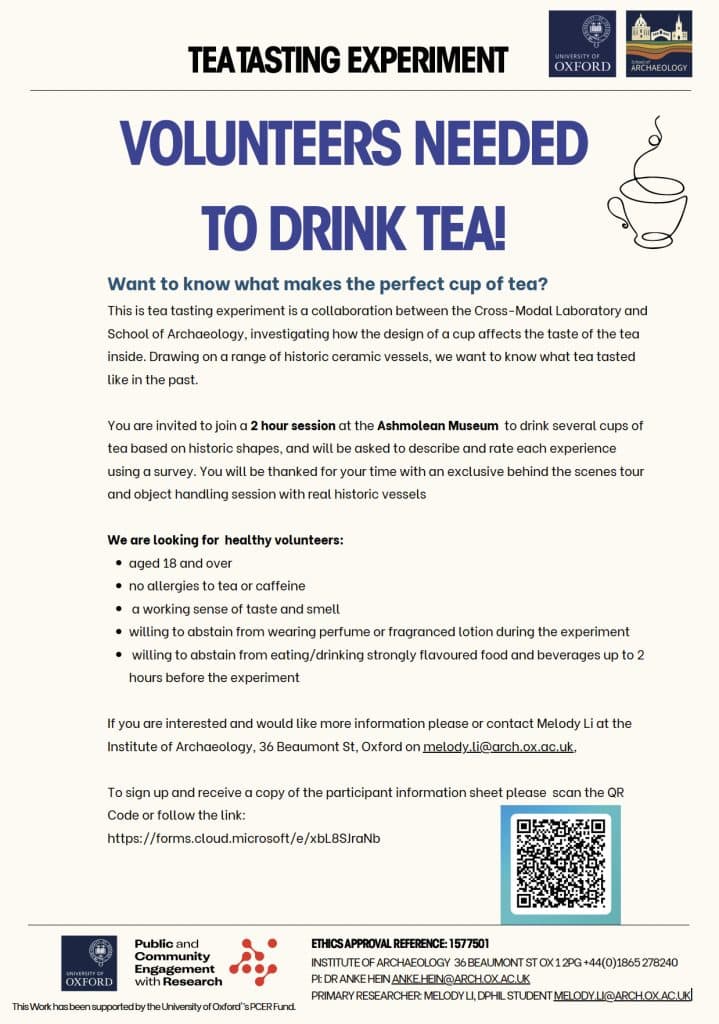
We will test this through a sensory evaluation (like a survey), which is a standard practice in the food and beverage industry. We are testing this at the Ashmolean Museum as many of the cup designs will be based on vessels from the Ashmolean’s collection, which also correspond to archaeological examples of cups I have encountered during my research. We need 100 participants, so this is also a chance to create an immersive experience where people not just visit the museum and look at objects, but ‘taste’ them too. 

This project brings together archaeologists, scientists, artists, and a museum. How have those different perspectives shaped the way the experiment has been designed?

The experiment design has become a balance of addressing the most fundamental needs and limitations of each perspective. Archaeologists and scientists want rigour in terms of controlling all the variables, the museum needs a format that will be comfortable and enjoyable for participants, while working with the artist has given a maker’s, rather than a user’s, view of these cups. We also ran two special sessions with the local Chinese community, and the experiment also had to accommodate community needs such as providing Chinese language facilitation and bilingual surveys and consent forms. 

There’s a strong sensory element: taste, smell, even the absence of perfume or strong flavours beforehand. Why is controlling those factors so important?

Our perception of the taste/smell of food and drink are easily influenced by many factors, so we need to remove as many interferences as possible. 

What have been both the key challenges and the most enjoyable elements of leading a public-facing research project in a space like the Ashmolean as a DPhil student?

The most enjoyable elements have been working with the Ashmolean Museum staff and local community leads to create an event that will be not just be useful for my research but also enjoyable for the participants. Finally sharing the event with our initial Chinese community sessions was so exciting — seeing my research actually bring enjoyment to other people, especially non-academics, was so meaningful. However the biggest challenge has also been trying to make sure all the logistical puzzle pieces are in place while observing museum guidelines. 

Seeing my research actually bring enjoyment to other people, especially non-academics, was so meaningful.

This is a collaborative project funded by the PCER grant, co-designed and executed with the help and expertise of the following people:

PI: Dr Anke Hein, School of Archaeology 

Prof Charles Spence, Crossmodal Research Laboratory

Dr Jenny Wang, WeaveYard https://www.weaveyard.com/

Jynsym Ong, Magdalen Studios https://www.jynsymong.com/

Dr Luciana Carvalho, Department of Chemistry 

Beth McDougall, GLAM/Pitt Rivers Museum 

Ashmolean Museum Public Engagement with Research Coordinator 

Ashmolean Museum Teaching Curator 

tea-tasting experiment call for participants poster with the title 'volunteers needed to drink tea'

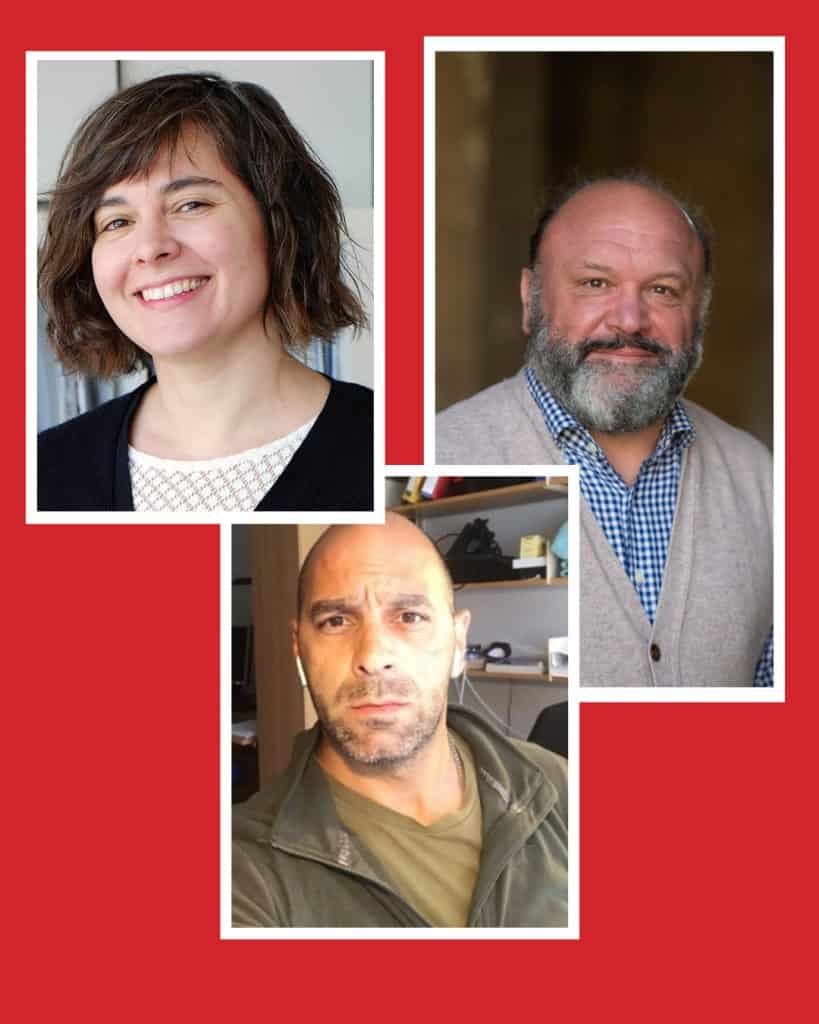
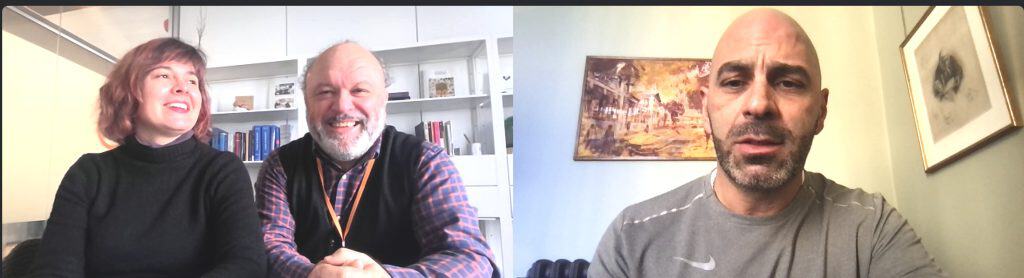
We spoke to Fellow in Mathematics Prof José A. Carrillo about his research and how, from swarms to stock markets, mathematics can help explain make sense of a complex world.

What first drew you to mathematics, and when did you realise it was something you wanted to pursue at the highest level?

In many ways, my journey began with exceptional teachers. Inspiring school educators play a decisive role in nurturing mathematical talent, and I was fortunate to encounter exactly that. I owe a great deal to both my school and my university for providing such a strong foundation. Participating in local Mathematical Olympiad competitions was another turning point: this challenged me, motivated me, and ultimately convinced me that mathematics was not just a subject I enjoyed, but a path I wanted to pursue at the highest level.

Your research uses Partial Differential Equations to model real-world phenomena. How would you explain what you work on to someone without a mathematical background?

Many systems in the world, whether in physics, biology, or even economics, are made up of vast numbers of interacting components. These might be particles in a plasma, cells in the body, animals in a swarm, or even agents in financial markets. Trying to track each individual component quickly becomes impossible due to the sheer scale involved.

This is where mathematics becomes powerful. Instead of following every individual element, we use differential equations to describe the collective behaviour of the system as a whole. These models allow us to uncover patterns, predict outcomes, and understand large-scale phenomena that would otherwise remain hidden. In essence, we move from complexity at the microscopic level to clarity at the macroscopic level.

Instead of following every individual element, mathematics uses differential equations to describe the collective behaviour of the system as a whole.

Your research spans disciplines from physics and engineering to neuroscience and social systems. What excites you most about applying mathematics across such diverse fields?

Mathematics is often described as the language of nature, a phrase attributed to Galileo that still resonates today. What excites me most is its universality. The same mathematical ideas can describe seemingly unrelated systems, from neural activity in the brain to the formation of social networks.
This ability to distil complex problems down to their essential structure is incredibly powerful. At the same time, each application requires careful adaptation. The challenge and the beauty lies in shaping mathematical tools so they meaningfully capture the intricacies of each field while revealing the connections between them.

Mathematics is often described as the language of nature, a phrase attributed to Galileo that still resonates today. What excites me most is its universality.

Many of your models explore collective behaviour, from particles and cells to neurons. What can mathematics reveal about how complex systems behave as a whole?

At the individual level, systems are often governed by relatively simple rules. But when many individuals interact, entirely new behaviours can emerge, what we call “collective” or “emergent” phenomena.

Mathematics provides a framework for bridging this gap. By moving from individual descriptions to averaged, large-scale models, we can begin to understand how patterns form and evolve. This approach helps us answer questions such as how heat distributes across a spacecraft during re-entry, how cells organise and spread in biological tissues, or how groups make decisions. It reveals how complexity arises from simplicity.

Mathematics reveals how complexity arises from simplicity.

You’ve received a number of major international honours in recent years. What do these kinds of awards mean to you personally?

Recognition from one’s peers is always meaningful. It reflects not only years of hard work, but also the collective effort behind any scientific journey. Receiving honours from institutions in Spain and Italy is especially significant to me, Spain as my home country, and Italy as a place I feel deeply connected to. These awards are both humbling and motivating.

You teach across the full breadth of applied mathematics. What do you most enjoy about teaching?

I particularly enjoy teaching differential equations and mathematical modelling, as they sit at the heart of how mathematics connects with the real world. More broadly, I believe mathematics should be approached as a unified discipline. Rigour and application are not opposing forces, they complement each other. When combined effectively, they create a richer and more meaningful learning experience.

I believe mathematics should be approached as a unified discipline. Rigour and application are not opposing forces, they complement each other.

What do you value most about mentoring early-career mathematicians?

One of the most rewarding aspects is seeing young researchers develop their own ideas and identities. Supporting them as they build their own research paths and gain independence is incredibly fulfilling. Nurturing the next generation is not only a responsibility, but one of the most important contributions we can make as academics.

Nurturing the next generation is not only a responsibility, but one of the most important contributions we can make as academics.

Looking ahead, what kinds of questions will define the next decade in your field?

The intersection of mathematics with data science, artificial intelligence, and machine learning will play a defining role. Understanding and using these technologies from a rigorous mathematical perspective while contributing to their development will be essential. This represents both a challenge and a major opportunity for the next generation of mathematicians.

How do you see the role of academies and professional societies in shaping the future of mathematics?

These institutions play a vital role in representing the discipline. They help articulate the importance of mathematics in modern society, provide informed guidance to governments and industry, and advocate for the value of scientific thinking. In many ways, they ensure that the foundational role of mathematics in technological progress remains visible and understood.

What would you say to students who may feel daunted by mathematics?

Mathematics today offers more opportunities than ever before. Its applications span an extraordinary range of fields, from academia to industry, technology, finance, and beyond. While it can be challenging, it is also deeply rewarding. Studying mathematics equips you with a way of thinking, a toolkit for solving problems, that is invaluable in almost any path you choose.

Studying mathematics equips you with a way of thinking, a toolkit for solving problems, that is invaluable in almost any path you choose.

Professor Richard Bruce Parkinson has devoted much of his career to showing how poems written four thousand years ago can still move us.

From two decades at the British Museum, to his new commentary on the Egyptian poem, The Life of Sinuhe, he has sought to bring ancient voices into the present.

As a child, Richard Bruce Parkinson, Professor of Egyptology at the Faculty of Asian and Middle Eastern Studies and Fellow of Queen’s, was fascinated by his father’s books on Egyptian art.

He recalls:


The pictorial and visual nature of the script really intrigued me. It was a shock to realise that ancient poetry could still speak to us like modern poetry.

That realisation carried Richard from his undergraduate studies at Oxford, through 20 years at the British Museum, and back again. At school, Richard was torn between studying English literature or Egyptology at university.

‘In the end I decided that as a native English speaker I could manage English literature on my own more easily than I could explore Egyptian poetry,’ he says. This choice brought him to Queen’s, where he completed his undergraduate and graduate studies.

His first permanent job was at the British Museum, initially as a graphics officer. His father, an art teacher, had trained him in drawing, and that combination (someone who could both read and copy inscriptions) got him the post. He stayed for over 20 years, becoming curator of papyri and written culture.

Working with artefacts and manuscripts really gives you a sense of their materiality. With a papyrus, you get to know the mistakes a scribe makes, the corrections, even an accidental fingerprint… and this humanises the ancient text. I’m a dreadful typist and some scribes’ handwriting is appalling, so we have a common ground in that sort of incompetency.

Unable to do fieldwork in Egypt due to Type 1 diabetes, he valued the experience of handling artefacts every day, which changed how he thought about Egyptian texts; he learnt not just what they said, but how they were made and read.

Professor Parkinson with the main papyrus of The Life of Sinuhe in the Ägyptisches Museum, Berlin, 2025 (Credit: Biri Fay)

Those years also showed him the value of collaborative team-playing, something that he appreciates very much in the current Egyptology subject-group at Oxford.

He also speaks with delight about working alongside conservators and designers. ‘Watching somebody doing something well is just such fun,’ he says. He has enjoyed working with the Bodleian Libraries’ team on an exhibition about the Tutankhamun archive: ‘There was complete collaboration and complete trust; it was such a joy, and a rather nostalgic experience for me’.

It’s a joy that still influences his research today. For Richard, a poem is the result of a network of authors, copyists, performers, readers, commentators, and conservators who all help create the meaning.

When Richard returned to Oxford as Statutory Professor of Egyptology, his aim was to work on The Life of Sinuhe, a poem from around 1850 BC.

‘It’s the text I really became an Egyptologist to read,’ he says.

This masterpiece of Egyptian poetry tells of a courtier who panics at the king’s death and flees Egypt. He prospers in exile but never feels at home. Only through the mercy of the new king does he return to Egypt to be buried with honour.

For all its fame, no one has produced a full commentary on the poem since 1916. ‘That seemed rather careless given it’s universally acknowledged to be the greatest surviving work of Egyptian literature,’ Richard says.

The main Middle Kingdom copy of Sinuhe, with the scribe’s handwriting (P. Berlin 3022; © Ägyptisches Museum und Papyrussammlung, Staatliche Museen zu Berlin; photographer: L. Baylis, the British Museum).

Over the past decade, and with the help of a British Academy / Leverhulme Trust Senior Research Fellowship between 2024 – 2025, he has written a commentary of around 1,000 pages, re-examining every verse in the light of new philology, archaeology, and performance, checking parallel passages and trying to chart the effect of word after word, in order to suggest some of the responses that the poem was intended to produce.

For Richard, the fascination of Sinuhe lies in its portrait of a human voice. ‘One of its core themes is the differences between the official way a person has to describe his own life and the actual experienced reality,’ he says. ‘And, in this case, the life doesn’t go wonderfully well.’

He feels an affinity with its troubled protagonist. ‘I can relate to Sinuhe’s sense of uprootedness, his struggle to find an identity and a real home.’ Having left the northeast of England for Oxford as a teenager, he knows what it is to feel out of place.

Richard has always believed that poetry is more than text on a page. He has worked with the actress and author Barbara Ewing who has recorded a recital of Sinuhe as part of the project. The experience had a profound effect: ‘The text we take two months to read in class takes 40 minutes in performance and the emotional intensity is overwhelming.’

Barbara’s performance also showed how much of the poem’s power lies in its silences and pauses, the meanings underneath the words. ‘It’s continually about what cannot be said. Why did he flee Egypt? He can’t explain it. But that is exactly what poetry does: it lets the unspoken rise to the surface.’

Listen to Barbara’s performance of Sinuhe

His commentary, then, is designed very much as a ‘reader’s commentary’, one that brings together the scribe’s handwriting, the cultural and archaeological contexts, the landscapes, performance insights, and also students’ contributions from his classes.

For him, teaching and research run in parallel: ‘Every time you read a poem in a class with students, you have to read it again yourself as if for the first time, and I think teaching is very inspirational.’

Above all, he wants it to bring the poem back to life and foster a sense of empathy:

I want readers to smile, to weep – simply to feel what others have felt.

Professor Parkinson (middle) visiting one of the locations mentioned in the poem, the Gebal Ahmar near Cairo, with Tim Reid and Hebatallah Ibrahim, 2019.

Oxford has been both a home and challenge.

The College, with its long Egyptological tradition and northern roots, has always been an immensely supportive home for Richard, he says. But he admits he has often felt uncomfortable elsewhere in the University. ‘I’m a gay diabetic northerner; working here has made me feel more vulnerable because of my sexuality and disability than I ever did growing up in Thatcher’s Britain.’

That experience has shaped his view of what really matters in scholarship. ‘Confidence is an overrated academic virtue. What we need when approaching ancient poetry is humility, not a sense of entitlement’. It is, he suggests, one lesson of Sinuhe, which is about a man forced to confront and live with his own failings.

Richard’s work has rarely stayed within neat boundaries. His time at the British Museum taught him to think materially as well as textually; his collaborations with actors showed how performance shapes texts. He has employed what he calls a ‘queer philology’, looking for non-normative voices in narratives, alternative endings and ambiguities.

‘Egyptian poetry often celebrates the untoward’ he says. Richard has also written widely on queer history, including the best-selling and influential A Little Gay History based on the British Museum’s collections.

Although Sinuhe has been a major project, Richard is already looking ahead. He will be continuing his work with mathematician Professor Christopher Hollings at Queen’s, exploring the history of ancient Egyptian mathematics. ‘I used to curate the Rhind Mathematical Papyrus at the British Museum,’ he says. ‘Thanks to this friendship, I’m finally understanding what it’s about’.

I want people to read the commentary and then throw it away. I want them to go back to the original text and try to feel for themselves what the ancient audiences felt.

Oxford University Press has asked him to prepare a revised and updated edition of the Oxford World Classics anthology of Egyptian poetry, which he published early in his career in 1997.

Egyptology, he notes, has developed enormously since then: ‘we’re a very young discipline, and our knowledge of texts has advanced rapidly; looking back, I’m proud to realise that quite a few of the advances are due to people I’ve supervised.’ Revisiting the book, he adds, will be ‘exciting to see how much better we understand the poems than 30 years ago.’

Richard argues that ancient poetry should not be regarded as a museum piece but as living expressive culture: ‘in reading, we can experience another culture in its own words, to see it from inside. And poetry also confronts us with ourselves, showing us the possibilities of experience beyond our own narrow world.’

After ten years of work, Richard is clear that his commentary is only a bridge to the poem itself. ‘I want people to read the commentary and then throw it away. I want them to go back to the original text and try to feel for themselves what the ancient audiences felt.’

With thanks to the original source: Pulse, Oxford University.

Professor Jasmina Panovska-Griffiths, Lecturer in Probability and Statistics at Queen’s, has co-led a major international study published in Nature Health (February 2026) that introduces a novel “gamified” approach to infectious disease modelling. Here she tells us more about the app and how it seeks to fill a critical knowledge gap.

What are Epigames and what’s the knowledge gap they seek to address?

Epigames are a proxy for the spread of infectious diseases across different contexts and settings. They are controlled situations in which participants join a simulated epidemic via a gamified smartphone app. Over the course of the game, participants interact with each other, enabling the Bluetooth signal between phones to measure mutual proximity, contact duration, and social connection. 

Epigames fill the knowledge gap that exists between complex and data-driven policy-relevant models of pathogen transmission and the data they require on the networks on which pathogens spread and the behaviour of the participants during the simulated outbreak. 

By thinking of epigames as “real-world agent-based simulations,” researchers can observe how actual humans behave during an outbreak. This would allow scientists to calibrate computer-based agent-based models using rich, empirical data on human decision-making and social networks, leading to much more accurate predictions of how infectious diseases like influenza or COVID-19 actually spread.

By thinking of epigames as “real-world agent-based simulations,” researchers can observe how actual humans behave during an outbreak.

How does gamifying the modelling process allow people to engage with the research?

One way to think about epigames is like “real-world agent-based simulations” where the agents are actual humans. Then we can consider the epigames as a “gamified modelling process” that would allow us to generate data on how participants interact with each other, how they respond to changing states from susceptible to infected or recovered, and how they make decisions like whether they isolate after being told they are infected, or if they choose to take a vaccine in response to the simulated spread with rewards/penalties built-into the app. This gamification of the modelling process allows epigames to be uniquely capable of gathering not only real-life contact networks, but also behavioural and attitudinal data from the participants. 

What else is different about this approach and how might this assist with pandemic planning?

Epigames leverage mobile technology to measure contact networks across social settings, environmental conditions and various contexts, while explicitly integrating behavioural data. What is different about epigames, compared to previous similar concepts, is their applicability to different settings and contexts and the high degree of mechanistic realism via simulating disease spreads over proximal interactions just as direct contact pathogens do. 

The information generated from epigames is relevant beyond the game context and is crucial knowledge into how people may respond during real outbreaks. This data can facilitate more accurate development and calibration of realistic computer-based agent-based models on which different interventions can be simulated and their impact on the epidemic trajectories explored.

This data can facilitate more accurate development and calibration of realistic computer-based agent-based models on which different interventions can be simulated and their impact on the epidemic trajectories explored.

The ability to conduct behavioural network science experiments in natural, every-day settings via epigames in a flexible and tailored way is their novelty. This opens up the possibility of collecting data that is externally valid by being able to replicate the complex social contexts and realistic disease exposure patterns of daily life.

What kinds of interventions are you able to test?

Due to their flexible construction, epigames are adaptable and can test a wide range of interventions to reduce disease spread. In the course of the game participants make decisions on whether to wear a mask, take a diagnostic test, or receive a vaccine, with varying costs and benefits associated with different decisions. Hence epigames can be used to evaluate both non-pharmaceutical or pharmaceutical interventions during an outbreak. Additionally, games can give information on the effect of individual-targeted strategies (e.g. messages targeting to the most connected individuals), group-based strategies (e.g. behavioural nudges addressing all members of densely-knit cliques), and induction approaches (e.g. introducing opinion leader “seeds”) to stimulate peer-to-peer diffusion of protective behaviours.

How does this innovative approach affect the accuracy of the results?

In modelling of infectious diseases spread, data on the underlying networks on which pathogens spread, including their temporal and spatial structures and how interventions alter the spread, are scarce, inconsistent, and seldom incorporate behavioural features. This produces a primary challenge for policymakers that human behaviour is often treated as a constant in models, when in reality, it is highly variable. Epigames provide four critical data streams that traditional models lack: high-resolution contact networks, quantifiable behavioural data, attitudinal data from surveys, and environmental factors, like weather.

Human behaviour is often treated as a constant in models, when in reality, it is highly variable.

How can this approach inform future practice and policy?

The data generated from the epigames can be readily integrated with sophisticated policy-relevant models to give a better understanding of how different environmental factors, behavioural data, and interventions that affect epidemic trajectories during epidemic outbreaks. 

The pipeline from epigames to policy-making integrates mathematical, statistical, and behavioural modelling with experimental epidemiology, ensuring predictions are driven by data reflecting actual human variability. Because our approach and resulting models are grounded in empirical data rather than assumptions, their outputs are more likely to be trusted by decision-makers compared to purely computational approaches.

Epigames provide an adaptable mechanism for testing a wide range of interventions to reduce disease spread. By implementing epigames with different incentive structures to “nudge” participants to make decisions that modify their susceptibility to infection or transmission rates during the game, researchers would be able to test hypotheses on individual perceptions and network factors that influence behaviour.


From liver disease to the archaeology of trees, What’s Brewing at Queen’s? brings graduate research out of the seminar room and into a relaxed, sociable setting. We spoke to the series’ organiser, Sanjna, about how this informal lecture series is creating space for curiosity, conversation, and cross-disciplinary exchange.

Sanjna

“What’s Brewing at Queen’s is an informal lecture series, designed to give current MCR (graduate) students the chance to talk about their research in a relaxed setting. The lectures are short and aimed at a non-specialist audience, with the goal of sparking conversations between members of the College across different disciplines. Queen’s students do a lot of very interesting research, and the goal is to create a space where students can learn from each other, without the pressure of a more formal academic environment.”

Sanjna profile photo taken in Front Quad

Where did the idea come from?

The lecture series itself was inspired by an event called “Lectures on Tap”, run in New York and other cities around the world, where academics give light-hearted lectures for a lay audience in a bar or brewery, resulting in an entertaining event which also contributes to public engagement with research. One of the highlights of Oxford’s collegiate system is access to an incredibly diverse academic community outside your own discipline, and we wanted to draw on that community in a more fun, light-hearted way.

One of the highlights of Oxford’s collegiate system is access to an incredibly diverse academic community outside your own discipline.

What does a typical evening look like and how is it different from a more traditional academic talk?

A typical evening involves a small group of College members gathering in a cosy venue – most recently the Provost’s Lodgings – to listen to short lectures by two MCR members. The lectures are always delivered over drinks and snacks, resulting in a very relaxed, fun environment, and they are usually interactive. Unlike more traditional academic talks, our lectures are aimed at a non-specialist audience, and are intended to spark discussion. The goal is to make learning accessible and fun, and some speakers have even taken a more comedic/entertaining approach to explaining their research. Since the audience is small and also made up entirely of fellow College members, the environment is more low-stakes, and we hope that this removes any pressure speakers may otherwise face while presenting in a more formal academic setting.

Why was it important to create a space where graduate students could talk about their research informally, and to a mixed audience?

Interdisciplinary conversations can have immense value: they allow one to view their research questions with a new, more diverse lens, and can be a springboard for new ideas and collaborations. Especially as students specialise in their training with higher postgraduate degrees, having access to interdisciplinary spaces becomes even more crucial. However, graduate students typically have a busy schedule with several formal academic commitments, so we felt that adding another would create more barriers to participating in these conversations. Therefore, it was important that we made the environment as relaxed as possible to encourage participation. We want this series to spark more organic conversations that continue even outside the lecture – in the MCR, Hall or Beer Cellar as well. From an audience perspective, the informal setting is also important because it creates a space where there is less hesitation to ask questions. Since the audience is assumed to be non-specialist, there are no “stupid questions” – everyone is here to learn, and all questions are welcome, which makes it easier to engage with the speaker during the Q&A. 

Interdisciplinary conversations can have immense value: they allow one to view their research questions with a new, more diverse lens, and can be a springboard for new ideas and collaborations.

What kind of research topics have featured so far, and have any conversations or moments really stayed with you?

The lectures so far have spanned a breadth of topics, ranging from improving diagnostics of liver disease to alternative paradigms for understanding reparations for human rights violations. Upcoming lectures include topics such as the archaeology of trees and the mechanisms underlying inflammation. One thing that’s stood out to me has been that while disciplines vary in the questions they seek to answer, the approaches and tools they employ can be useful even beyond that discipline. For example, a speaker who was researching tree-killing in Canada was using tools and tests usually used by chemists, while another speaker studying music and the cultural experience of listening was combining approaches from musicology, the processing of sound, and audiology in her research, proving that modern-day research is a lot more fluid and interdisciplinary than one might think. 

How do speakers approach explaining their research to a non-specialist audience?

We’ve had very engaging speakers so far that have done a wonderful job making their lectures accessible to non-specialists. Speakers vary in their approach to meeting this goal, but typically, lectures are devoid of jargon and technical terms and focus on the bigger picture rather than minute methodological details. There is an emphasis on providing enough context, so the audience understands the story, without getting overwhelmed by details. We’ve also had some very interesting analogies used to explain concepts, and some fantastic visual representations as well. Not all research stories are complete, and those often make for very interesting lectures, since they invite further thought and discussion, and it is fascinating to see how differently trained academics approach the same questions.

What do you think graduate students gain from organising and speaking at events like this, beyond sharing their research?

There is immense value in making your research accessible to a non-specialist audience. Doing so demands that you have a clear and focussed understanding of the problem or question your research seeks to answer, and preparing a lecture helps one narrativise one’s research into a story, which is an important skill for students to develop. Additionally, talking to students outside of your field can help you view your questions with fresh eyes, or bring to light new tools and approaches one could try as well. 

If you were trying to convince someone to come along for the first time, what would you say to them?

Studying at Oxford gives you the unique opportunity to interact with brilliant people in all disciplines, who do cutting-edge research. Learning about all the latest research can be incredibly fun, and who better to learn from than the students at the very frontline of it! I’d encourage anyone who wants to learn something new, in a relaxed setting with no pressure, to come along to a lecture with an open mind.

Learning about all the latest research can be incredibly fun, and who better to learn from than the students at the very frontline of it!

What’s surprised you most about how people engage with research in this kind of relaxed setting?

I’ve been pleasantly surprised by the nuanced, and often quite detailed level of engagement speakers get during the Q and A. Even in this relaxed setting, the audience is very perceptive and plays close attention. We’ve had some very interesting questions come up, not only direct questions about lecture content, but also questions that have invited further discussion beyond the scope of the short lecture and made for very interesting conversation at the drinks reception afterwards.

We spoke to new Fellow in Physics Dr Nakita Noel about her research into how new materials could transform solar energy.

Your work sits at the crossroads of Physics, Chemistry, and Materials Science. How do you describe what you do to someone outside your field?

One of the most fascinating and, in my opinion, most important technological developments is to control the interaction between light and matter. One of the most well-known applications in this area are photovoltaic solar cells where light is absorbed by a semiconductor and converted into electrical power. In LEDs or lasers, this process happens in reverse, where we apply electrical power to a semiconductor and thus produce light. What I am personally interested in is the development of new materials that have outstanding light-matter interactions. Importantly, my interests span from conceiving of the elemental composition, to the synthesis and characterisation, to the eventual application in a device.

To what extent are you driven by pure scientific interest in your research and to what extent are you motivated by wanting to affect change, for example to address climate challenges?

Being interested in Physics stems from my childhood; I was the youngest of four and looked up to my big brother in particular who was studying Physics. He would teach me what he was learning about, and I clearly remember the book he used and how it sparked my curiosity about how the world worked. When you start studying Physics initially, you spend a lot of time learning things that just have to be learnt but it’s good to pause a moment and ask what something really means.  Maybe you know the fine detail but it’s good to look up and think oh, that’s what it does, that’s why this is the way it is. It’s this real-life aspect that makes it exciting. I like solving puzzles and I think science is the best way to do that. So, the thing that really motivates me is yes, doing cool science but doing cool science with a purpose. One day, maybe ten years from now, I might look up and see halide perovskites on someone’s roof and say hey, I worked on that.

I like solving puzzles and I think science is the best way to do that.

You’ve talked about being a translator between Chemistry and Physics; can you explain what you mean by this?

The thing that’s interesting about the specific area I work in is that you can’t really get a full understanding of these systems by just doing the Physics or just doing the Chemistry. You must understand what’s going on with every component of a semiconductor system and how these different areas impact on each other. For me the breakthroughs happen when you can look at things from every angle and stitch together what’s going on. Very often Chemists and Physicists are saying the same thing but using different language to say it. If you can see this, make the connections and fill in the gaps, then things will click into place.

What first drew you to study semiconductor materials and what makes them so fascinating to you?

I’m very intrigued by light-matter interactions but specifically, the development of new solar cell materials drew me to the field. Solar cells are such an obvious solution to our increasing need for more energy without the catastrophic downsides of increased fossil fuel consumption. What is required to make solar power more ubiquitous and to truly rival conventional energy sources is to make its deployment even cheaper and its initial carbon footprint even smaller.

Can you explain how you are working with new materials to improve their photovoltaic application for solar energy and other technologies?

Halide perovskites are currently the most promising new material class that has the potential to significantly boost solar technologies. There is a variety of properties that sets these semiconductors apart from their conventional cousins, but there are a few that are truly noteworthy:

  1. Because they are such good absorbers, even extremely thin layers absorb practically all available light. To put some numbers it, the average human hair has a diameter of about 75 μm, a perovskite absorber layer is about 150 times thinner.
  2. By modifying the elemental composition of the halide perovskite, we can change its bandgap which determines the fraction of the solar spectrum it can absorb. This allows us to stack several layers of different compositions on top of each other to absorb different fractions of the solar spectrum separately, and thus we can substantially increase the overall conversion efficiency of such so-called “tandem” stack compared to solar cell containing a single absorber layer.
  3. A third amazing property is the fact that these materials can be deposited with a variety of deposition methods such as thermal evaporation or inkjet printing without requiring highly specialised high-temperature ovens for example.

All these properties have direct implications on the technology as part of the renewable energy source portfolio, for example the use of tandem solar cells. At the same time, modulating and controlling these properties requires a deep understanding of the fundamental relationship of the absorber Chemistry and Physics. It is very exciting to me that even when I work on some of the most fundamental aspects of this technology the ramifications of my findings often have a direct impact on the technology on a much more applied level.

It is very exciting to me that even when I work on some of the most fundamental aspects of this technology the ramifications of my findings often have a direct impact on the technology on a much more applied level.

You’ve developed new ways to control crystallisation. Can you explain how this might change the stability or efficiency of future solar materials?

Crystallisation is probably the most important process of making perovskite solar cells. The reason is that this process not only controls the quality of the absorber but will also determine its longevity. The underlying mechanism is that during this process the order of the crystal is set. The more disorder or defects the crystal contains, the less efficient and resilient the absorber will be. Especially, high absorber durability is critical for solar cells since once they are part of a solar panel, we want them to continuously and efficiently convert sunlight into electricity for decades.

You study how materials assemble themselves. What’s the biggest challenge in understanding such complex processes at the atomic level?

Ha. I’m not sure there is one biggest challenge. Everything is challenging, but that’s what keeps it fun! In general, we have to use inference from certain observation to draw larger conclusions regarding processes and mechanisms. However, often a lot of uncertainty remains as to what actual happens on the atomic or molecular level. That’s one of the motivations of my research to use cryo-electron microscopy and nanodiffraction to take actual snapshots of processes taking place at the atomic level. Here one of the biggest challenges is that the mere process of looking at the material may impact its behaviour, so we need to be very careful and diligent to ensure that our observations are not the result of us taking these snapshots.

What does this mean in the context of making new kinds of solar panels?

One of the ways I describe it to people is by getting them to think of the best cake they have ever eaten and then I say I will give them the ingredients for it but no recipe and ask if they think they can recreate that exact cake. The answer is probably not. But if I give you the recipe then you probably could. Depending on what kind of cake you want to make, the different methodologies matter: you can’t just throw all the ingredients together without mixing them properly. This is similar to making multi-component materials because you are bringing a lot of things together and hoping for the best but things at the nano-scale can actually be very different to how they look at the macroscale. You may think everything is perfect, but at the atomic scale things are not perfect at all. How can I control that? To control it, you need to understand it so we spend a lot of time doing electron microscopy and trying to figure out how if we change the way we put the elements together it can change the integrity of the material we create at the nanoscale. If we can control the integrity of the material at the nanoscale, does it affect long-term device stability? The answer to that question is yes, and we have a paper forthcoming to explain more. I find it very cool to try to understand the entirety of a system from literally how the atoms come together, to a product you can put on your roof to power your home.

I find it very cool to try to understand the entirety of a system from literally how the atoms come together, to a product you can put on your roof to power your home.

You teach a wide range of topics, from optics to statistical Physics. What do you most enjoy about teaching Queen’s students?

Obviously, the students. Getting my footing as a new Tutorial Fellow still feels quite daunting sometimes because you’re teaching a lot of things! What is a thoroughly redeeming aspect, however, is when I can see how the penny drops and one of my students goes from being completely confused to having this amazing spark of understanding. That is really gratifying. They often push my understanding as well because they never stop asking why! It’s really fun to be honest; we have some great Physics students at Queen’s and I really enjoy teaching them.

How does your research influence the way you teach, and vice versa?

In my research I try to connect the most fundamental science to applications. This holistic view is something that definitely shapes how I think about teaching. Meaning, I want my students to consider the larger picture, especially when they get bogged down in the details of a problem. I think the ability to zoom out and take the wider perspective is a critical skill for scientists to have which is what I’m trying to impart to all my students…even at the graduate level!

You supervise students at every level, from MPhys projects to DPhil researchers. What do you look for in a good research question or student project?

For MPhys and student projects, the research question needs to be well-circumscribed and self-contained, while still remaining interesting. In contrast, DPhil projects should start with an open and original question. To a large extent, I expect my DPhil student to develop their very own approach to asking the important questions, as I see asking the right questions as one of the most important developments for any budding scientist. A good research question should seek to fill a gap in our understanding, and (hopefully) is something we can build on so that we gain a deeper understanding of the world in which we live.

A good research question should seek to fill a gap in our understanding, and (hopefully) is something we can build on so that we gain a deeper understanding of the world in which we live.

What do you think makes Physics at Oxford particularly exciting?

One aspect of Physics at Oxford, in particular Condensed Matter Physics, that I personally find very exciting is that we span the entire spectrum from very fundamental research to very applied technology development. We’re also a big department and cover so many areas of Physics that there’s always something new to learn!

Your research could play a role in the future of sustainable energy. How do you see Physics contributing to solving global challenges?

New technological developments, especially in the area of energy generation and storage, will be key in tackling global challenges. Here, I see Physics, and especially the kind of Condensed Matter Physics that also incorporates important aspects of Chemistry and Materials Science, as one of the most critical fields of science.

Science often advances through collaboration. How do you bring together physicists, chemists, and engineers in your work?

Since my group’s research focus is truly at the overlap of Physics, Chemistry, and Materials Science (and a little black magic), that is reflected in my team members as well who also have diverse scientific backgrounds. It allows us to look at a problem from various aspects and develop a holistic understanding of a given problem. I appreciate the fact that we all have such varied expertise that somehow overlaps perfectly. Personalities are important too! I’m really fortunate that people in my team get along so well…having fun together makes the work so much more satisfying because you succeed as a team. In my collaborations, I also work frequently with groups in the Materials or Chemistry departments and there, the same principles apply.

The field of Materials Science is evolving fast – what’s on the horizon that excites you most?

Specifically in my field, there’s a variety of emerging materials that have been predicted to have very interesting light-matter interactions, but so far no one has been able to make and/or characterise them. More broadly, I think leveraging large-data sets and artificial intelligence to predict materials and properties has a lot of potential to be very exciting, particularly as it means people like me have more materials to probe.

In your opinion is using AI with large data sets its main strength?

I am not an AI sceptic, but I am cautious. I am a firm believer that if you’re going to do  something, you should do it right so, because it’s not my area of expertise, I prefer to hold off until I know what I’m doing!  The kinds of things we do use it for already are pattern recognition and helping us sort data.  We can, of course, do this without AI, it just takes significantly longer. This is very different from a student taking their problem sheet to ChatGPT and asking for the answers. Used correctly these tools can aid understanding of concepts but there’s a real problem if you outsource all your work to them because then you don’t actually understand anything.

What do you advise your students to do in order to gain genuine understanding?

I always try to teach my students early on not just how to ask the right question but how to sanity check yourself because people can easily get stuck in a problem and no longer critically evaluate the way they are thinking about it.  That’s one of the reasons why collaborating with people is so important. When others challenge your ideas, it helps you reset your bearings. Scientists need ongoing ways to verify their assumptions so that their hypothesis remains the best one supported by the data. It’s not about having an absolute right answer (though you may have one) it’s about formulating the best and most logical explanation you can given everything you have in front of you.

When others challenge your ideas, it helps you reset your bearings.

Is that why you encourage the undergraduates to work as a cohort?

Absolutely. It’s also because nobody is brilliant at everything, I’m certainly not! It’s important to recognise the things that are not your strength and you have two choices at that point: you can find someone else who is good at them and work together, or you can say I want to be good at this too and find someone who can teach you. Either way, you are collaborating. You will get a more complete answer when you look at a question from different points of view and learn from others, and the best part of science is continuously learning new things.

What do you enjoy about being at Queen’s?

I think one of the really great things about being at Queen’s is being frequently exposed to so many different people who are in different disciplines. Everyone is very friendly, and you always end up having the most fantastic conversations. I always really look forward to having those seemingly unrelated conversations that really make you start thinking about your own work in a new light, but especially the ones that are so far out of your wheelhouse. There’s always something new to learn and it’s awesome having so many willing teachers!

Can you recommend a book?

The Knowledge Machine by Michael Strevens is a very interesting account of how the scientific method evolved and what its foundations are. I think especially for students who are considering a career in a scientific field this book is immensely valuable because it highlights the very foundations of modern science.

Header photo: David Olds

A conversation over lunch at Queen’s has led to a breakthrough collaboration spanning neuroscience, applied mathematics, and international research. What began as an informal exchange in the Senior Common Room between neuroscientist Dr David Menassa and applied mathematician Prof José Carrillo quickly revealed an unexpected overlap in their work on microglial development, the brain’s immune cells. Read their paper online.

Their serendipitous meeting set in motion a partnership with Prof Amanda Sierra’s team in Spain, ultimately uncovering a fundamental “switch” in early brain development shared between mice and humans. This cross-disciplinary effort, rooted in the everyday collegiate life of Queen’s, shows how ideas sparked over lunch can grow into research with implications for understanding neurodevelopmental and neurodegenerative disease. We asked the trio to tell us more about their work.

How did your chance meeting in the Senior Common Room at Queen’s lead to a research collaboration and published paper? How did you realise there was common ground in your research?

David: I met José over SCR lunch. We got chatting and slowly realised that the work I had done on human microglial development overlapped with his interests on applying mathematical models to predict changes of this cell’s phenotype during development. José had been collaborating closely with Prof Amanda Sierra from the Achucarro Basque Centre for Neuroscience in Spain and they were planning to get in touch with me regarding the human data I generated in a previous paper! It was a beautiful coincidence. We had our first meeting about the current work two years ago and I went on to validate some of the murine microglial findings in the human fetal hippocampus in samples from the Oxford Brain Bank.

Could you explain, in simple terms, what your collaborative study reveals about microglial development?

David: The brain has its own immune cells, called microglia, that help clean up waste and shape brain development. This study shows that early in life, microglia go through a key switch that is conserved in mice and human developments: first they divide a lot, then they slow down and become better cleaners/phagocytes. If this early growth phase is disturbed, the cells don’t develop properly and can’t clean the brain as well.  This research identifies that this step-by-step maturation of microglia is controlled by changes in how DNA is packed and regulated inside the cells. These findings suggest there is an early ‘critical window’ where problems with microglial development could increase the risk of brain disorders of development and advanced ageing.

What does mathematical modelling bring to neuroscience that traditional lab work alone can’t? How did this model help reveal the developmental ‘switch’ in microglia?

José: Amanda and I began discussing her project online in early 2022 during the pandemic, through contacts at the Basque Center for Applied Mathematics. She approached me with the idea that, given the amount of data her group had collected, mathematical modelling could help advance their research. Her team had been measuring microglial cell counts in various regions of the developing mouse brain, focusing on a time window that began five days after birth. They noticed that microglial density initially increased, then plateaued, and eventually decreased as development progressed.

Through a series of conversations involving members of both our labs and by asking targeted questions about microglial proliferation and maturation, we converged on the idea that a model with two cell populations, proliferative and quiescent, might explain the observed density dynamics although we did not discard a one population model. Amanda’s team then realised they needed experimental data specifically on proliferative microglia.

While they worked on collecting that data, we developed three differential-equation–based models: two assuming a single microglial population, and one incorporating separate proliferative and quiescent compartments along with brain-volume growth and other effects. Our parameter-estimation analyses showed that, of the three, the two-population model best captured the experimental data. Remarkably, it predicted a switch from proliferative to quiescent behaviour between postnatal days three and five, much earlier than the time points Amanda’s lab had been examining, which began at day five.

In response, Amanda’s lab collected new data starting as early as postnatal day two. The results confirmed that the predicted transition indeed occurred between the third and the fourth day postnatal, precisely as the model suggested. That confirmation was the first “light-bulb moment” in our collaboration, nearly two years ago and opened lots of questions and experimental verifications of this fact as next steps.

Mathematical modelling, numerical analysis, and statistical parameter estimation are powerful tools that, when combined with precise data from experimentalists, can create a productive feedback loop, advancing both mathematics and the biological sciences. In our case, this interplay prompted experiments that might not otherwise have been pursued, and it also pushed us to incorporate time-dependent brain growth into our cell-population models. This synergy ultimately allowed us to develop a mathematical model with genuine predictive power, the “holy grail” of mathematical modelling.

It soon became evident that we should test the model on human data, if available, to see whether the same switching behaviour appeared. That’s when David entered the picture. Interestingly, the first time I heard of him was through a paper Amanda had sent us; he had led this work during his postdoctoral Fellowship in Southampton. When I looked him up, I discovered that he had just joined Oxford and, remarkably, he was at Queen’s. What a coincidence! We met at lunch, talked science, and the rest is history.

What makes this finding (the early proliferative-to-quiescent switch) so important for understanding brain development?

Amanda: The moment we realised the biological implications of the predictions of the two-population mathematical model was really a light-bulb moment, as José says. It is actually a really basic biological behaviour that was beautifully identified through mathematics, something we called “terminal differentiation”: cells divide, then synchronously stop dividing (what we call the switch). We can now ask the question of what drives this synchronisation and try to understand what is specifically happening in the brain and in microglia at this precise time point, and what happens when we disturb it.

In the paper we tested the prediction that impairing proliferation led to dysfunctional phagocytosis. You may think of microglia as a three-dimensional network of soldiers, perfectly positioned – not unlike the testudo formation of the roman army. To protect the brain, microglia need to be distributed throughout the brain. If you alter proliferation and have fewer microglia, they are not going to be effective defending the brain from damage and will not become efficient phagocytes.

Another aspect that we are exploring now is how to exploit what we have learnt from the synchronised switch to generate better alternative models to study human brain diseases. We are particularly interested in the so-called “minibrains”: human brain organoids that we culture in plates in the lab. As the real brain, they also need their army of defenders and we believe we need to control microglial proliferation within the organoids to have them mature as phagocytes.

Why is it significant that these findings are conserved between mice and humans? How might this work inform our understanding of neurodegenerative diseases or neurodevelopmental disorders?  What are the implications of identifying an early “window of vulnerability” in microglial development?

David: It’s significant because it means this isn’t just a mouse quirk and it is a fundamental brain process shared across mammals, including us. Because mice and humans use the same “grow first, clean later” program for microglia, mouse experiments become much more relevant for understanding human brain development and disease. We can test drugs or interventions in mice with more confidence that they might work similarly in people. It suggests there’s a real early-life window in humans where disrupted microglia development could raise the risk of later brain disorders – and that window might be targeted for prevention.

How did you bridge the gap between applied mathematics and neuroscience, two very different scientific disciplines?

José: Talking about science openly, while recognising our own biases about other fields, and understanding that true excellence comes from different disciplines working together toward a shared goal is key to success. Social skills matter too; being professional yet friendly, communicative, and joyful helps create a positive work atmosphere. And, of course, good food and wine, whether in Bilbao or back at the College, helped spark creativity. 😊

True excellence comes from different disciplines working together toward a shared goal.

Amanda: I think we were extremely lucky to find José and his team, particularly Duncan Martinson and Carles Falco. The three of them have a unique combination of deep mathematical knowledge, curiosity for biology, and the rare ability to be able to explain what they were doing. On my side, I was very fortunate to have a talented, creative, and hard-working PhD student, Marta Pereira-Iglesias, who was able to manage a huge amount of experimental work. And then meeting David was the cherry on the pie. This was the most exhilarating experience in my scientific career, one that I really valued and enjoyed.

Were there any surprising insights or moments of misunderstanding that led to breakthroughs?

Amanda: This is an interesting story because we started off on the wrong foot. José’s team had been working on simple models but they did not fit the data. Then, they got captivated by one of our microscopy images where one could see microglia very close to the protein scaffolding that neurons use to migrate through the brain, and created the two-population model with the idea that there might be “free”  and “bound” microglia, so they allowed two types of microglia with different behaviours. This two-population model fit perfectly will all our datasets, but by analysing the model parameters we learnt that the difference between the two populations was not that they were bound or free. They were proliferative and not proliferative, and this is how we discovered the switch. So, by being wrong but open to exploration we ended up discovering a completely unexpected biological behaviour that now makes a lot of sense.

By being wrong but open to exploration we ended up discovering a completely unexpected biological behaviour that now makes a lot of sense.

What have you learned from working outside your immediate discipline?

David: That although we may speak different technical languages, we get closer to the truth by teamwork and by interacting with disciplines when it does not seem immediately obvious to do so. This is scientific research at its best.

Where might this research go next?

David: The next steps will be to further investigate the mechanisms of this switch in more thoroughly collected human data and closer-to-human models, the minibrains we mentioned previously, test the mathematical model on these data, and to investigate the relevance of this switch in sections from specific neuro-developmental and neurodegenerative disorders in humans.

What advice would you give to other researchers at Queen’s who might want to collaborate across fields?

David: Collaborate as much as possible. Science is about teamwork and cross-over between disciplines is the way forward to getting closer to the truth in science. And surround yourself with a team of people you can have fun with!

What’s the best thing about doing this kind of cross-disciplinary science at Oxford?

David: The best thing is how easy it is to discuss with people who think in completely different ways but care about the same big questions. In one building you can go from talking to a clinician who sees patients with Parkinson’s, to an immunologist, to a mathematician who wants to model your data. Oxford is small enough that these conversations happen over coffee rather than through months of emails, but big enough that you have world-class expertise and excellent international collaboration in almost any method you might need. That mix makes it very natural to turn a biological observation into a quantitative model and then back into a hypothesis you can test in the lab or even in patients.

Oxford is small enough that these conversations happen over coffee rather than through months of emails, but big enough that you have world-class expertise and excellent international collaboration in almost any method you might need.

Amanda, Jose and David on a Zoom call
Amanda, José and David on a Zoom call

When a former head of government is sentenced to death in absentia, the world tends to fix its gaze on the headline. But behind the spectacle of former Prime Minister of Bangladesh Sheikh Hasina’s conviction lies a far more complex set of questions about what justice really means in moments of national reckoning. In this conversation, a Queen’s DPhil student and human rights practitioner Taqbir Huda reflects on Bangladesh’s July revolution, the moral authority and fragility of international human rights law and criminal law, and the uneasy role that social media, digital evidence, and politicised courts now play in shaping public understanding of atrocity.

Drawing on years of documenting state violence and thinking critically about reparations, punishment, and due process, he offers a frank account of why justice must be more than symbolic – why it must be fair, durable, and capable of withstanding the pressure of both popular outrage and political revenge. Fresh from appearances on Al Jazeera and DW, Clarendon Scholar Taqbir Huda tells us more.

Do you think justice has been served in the sentencing of Sheikh Hasina or is the ruling purely symbolic? How do you define justice and what makes justice meaningful in practice rather than just in appearance?

For many Bangladeshis, there is a real sense of moral vindication in seeing a brutal dictator held legally responsible for the mass killings that occurred during a popular uprising. In that sense the judgment is perhaps not purely symbolic: it also has a communicative dimension of the kind Antony Duff writes about, in that it publicly condemns the shootings of students and civilians in the July revolution as state sponsored crimes against humanity under international law, rather than unfortunate excesses. An official condemnation from the state which acknowledges this difference matters greatly for realising justice.

At the same time, justice is not only about obtaining a conviction, but also about how likely that conviction will translate into actual accountability. A death sentence delivered in absentia, after a hasty trial that did not meet fair trial standards, risks looking more like victor’s justice than the kind of impartial accountability we owe to the victims. To me and most other human rights practitioners, justice for mass atrocities becomes meaningful when at least four elements come together: truth about what happened, accountability that is based on credible evidence and fair process (so no one can raise doubts about the legitimacy of the conviction), some form of reparation for victims and genuine institutional reform designed to prevent recurrence of past abuses. If any or all of these elements is missing, then justice becomes less meaningful.

To me and most other human rights practitioners, justice for mass atrocities becomes meaningful when at least four elements come together: truth about what happened, accountability that is based on credible evidence and fair process (so no one can raise doubts about the legitimacy of the conviction), some form of reparation for victims and genuine institutional reform designed to prevent recurrence of past abuses. If any or all of these elements is missing, then justice becomes less meaningful.

When you look at high profile trials like this one, what are the essential legal principles that must be protected if we want a fair process?

The basic principles under international criminal law are quite simple: the accused must be presumed innocent, have the right to be present at their trial, and be represented by independent defence counsel who act on their instructions rather than on the government’s and the ability to call and cross examine witnesses on equal footing with the prosecution, and the defendant must have a real right of appeal.

A novel challenge in cases like this is the emergence of evidence on social media. In Bangladesh, the July uprising generated an enormous amount of digital evidence: photos and videos of protesters being shot, run over by vans, thrown off the back of trucks, or beaten to a pulp by security forces and party cadres. That material has been vital for documenting what happened, but it also creates a risk that public opinion hardens around clips seen on social media long before any court evaluates them.

Verifying authenticity in a criminal trial involves much more than watching a clip on a phone. You need to establish where the file came from, how it was stored, and whether it was altered. During the revolution, I was working day and night with the Evidence Lab at Amnesty International to verify the hundreds of photos and videos that we received from partners and witnesses on the ground as well as open sources. This included checking metadata, time stamps and geolocation, matching buildings and landscapes on screen to real locations, comparing shadows and lighting, and asking forensic experts to analyse the audio and video for signs of editing or artificial generation. Later, working with colleagues at Tech Global Institute, which holds one of the largest archives of digital evidence of the July atrocities, has really brought home to me how the rise of artificial intelligence makes this even more complex. AI generated or altered content can look and sound convincing, which means courts have to be especially careful not to treat viral clips as proof beyond reasonable doubt without proper forensic testing and adversarial challenge in court.

AI generated or altered content can look and sound convincing, which means courts have to be especially careful not to treat viral clips as proof beyond reasonable doubt without proper forensic testing and adversarial challenge in court.

In that sense, the digital turn can put real pressure on the presumption of innocence in high profile cases: by the time a trial starts, many people already feel they “know” what happened from what they have seen online. A court that truly upholds the right to a fair trial has to be seen to push back against that pressure, not simply cave into it. In a case of this magnitude, the integrity of the process is just as important as the moral culpability of those who end up being punished.

Many people have noted that the tribunal used in this case was originally set up under the same leader it has now convicted. What does that tell us about the importance of judicial independence?

There is a striking irony in seeing Sheikh Hasina convicted by a tribunal that her own government created and used extensively against its political opponents, which led to many being able to seek asylum here in the UK under the Human Rights Act, but also led to the execution of high-profile opposition leaders who were not able to escape. Sheikh Hasina being awarded the death sentence by the very tribunal which she set up to execute her foes should serve as a sobering reminder to autocrats around the world: once you cull judicial independence and embed authoritarianism into a legal system, you may one day be subject to the same system you built. So you should not do unto others, what you do not want others to do unto you.

Judicial independence is not only about having in place formal guarantees in the text of the law, but about building a culture of adjudication that can resist pressure from whichever government happens to be in power.

Judicial independence is not only about having in place formal guarantees in the text of the law, but about building a culture of adjudication that can resist pressure from whichever government happens to be in power. Even a tribunal born in a deeply politicised context can, under a different constellation of social movements, professional ethics and international support and scrutiny, start to move in a more principled direction.

You have drawn on the phrase “the master’s tools will never dismantle the master’s house.” In legal terms, what does that mean and can systems built under authoritarian rule ever fully reform themselves from within?

In this context, “the master’s tools” are the very set of laws and institutions an authoritarian regime relies on to consolidate power: special tribunals with special emergency powers, vaguely defined offences such as “tarnishing the image of the state” and normalising exceptional derogations from human rights in the name of national security. These tools are designed to make the exercise of arbitrary powers look like lawful governance. As a human rights defender, I have spent the past decade censoring myself to escape the tools Sheikh Hasina’s authoritarian regime used to criminalise dissent. In 2022, I took the risky decision to join Amnesty International, an organisation blacklisted by the Hasina government at the time, to expose the human rights abuses it was committing in Bangladesh. I investigated and documented over 50 such cases: from enforced disappearances, extrajudicial killings to arbitrary detention etc.. I had to keep my affiliation a well-guarded secret. The last thing I wanted was as to face a criminal case for ‘spreading propaganda’ against the state – which had become the default response to any dissent. To avoid this risk, I used a pseudonym, burner phones/ email IDs; requested my colleagues to front our publications on Bangladesh; and avoided any public engagements, all to escape the state’s ever broadening radar of surveillance. I even added and then removed Amnesty from my LinkedIn. That’s how successful the state was in catalysing a culture of fear.

All this changed during the July 2024 revolution, when I decided I could no longer hide. I accepted an interview with DW News, the first international media outlet to report what was happening. That interview reached a million views in 24 hours and soon enough I found myself speaking to every international media outlet interested to listen, sharing the evidence we’d verified of the state’s brute violence against peaceful protesters. When the regime began killing children under a total internet shutdown, seizing every opportunity to spread the truth felt like a moral obligation.

Frantic days and sleepless nights followed, especially as the regime crossed more red lines each day and instructed its foreign missions to keep tabs on those ‘tarnishing the image of the state’ abroad. I could live with the risk to myself, but I could never forgive myself if something happened to my family – who I couldn’t even warn due to the communications shutdown. If the regime did not ultimately collapse on 5 Aug 2024 due to international and public pressure, I may’ve had to live in exile for the foreseeable future.

After Sheikh Hasina was toppled, and an interim government comprising of human rights lawyers and technocrats who faced the brunt of her oppression came to assume power, for a brief moment, it felt as if the entire apparatus might finally be dismantled. Instead, we are now witnessing the same repressive legislation the Awami League once crafted and used to eliminate its opponents—being turned back against the Awami League itself. That is the perverse circularity of revenge politics in Bangladesh, and exactly what I mean when I say the master’s tools are being used to rearrange the house rather than dismantling it altogether. Ultimately, democratic renewal requires more than the removal of an autocratic leader. It requires undoing the architecture of repression instead of rebranding it. Authoritarian laws outlast authoritarian rulers, so we have to dismantle them.

Ultimately, democratic renewal requires more than the removal of an autocratic leader.

Can such systems ever fully reform from within? Sometimes they can start the process, but only if those in power are prepared to give up the very tools that protect them. Abolitionist thinkers distinguish between reformist reforms, which make a violent system more efficient or more palatable, and non-reformist reforms, which actually shrink its footprint and shift power away from it. The latter would mean repealing emergency style laws, removing exceptions to constitutional guarantees, repealing offences that criminalise dissent, and accepting meaningful oversight by independent courts and international bodies. In a Foucauldian sense, it is less about giving power away and more about breaking up the circuits through which power is able to operate and dominate.

In your research on reparations, how do ideas of remedy and redress either complement or challenge the traditional focus on punishment?

In international human rights law, the right to an effective remedy has traditionally been interpreted as having two complementary dimensions: a reparative dimension, which is about redressing the harm done to the victim, and a punitive dimension, which is about holding the perpetrator criminally responsible. In practice, however, the punitive strand often dominates domestic justice policy, and the reparative strand becomes all but forgotten. We celebrate a lengthy sentence of incarceration or even a death sentence, while victims lack the financial means to meet the costs of their victimisation (i.e. medical care, income support). My doctoral thesis seeks to unsettle that hierarchy. I am trying to bring together two groups of critics who share the same concerns, but are not necessarily in conversation with one another: the first are critical human rights scholars who warn that an uncritical embrace of incarceration as the primary means of enforcing human rights risks expanding the very coercive apparatus that often produces the violations in the first place. The second is abolitionist scholars who warn that contemporary systems of incarceration sit on the afterlife of slavery and colonial control, and that any account of remedy that centres prison will reproduce racial and class hierarchies rather than dismantle them.

To this end, my research attempts to answer the following questions. How can we build accountability for human rights violations without expanding the carceral state? To what extent can monetary reparation replace carceral punishment as the most effective remedy for most human rights violations, in support of the abolitionist and restorative justice movements? I will attempt to show how the under-theorisation of monetary reparation under international human rights law has allowed the punitive dimension of the right to an effective remedy to take centre stage in human rights protection. I will then query to what extent, if at all, the existing criminal justice system be repurposed to serve more reparative ends. There are interesting experiments in that direction, from practices influenced by Maori principles in Aotearoa New Zealand to restorative justice projects in the United Kingdom, where criminal proceedings are designed to facilitate restitution, apology and agreement on concrete steps to repair harm, rather than only to impose suffering on the offender.

So for me, ideas of remedy and redress both complement and quietly challenge the traditional focus on punishment. They complement it when criminal accountability is part of a broader architecture of support for victims. They challenge it when we mistake the suffering of the perpetrator as the only or primary measure of justice, instead of asking whether the people who were harmed have actually been helped to rebuild their lives and whether our response to atrocity is reproducing the same racialised and unequal patterns of confinement that abolitionist thinkers urge us to move beyond.

How has your time at Queen’s and Oxford shaped the way you think about international law and justice?

Being at Queen’s and Oxford has given me the space to connect the very immediate crises I was investigating on a day-to-day basis as a human rights lawyer with a much longer history of doctrinal debates about sovereignty, responsibility and reparation. It is also where I have learned to hold together two instincts that used to feel in tension: the urgency of speaking out during a crisis, and the discipline of thinking carefully about what international law can and cannot do.

Being at Queen’s and Oxford has given me the space to connect the very immediate crises I was investigating on a day-to-day basis as a human rights lawyer with a much longer history of doctrinal debates about sovereignty, responsibility and reparation. It is also where I have learned to hold together two instincts that used to feel in tension: the urgency of speaking out during a crisis, and the discipline of thinking carefully about what international law can and cannot do.

The seeds of abolitionist thought that were laid when I started my Oxford journey in 2022 when reading for the MSc in Criminology are now beginning to bear fruit as I embark on my DPhil. Being exposed to critical sociological and criminological scholarship forced me to question how the language of human rights has been used to expand the power of the state to arbitrarily punish individuals. This was not an easy realisation as it forced me to confront my own complicity in this process. That experience now sits at the core of my work on reparations and remedies.

Being able to benefit from fortnightly supervision meetings with a leading scholar of human rights and international law, Professor Başak Çalı, has also been central in shaping how I think about the role of international law in shaping just outcomes at both the national, regional and international levels. Each meeting has felt less like a stocktaking of progress and more like a calibration exercise. Our conversations have made me much more attentive to the diffuse and contested nature of interpretive authority in international law – how states, domestic and international courts, treaty bodies and the wider epistemic community of scholars all participate in giving meaning to human rights norms – and to the strategic possibilities that such interpretive pluralism opens up for my own reparations project.

Beyond formal supervision, Oxford is saturated with small intellectual “incubators” that continually reshape how I think about law and justice: the Bonavero Institute of Human Rights, where you are surrounded by practitioners and scholars trying to make human rights law usable in the real world; the Public International Law Discussion Group, which brings together international lawyers every week to debate ongoing crises from genocidal warfare to anthropogenic climate change; and countless talks, reading groups and seminars where people from very different ideological starting points test each other’s assumptions. At a time when social media algorithms increasingly trap us in echo chambers and reward confirmation bias, that kind of structured disagreement is a rare gift; Oxford has been one of the few spaces where I feel I can genuinely escape that confinement and have my views changed by serious engagement with people who disagree with me.

At a time when social media algorithms increasingly trap us in echo chambers and reward confirmation bias, that kind of structured disagreement is a rare gift; Oxford has been one of the few spaces where I feel I can genuinely escape that confinement and have my views changed by serious engagement with people who disagree with me.

At the same time, College life at Queen’s has been a reminder that questions about law and justice can never purely be technical. Conversations with peers from different corners of the world who do not study law but have experienced or witnessed some form of injustice constantly destabilise my assumptions and keep me honest about both the limits of law and how radically different people’s intuitions about justice can be, even when we are using the same vocabulary. At lunchtime you can feel fairly confident in your working hypothesis, and then have it quietly dismantled over dinner by a chemist who has never read a human rights treaty but can ask the most disarming questions.

At lunchtime you can feel fairly confident in your working hypothesis, and then have it quietly dismantled over dinner by a chemist who has never read a human rights treaty but can ask the most disarming questions.

Queen’s also has given me the opportunity to engage with a tight knit community of law students thinking about law at very different stages and from very different angles. I find myself talking to first-year undergraduates in the dining hall about what “justice” means to them at the start of their law degrees; debating with master’s students taking a module on investor-state arbitration and hoping to go into commercial practice about how protections for foreign investors can make ambitious climate regulation harder; and comparing notes with fellow DPhil students about which paradigms of justice they situate their research question in, and how it compares to my own conceptions of a just world.

Queen’s College Law Society also creates space for candid conversations with law Fellows who bring decades of teaching experience. Those conversations often turn into quiet reflections on how legal education has evolved in an increasingly globalised and digitised world – from teaching ancient Roman law to grappling with human rights, climate litigation, and algorithmic governance in the same tutorial rooms.

What do you enjoy about your studies at Queen’s?

Studying at Queen’s has quite literally been a lifeline for me. Right before coming here, I was doing my master’s in law at Harvard with a view to transitioning into the PhD.  Yet when the Trump administration started relentlessly cracking down on international students while moving to revoke Harvard’s certification to host international students and Rumeysa Ozturk was abducted by masked ICE agents ten minutes away from me for simply co-authoring an op-ed, I had to seriously reconsider my initial plan. Life as a doctoral student thousands of miles from home was going to be taxing enough; could I bear the added burden of being dehumanised daily by a tyrannical regime? More importantly, could I live a life where I indefinitely suspend my right to free speech just to keep my visa valid?

Studying at Queen’s has quite literally been a lifeline for me.

It was in the middle of that uncertainty, during a class on injunctions against arbitrary presidential action, that the email arrived telling me I had been awarded a Clarendon Scholarship, partly funded by Queen’s. With less than a one percent chance of being nominated and then selected, it was not an outcome I had allowed myself to expect. When it came, it felt like a door opening out of a situation that was becoming untenable. The fact that I can now focus on my DPhil full-time, rather than juggling multiple jobs just to pay rent, is a huge privilege—especially when so many international doctoral students do not have that safety net.

That experience colours how I see Queen’s and Oxford. It reminds me that being here is never just about individual merit; it is also about visas, funding, and political decisions far beyond any student’s control. It is why I feel a particular responsibility to support Queen’s outreach work with school students from under-represented communities as an Outreach Facilitator. The first law taster session I designed for a group of Year 11 students was, by coincidence, scheduled for the morning after the Hasina verdict. On what was meant to be a quiet Sunday, I spent the afternoon briefing international media about due process violations in a crimes against humanity trial in Bangladesh, and that evening I was crafting problem questions to demystify law for teenagers who might never otherwise picture themselves at Oxford. For me, those things belong together: justice is not only about judging past abuses; it is also about widening who gets to study, practise, and shape the law in the future.

On what was meant to be a quiet Sunday, I spent the afternoon briefing international media about due process violations in a crimes against humanity trial in Bangladesh, and that evening I was crafting problem questions to demystify law for teenagers who might never otherwise picture themselves at Oxford. For me, those things belong together: justice is not only about judging past abuses; it is also about widening who gets to study, practise, and shape the law in the future.

Oxford as a whole is a vast, decentralised ecosystem, and it can feel overwhelming and, at times, lonely. That is where the community at Queen’s gives me a sense of home. The College is small enough that you keep running into familiar faces in its medieval hallways, but large enough to feel genuinely international. I love that I can choose between the warmth of the MCR’s leather sofas, the Upper Library—with its long wooden desks, high windows and quiet sense of history, which I am tempted to claim is the most beautiful reading room in Oxford—and, when the weather cooperates, the stillness of the Fellows’ Garden.

The College is small enough that you keep running into familiar faces but large enough to feel genuinely international.

For someone working on egregious human rights violations and reparations, being part of a College culture where intellectual seriousness sits alongside a strong welfare ethos makes it much easier not to burn out. That is what inspired to join the MCR Committee as a Welfare Officer, and I have thoroughly enjoyed hosting weekly welfare events that bring overworked graduate students to decompress over fun activities. Last Saturday, I was co-hosting a Middle Eastern brunch where the conversations drifted from what would comprise the best fillings for falafel wraps to whether reparations programmes for historical injustice are economically viable, or whether large-scale debt cancellation would do more for justice than traditional compensation schemes. I also enjoy how movie nights often spill over into arguments about diagnosing the causes and consequences of structural injustice, and I like that those shifts feel natural rather than jarring. One of my favourite evenings this term was hosting two friends from completely different disciplines and other colleges (with less generously endowed MCR facilities!) watching the Chomsky–Foucault debate: the first half dense with technical philosophy and linguistics, the second half turning on questions of power, punishment and law.

What I enjoy most about my studies at Queen’s is precisely that blend: a place where I can think seriously about mass atrocities and reparations, feel supported as a human being, and be constantly reminded—in hall, in the library, in the MCR—that justice is not an abstract ideal but something that shapes, and is shaped by, people’s lives.

If you could remind the world of one enduring principle of law, what would it be and why does it matter beyond this single case?

If I had to choose one enduring principle, it would perhaps be due process. For me, due process is not only something any defendant is entitled to as a matter of law, it is also a debt we owe to victims, especially those of mass atrocities. People whose family members have been unlawfully killed or those who have been maimed for life due to an act of brutality deserve a process that establishes guilt in a way that cannot later be questioned, either on the day of the verdict or a decade from it. An expedited trial which sidesteps due process safeguards may satiate populist sentiments in the short term, turning the verdict into yet another battleground where what happened is constantly questioned and victims are forced to defend their own suffering again and again. If a verdict has to stand the test of time, it must first pass the test of due process.

Due process is not only something any defendant is entitled to as a matter of law, it is also a debt we owe to victims, especially those of mass atrocities.

Taking this simple yet deeply unpopular position has not been easy in the Hasina case. After my recent media interviews, I have received a barrage of hostile comments simply for suggesting that she is entitled to fair trial rights: accused of being a hypocrite, traitor, a paid foreign agent, a sympathiser, an imbecile and Hasina Mitläufer. The irony is that many of the same labels were thrown at me by Awami League supporters when I exposed abuses by her government. That is the paradox of human rights work. I wish the people maligning me now understood that the safeguards that protect an unpopular defendant today are the very same safeguards that could stop a future government from using the law to punish innocent dissidents tomorrow. That is why the essentiality of this legal principle extends far beyond any single case or country.