Professor Jasmina Panovska-Griffiths, Lecturer in Probability and Statistics at Queen’s, has co-led a major international study published in Nature Health (February 2026) that introduces a novel “gamified” approach to infectious disease modelling. Here she tells us more about the app and how it seeks to fill a critical knowledge gap.
What are Epigames and what’s the knowledge gap they seek to address?
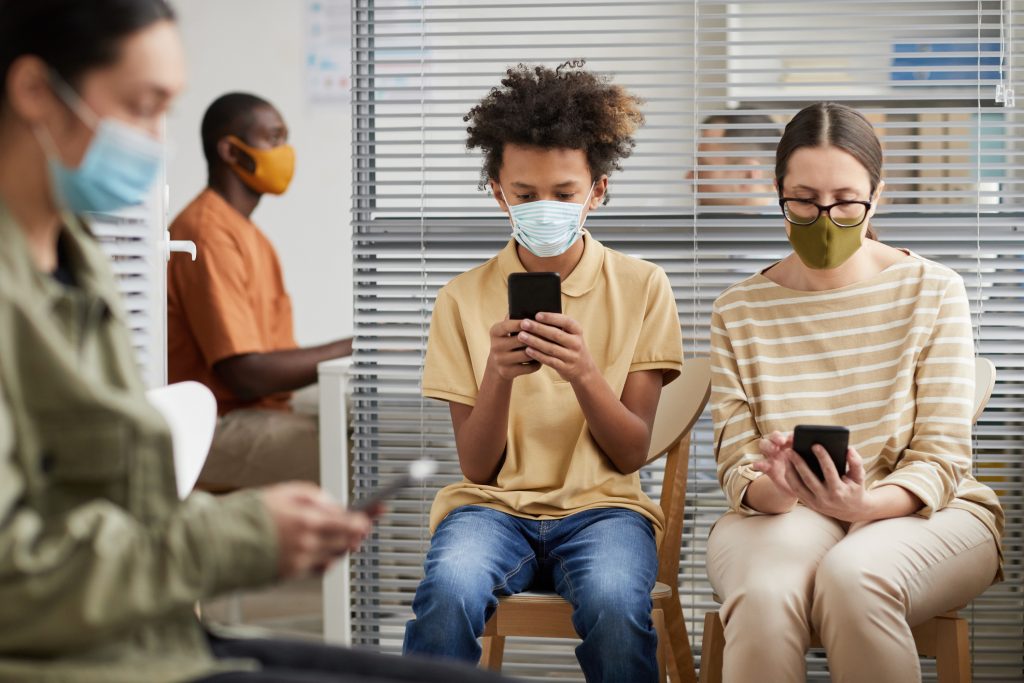
Epigames are a proxy for the spread of infectious diseases across different contexts and settings. They are controlled situations in which participants join a simulated epidemic via a gamified smartphone app. Over the course of the game, participants interact with each other, enabling the Bluetooth signal between phones to measure mutual proximity, contact duration, and social connection.
Epigames fill the knowledge gap that exists between complex and data-driven policy-relevant models of pathogen transmission and the data they require on the networks on which pathogens spread and the behaviour of the participants during the simulated outbreak.
By thinking of epigames as “real-world agent-based simulations,” researchers can observe how actual humans behave during an outbreak. This would allow scientists to calibrate computer-based agent-based models using rich, empirical data on human decision-making and social networks, leading to much more accurate predictions of how infectious diseases like influenza or COVID-19 actually spread.
By thinking of epigames as “real-world agent-based simulations,” researchers can observe how actual humans behave during an outbreak.
How does gamifying the modelling process allow people to engage with the research?
One way to think about epigames is like “real-world agent-based simulations” where the agents are actual humans. Then we can consider the epigames as a “gamified modelling process” that would allow us to generate data on how participants interact with each other, how they respond to changing states from susceptible to infected or recovered, and how they make decisions like whether they isolate after being told they are infected, or if they choose to take a vaccine in response to the simulated spread with rewards/penalties built-into the app. This gamification of the modelling process allows epigames to be uniquely capable of gathering not only real-life contact networks, but also behavioural and attitudinal data from the participants.
What else is different about this approach and how might this assist with pandemic planning?
Epigames leverage mobile technology to measure contact networks across social settings, environmental conditions and various contexts, while explicitly integrating behavioural data. What is different about epigames, compared to previous similar concepts, is their applicability to different settings and contexts and the high degree of mechanistic realism via simulating disease spreads over proximal interactions just as direct contact pathogens do.
The information generated from epigames is relevant beyond the game context and is crucial knowledge into how people may respond during real outbreaks. This data can facilitate more accurate development and calibration of realistic computer-based agent-based models on which different interventions can be simulated and their impact on the epidemic trajectories explored.
This data can facilitate more accurate development and calibration of realistic computer-based agent-based models on which different interventions can be simulated and their impact on the epidemic trajectories explored.
The ability to conduct behavioural network science experiments in natural, every-day settings via epigames in a flexible and tailored way is their novelty. This opens up the possibility of collecting data that is externally valid by being able to replicate the complex social contexts and realistic disease exposure patterns of daily life.
What kinds of interventions are you able to test?
Due to their flexible construction, epigames are adaptable and can test a wide range of interventions to reduce disease spread. In the course of the game participants make decisions on whether to wear a mask, take a diagnostic test, or receive a vaccine, with varying costs and benefits associated with different decisions. Hence epigames can be used to evaluate both non-pharmaceutical or pharmaceutical interventions during an outbreak. Additionally, games can give information on the effect of individual-targeted strategies (e.g. messages targeting to the most connected individuals), group-based strategies (e.g. behavioural nudges addressing all members of densely-knit cliques), and induction approaches (e.g. introducing opinion leader “seeds”) to stimulate peer-to-peer diffusion of protective behaviours.
How does this innovative approach affect the accuracy of the results?
In modelling of infectious diseases spread, data on the underlying networks on which pathogens spread, including their temporal and spatial structures and how interventions alter the spread, are scarce, inconsistent, and seldom incorporate behavioural features. This produces a primary challenge for policymakers that human behaviour is often treated as a constant in models, when in reality, it is highly variable. Epigames provide four critical data streams that traditional models lack: high-resolution contact networks, quantifiable behavioural data, attitudinal data from surveys, and environmental factors, like weather.
Human behaviour is often treated as a constant in models, when in reality, it is highly variable.
How can this approach inform future practice and policy?
The data generated from the epigames can be readily integrated with sophisticated policy-relevant models to give a better understanding of how different environmental factors, behavioural data, and interventions that affect epidemic trajectories during epidemic outbreaks.
The pipeline from epigames to policy-making integrates mathematical, statistical, and behavioural modelling with experimental epidemiology, ensuring predictions are driven by data reflecting actual human variability. Because our approach and resulting models are grounded in empirical data rather than assumptions, their outputs are more likely to be trusted by decision-makers compared to purely computational approaches.
Epigames provide an adaptable mechanism for testing a wide range of interventions to reduce disease spread. By implementing epigames with different incentive structures to “nudge” participants to make decisions that modify their susceptibility to infection or transmission rates during the game, researchers would be able to test hypotheses on individual perceptions and network factors that influence behaviour.