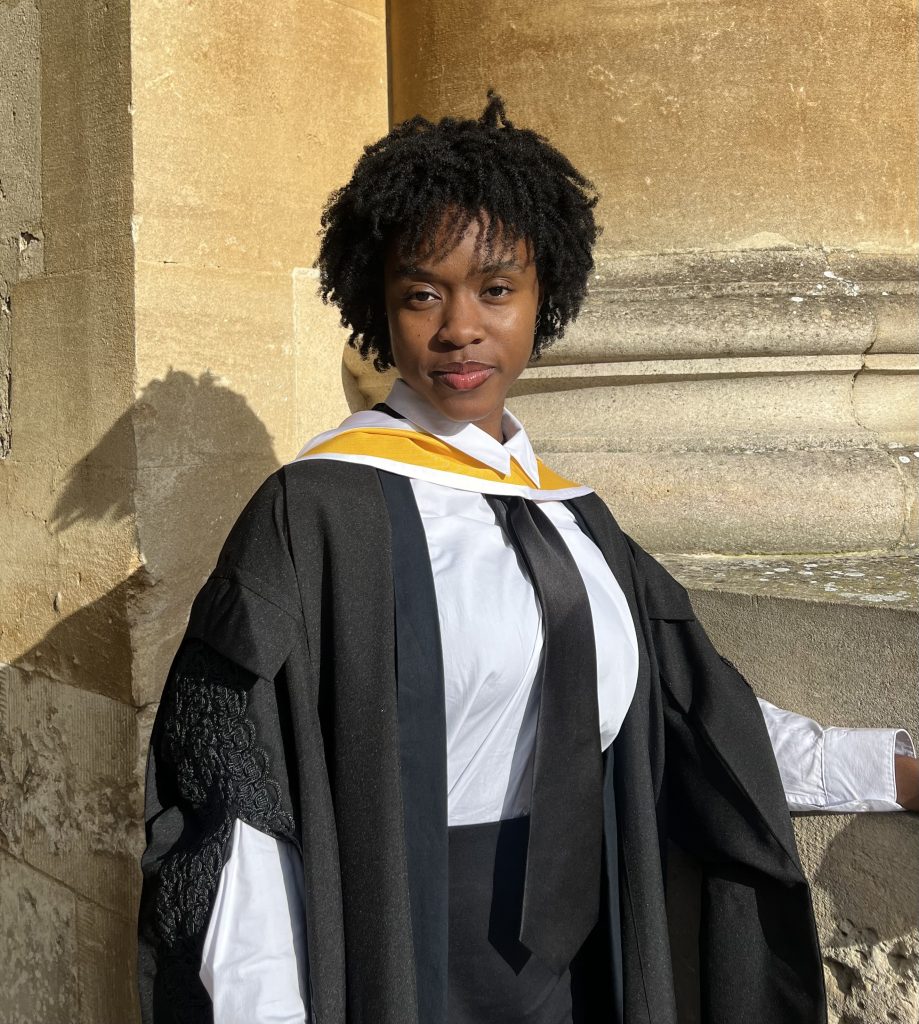
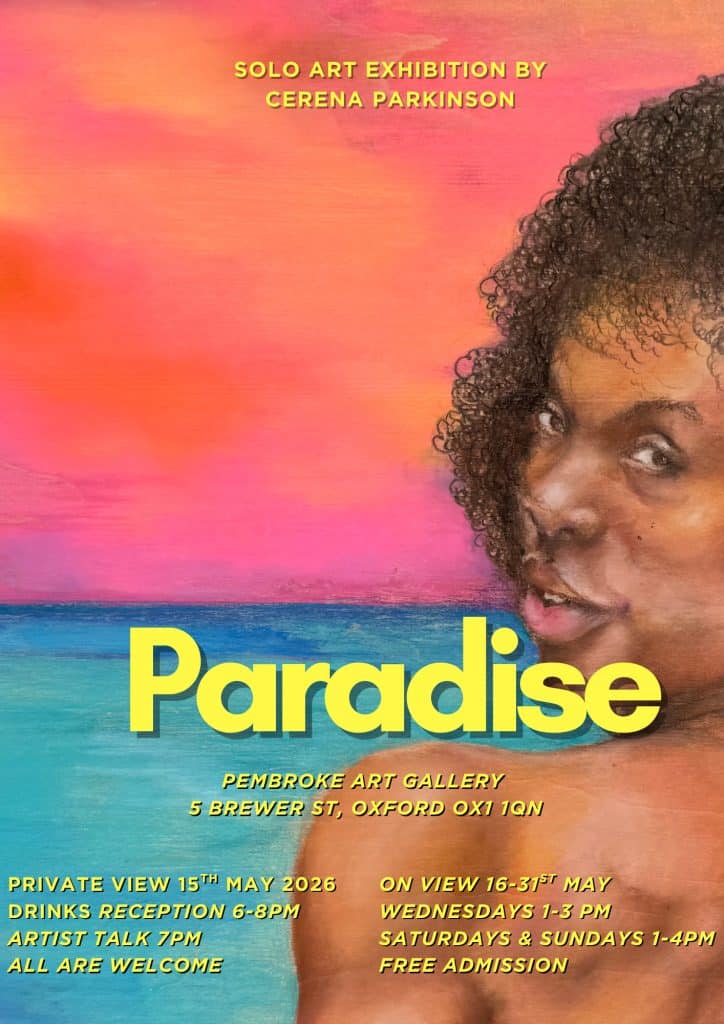
The College warmly congratulates Cerena Parkinson (Master’s of Fine Art) on receiving the Emery Graduate Prize for her Master’s submission. As part of this prize, Cerena is awarded a solo exhibition at the Pembroke College Art Gallery this May.
Cerena Parkinson is a multi-disciplinary artist and writer from Brooklyn, New York. She holds a BFA from The Cooper Union for the advancement of science and Art and an MFA from the Ruskin School of Art at the University of Oxford. We asked her to tell us more about her work.
Congratulations! What does this recognition mean to you at this stage of your practice?
Thank you! Having my debut international solo exhibition at Oxford is a significant milestone in my career. I have had solo exhibitions in New York City and exhibited in the Pastel Society exhibitions at the Mall Galleries London. I am very excited to share this body of work with the University community and the public.
How did the work you presented during your degree evolve into the upcoming solo exhibition?
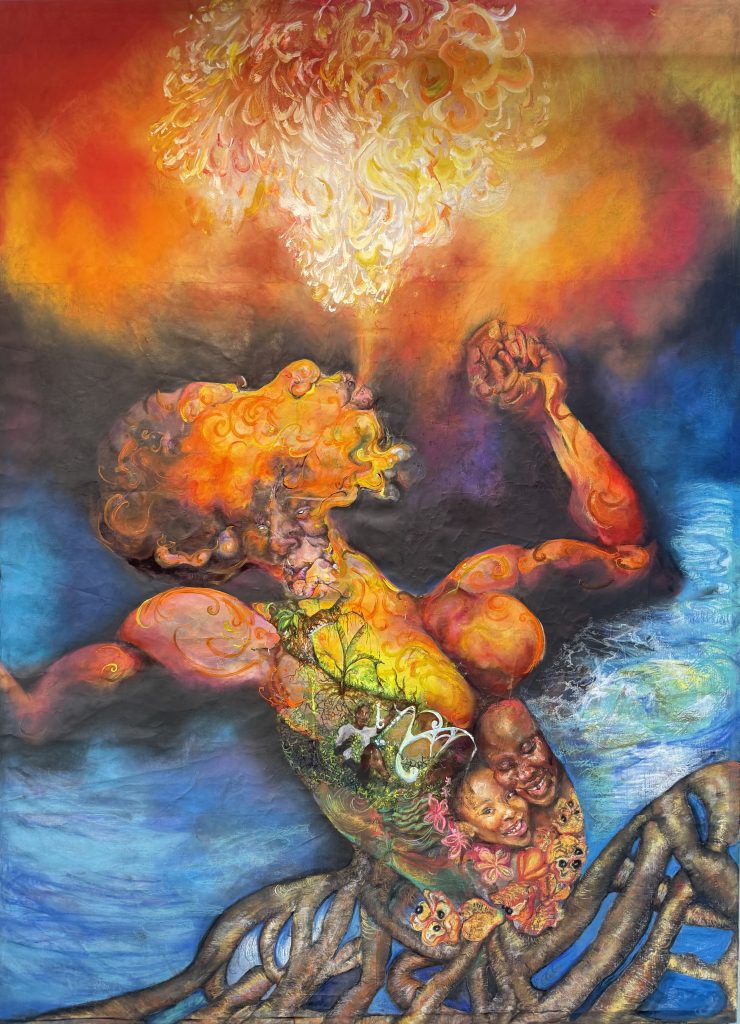
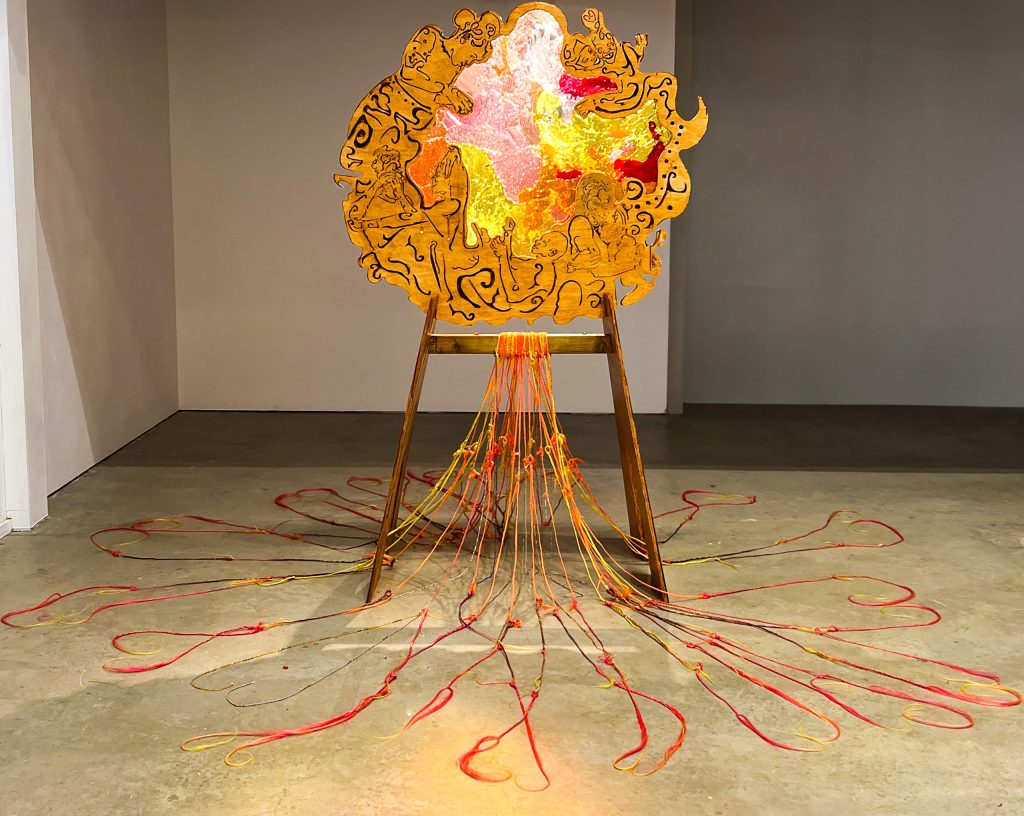
My Master’s degree installation was a series of works representing generational experiences of migration in the Caribbean diaspora. These works derived from “The Parenthetical theory”, which I created, researched, and authored for my dissertation. In grammar, parenthetical information is considered marginal to understanding the meaning of a clause; however I argue the reader loses the opportunity to understand the clause from a different perspective in its absence. My theory relates the value of parenthetical information in a clause to the influence of non-western ontologies on Euro-American modern society.
This forthcoming exhibition represents the experiences of migration through the lens of parenthetical theory and how living through transitional periods in our lives are experiences we can all relate to. Several works in the show incorporate aspects of Caribbean spiritual epistemology which regards the world of dreams as a primary source in navigating life’s complexities.
What can visitors expect from the exhibition at Pembroke – are there particular themes or questions you’re exploring?
This exhibition is entitled “Paradise”. I have chosen this title because the show is about finding joy in daily experiences and resilience through life’s uncertainties. Being caught in the responsibilities of our lives can make us forget how the simplest moments can be the most significant to us. This show takes a moment to celebrate our ability to create our own bliss in our relationships with others and in the love for ourselves.
Being caught in the responsibilities of our lives can make us forget how the simplest moments can be the most significant to us.
Does it feel very different to move from producing work in an academic setting to preparing for a public-facing exhibition?
My research continues to inform how I view the world and what I create. This is similar to how I have worked in academic settings. I do approach my current work about dream interpretation differently. I am treating emotion as a primary source for meaning making. I analyse the events that have occurred in my dreams as well as dreams that have been shared with me and I use their symbolism to construct the environments I compose in my pieces. When creating, I think about how my audiences can bring their own life experiences with them when they enter the world of my work. It is important for others to find something meaningful to them in my art and I enjoy hearing people share the memories brought about by my artwork. Each piece has a part of my heart in it and I want to encourage others to approach life with passion and creativity.
Is there a particular response or reaction you hope people take away from the exhibition?
I want people to feel grateful for their everyday experiences. The unexplainable wonders of life are a gift that should be cherished. I want to inspire others to tell their own stories through creative languages that are true to who they are.
Can you talk us through your artistic process: how does a piece typically begin and develop?
I begin my work by engaging in conversations with family members, friends, and research participants about their lives. In this process, I reflect on my experiences of migration to create pieces defining identity formation abroad. The appropriate mediums to utilise for the pieces reveal themselves to me throughout the research process. In my dissertation research I utilised sugar cane in various forms to address the impact of British colonialism on the social and economic composition of the Caribbean and its diaspora . While sugar sweetened the lives and economies of the west, it meant the dramatic loss of life and suffering for people enslaved to build the wealth of the British Empire. In the same breath, my ancestors created culinary traditions from this crop that have generationally connected the Jamaican diaspora.
All I Have Needed Thy Hands Have Provided, is a candy glass mirror sculpture I created using flavoured drinks syrup from The Johnson’s Jamaica Syrup company. This Birmingham-based family-owned and -operated company has connected people in the Jamaican diaspora for generations through their traditional Jamaican flavoured syrup. This piece bittersweetly acknowledges the effects of colonisation on families separated by forced and voluntary migration while celebrating the beauty of Jamaican culinary tradition as a form of revolution. The frame of this mirror symbolises the significance of photographs placed in the grooves of dresser mirror frames found in many Jamaican households including my own. This is a way of keeping families together even if time and place has separated them.
How did your time at Oxford and involvement in the Queen’s community shape your development as an artist?
Being part of a diverse intellectual community during my studies at Oxford was an exciting time. I love finding connections between seemingly disparate fields and I continue to be interested in learning more about how and why people think the way they do. At Oxford I enjoyed getting to know other academics and learning about what moves them, especially what gives them the passion to pursue their research. I was glad to share my knowledge in this environment and engage in multifaceted forms of learning. I also enjoyed learning about how others engage with art and the meaning it has for them.
I love finding connections between seemingly disparate fields and I continue to be interested in learning more about how and why people think the way they do.
What did you enjoy most about Queen’s?
I enjoyed many things about The Queen’s College. The community, faculty, library, and gardens at Queen’s are some of my top choices. My advisor and I engaged in valuable conversations about my work and professors outside of my discipline at Queen’s gladly welcomed and answered the questions I asked them. The MCR is a great place to connect with others in the graduate community and as the former BAME representative of the MCR committee I met great people. The care brought to the environment by the porters and the dining staff at Queen’s made my time very special; I especially appreciate how they greeted all of the students with a smile.
The care brought to the environment by the porters and the dining staff at Queen’s made my time very special; I especially appreciate how they greeted all of the students with a smile.
What’s next for you?
I am currently studying on The Drawing Year Scholarship at The Royal Drawing School in London. It has been a wonderfully enriching experience and I have cultivated a deeper connection with the medium of drawing which has always been my first love. As I look forward, I will be preparing for our autumn exhibitions at Christie’s auction house this November in London as well as our school and studio exhibitions in December.
You can stay connected with my artwork through:
Instagram: @shabazz.z
LinkedIn: Cerena Parkinson