Dr Catherine Ames is Head of Languages at The Grey Coat Hospital school in London, and an Association for Language Learning Council Member.
All linguists know that the study of Languages can be truly transformative in developing perspective, voice, resilience and the independent thought and agency vital to becoming critical thinkers and global citizens. The interdisciplinary appeal of our subject is probably what makes us tick – whether literature, film, history, linguistics, sociology, cultural studies or whatever else draws you to your language(s). We also know that as Languages teachers we can at times feel frustrated by an apparently narrow curriculum which tends to focus on the mechanics of language at the expense of the bigger picture, especially when there is a sense that the fun and really discursive stuff is reserved only for those who make it to A-Level. This is an odd situation and one which our colleagues in History and English for example don’t generally have to contend with. Primary school teachers are naturally interdisciplinary; A-Level Languages are necessarily interdisciplinary. Yet KS4 in its pugnacious prescriptiveness not only defines the GCSE input but also oversteps the mark and ends up prescribing what happens at KS3. This overweening prescription can be compounded by often overbearing, centralised curricula which, when done badly, can suck the creative life blood out of teaching and learning.
The recruitment and retention of teachers and students alike is at least partly a question of curriculum. Do students enjoy what they are learning? Does it appeal to their sense of self and intellectual curiosity? Does it increase their cultural capital? Can they do things with the language that they couldn’t do before? Are there opportunities for them to be creative and express what matters to them? The same questions apply to us as teachers but we don’t often ask them. As a teacher, do I think that what I am teaching is important and meaningful? Does it tap into the full extent of my knowledge and expertise? Does it allow me to be creative? As a well-educated (and possibly well-travelled) professional, do I have the freedom to develop ideas and content according not only to the people in my class but also according to my own strengths, experiences and interests? Am I allowed to do that? What happens if I am not? What if some of the brilliant Languages graduates who might be considering a career in teaching look at current classroom practice and decide that it is not a viable forum for their talent?
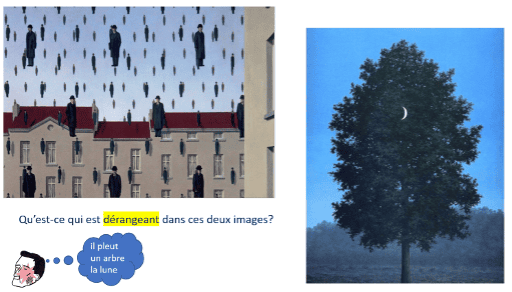
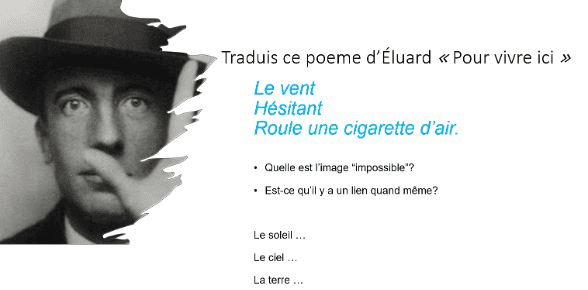
Verbs and vocabulary are important but if that’s all our lessons look like then how will our students understand the broad and capacious opportunities our discipline has to offer? How will we not dull ourselves to death in yet another lesson about le week-end dernier? Some teachers argue that we need to get out of the classroom and be immersed in the culture first-hand. They are not wrong – something that the independent sector and those state schools rich in hidden resources have been tapping into for a long time. I am hopeful that Erasmus+ will rejuvenate our offer as long as its organisation does not all land on our already generously burdened shoulders and as long as it has a marked impact on alleviating disadvantage. Trips and visits are fantastic but we need to be realistic – if over 95% of our contact time is in the classroom then that is where we need to focus our attentions. The curriculum is the lever whereby we can effect change in outcomes, approaches and mindsets. It is the day-in-day-outness which is where we can have the most impact, not only on our own students but also on our own sense of enjoyment, creativity and challenge.
I have been very lucky in my career as a Languages teacher, always gravitating towards settings which see me as the most valuable resource and making the swiftest exit from those which saw me as a mere function. I have tried to engender an environment in which the teacher creates and cocreates with the team and with our students in the moment (with a really good linguistically progressive Scheme of Work behind us). An ECT who wants to create a unit in Spanish on Bad Bunny? Yes please. A Germanist who wants to do video diaries with her Year 10? I’m all over it. A student teacher who wants to work on poetry with Year 8? Absolutely. A colleague who suggests bringing in Hermann Hesse extracts to KS3? I don’t see why not. Language, knowledge, skills, cultural capital, curiosity, working together: I have always seen these as mutually affirming. What is just as important is that we as teachers recognise that our own interests sustain us and are probably also catching.
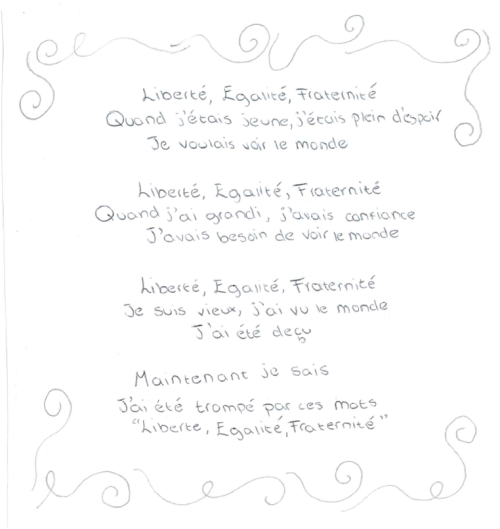
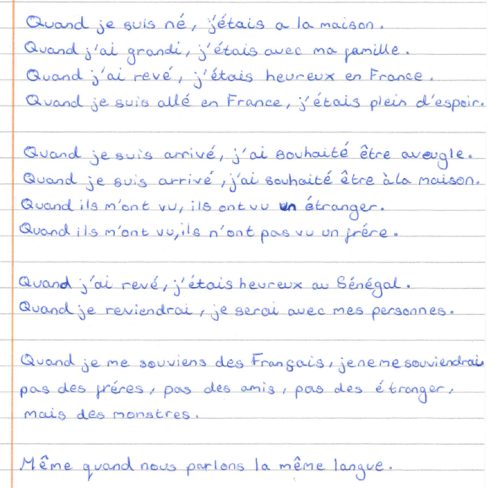
How do we do that within the current KS4 landscape? This is the question I am asking myself afresh as my glorious Year 9s have all chosen French and I can’t let them down. How will they go from Léopold Sédar Senghor, poetry, Senegal and francophonie to relationships in the family? Perhaps I might start with a short extract from Édouard Louis or Mohamed Mbougar Sarr if that is what I am reading right now. They are of course outside the prescription and I can’t spend too much time off piste. In the more everydayness of the quandary, I would say look for the opportunities as they present themselves. For example, if you love words, find the links. My students know that I love the eponym poubelle because it is derived from M. Poubelle who ordered that covered bins be used in Paris to improve the city’s sanitation. They know that I use the word fenêtre to demonstrate the function of the circumflex via one of my fondest A-Level History factlets – the Defenestration of Prague of 1618. Describe a picture? Yawn. Let me give you a proper picture to describe and let’s make it a Caillebotte. Self, family and friends? Let’s begin with a juicy quotation: « On ne naît pas femme : on le devient. » Discuss.
My starter with Year 11 as we began the theme of travel and tourism on a rainy morning in December and imagined ourselves elsewhere. I gave them bleuâtre which they loved and we talked about the connotations of verdâtre. We linked to the work we had done in Year 9 on Monet and Normandy and talked about the importance of the light for the Impressionists. Not a GCSE question in sight but the link to the Individual Research Project was as clear as Honfleur.
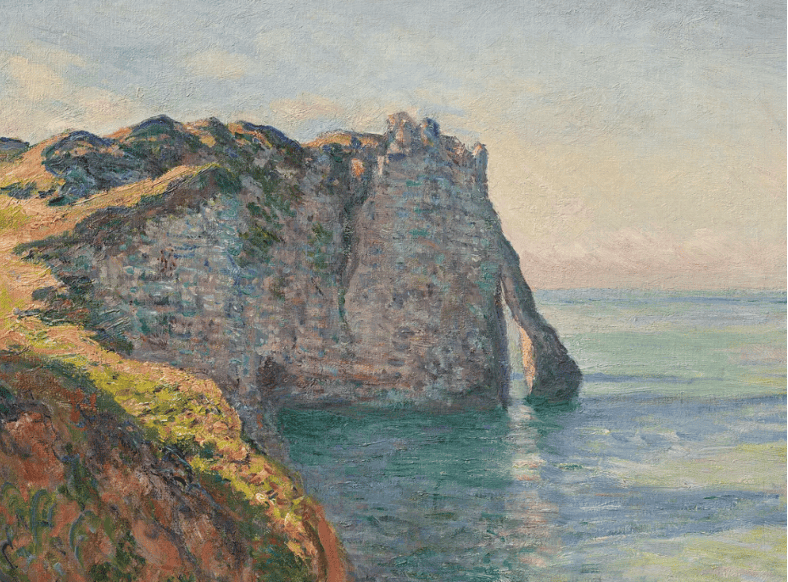
The problem with the so-called “new” GCSE (I’ve seen a lot of new GCSEs) is that we risk confusing input with output. We want to teach so that they can produce the exact same thing. That’s not how language learning works of course. Every linguist knows that you don’t have to understand everything to get a sense. We used to call that reading for gist. This is important to remember when we feel like we are taking a risk with more creative inputs. My low prior-attaining Year 8s not only got a great sense of achievement from understanding some of the similes in a poem by Anne de Noailles but were able to produce their own in French. My proudest triumph this last year has to be in the lesson when the child whose head was often on the desk was beside herself with pride when she offered up her own simile, having used a dictionary by herself to find the word she wanted. She used her imagination and I let her do it.
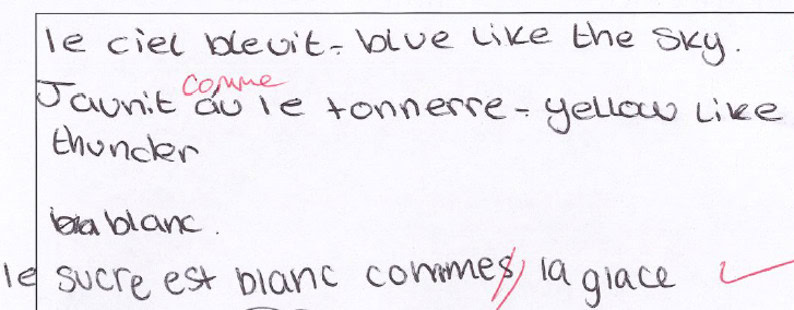
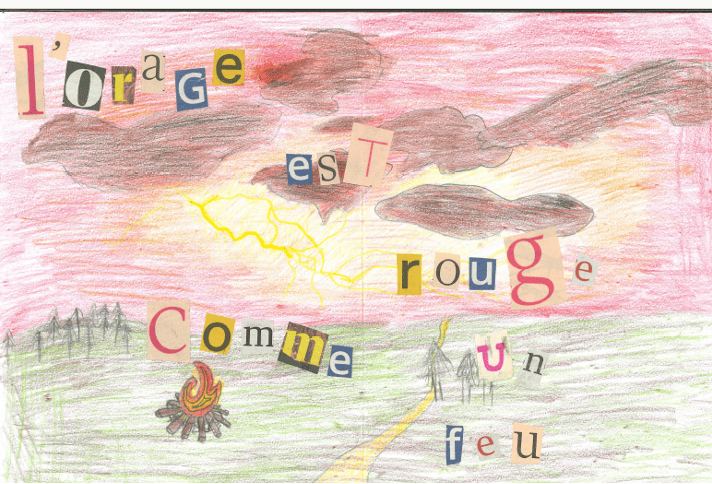
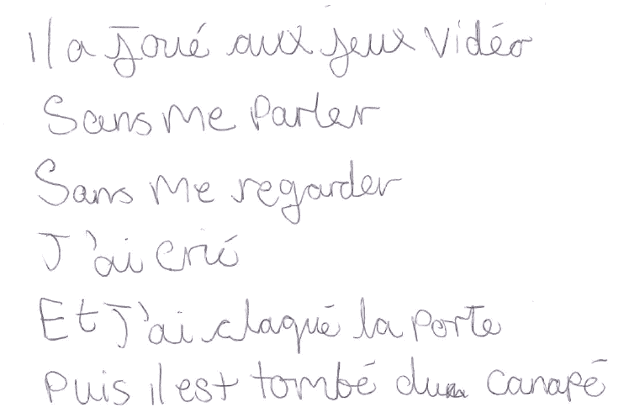
As linguists we are naturally multi-taskers and link finders. As a Joint Honours History and French undergraduate, I was always being told to stick to the literature or stick to the history but my brain doesn’t work like that. In school settings we are often led to suppress the surprise and delight of our subject and delay the creative and intellectual because they can’t do that yet. How will they get there if we don’t show them what is possible and how will we sustain ourselves and each other in the process?
Further reading and cultural resources for language teaching:
Translating Poetry and Visual Culture resource book, The Stephen Spender Trust: https://www.stephen-spender.org/translating-text-and-visual-culture/translating-poetry-and-visual-culture-resources/
Anthea Bell Prize for Young Translators, Sample Resources (worksheet, lesson plan, slideshow)
https://www.queens.ox.ac.uk/research-at-queens/translation-exchange/anthea-bell-prize/anthea-bell-prize-sample-resources/#collapse10010
Creativity Special Interest Group, Association for Language Learning (regular meetings, best practice, sample resources): https://www.all-languages.org.uk/creativity-sig/
This blog post was commissioned by the Queen’s Translation Exchange in Summer 2026 as part of a research series titled ‘Creative Translation and Modern Languages Today‘. For more information, visit our Advocacy and Research page.