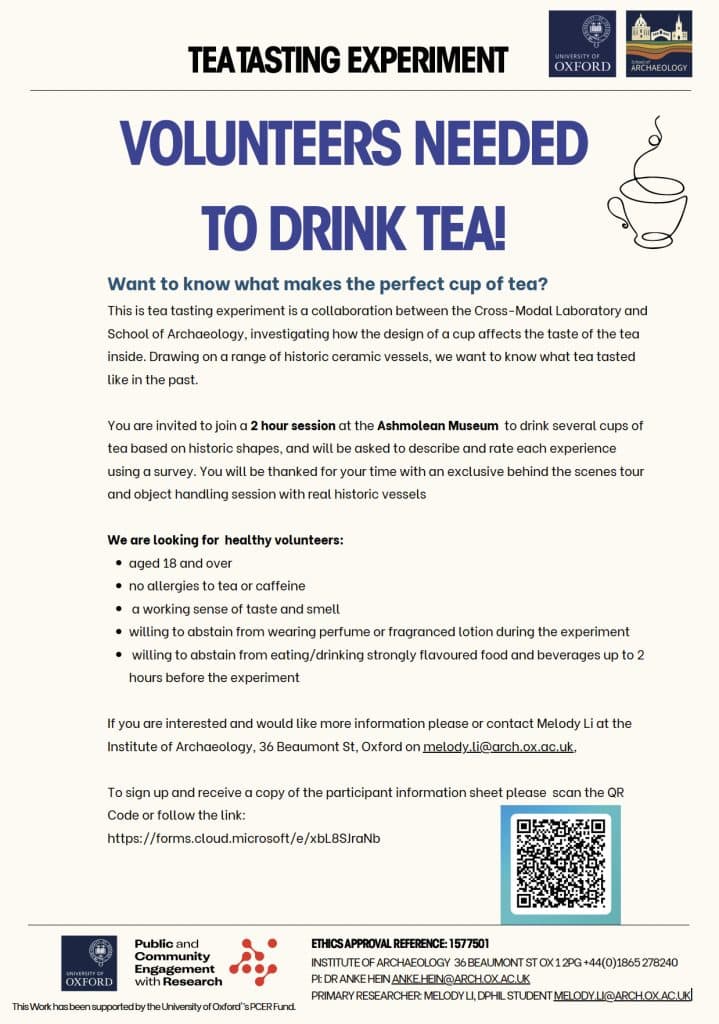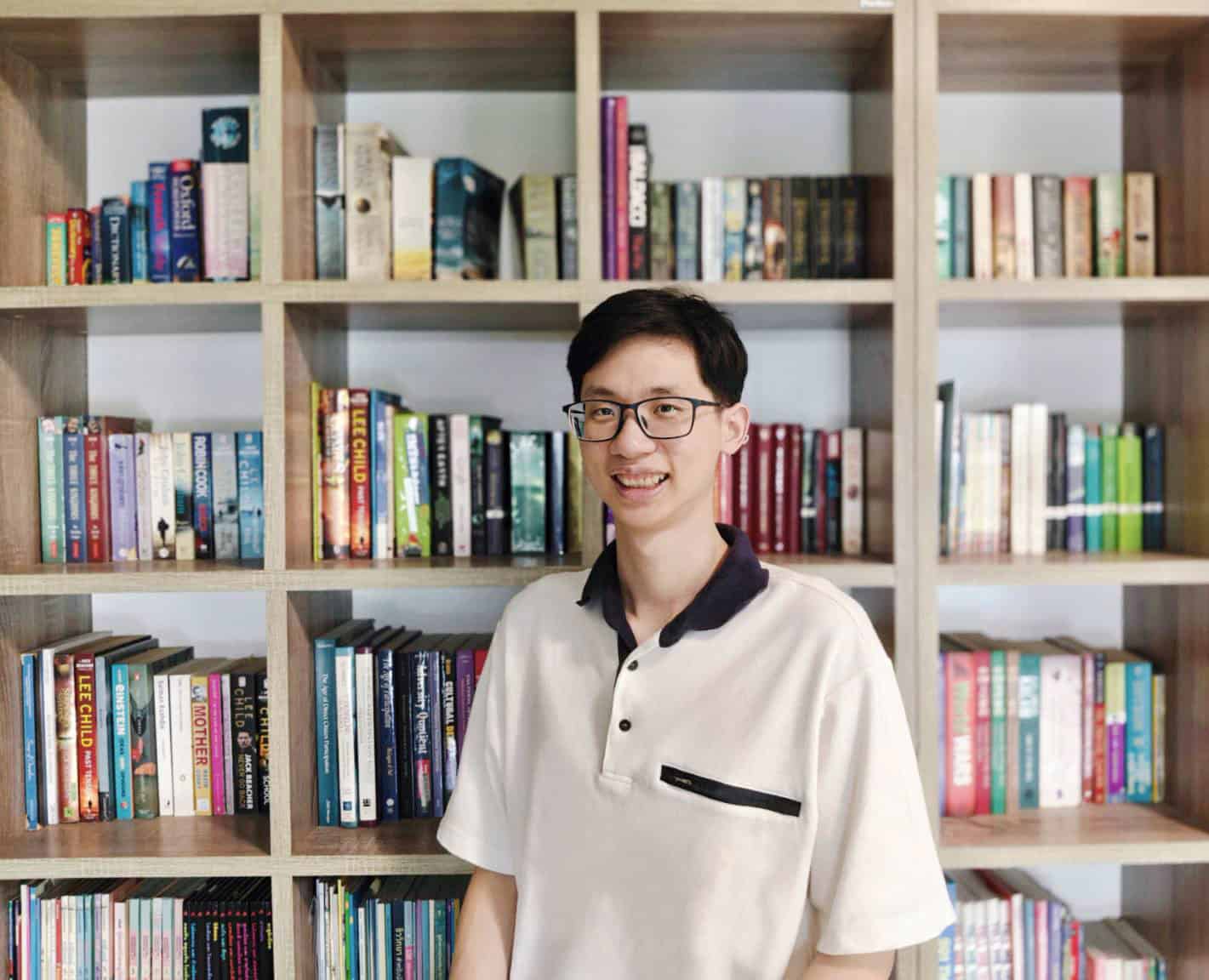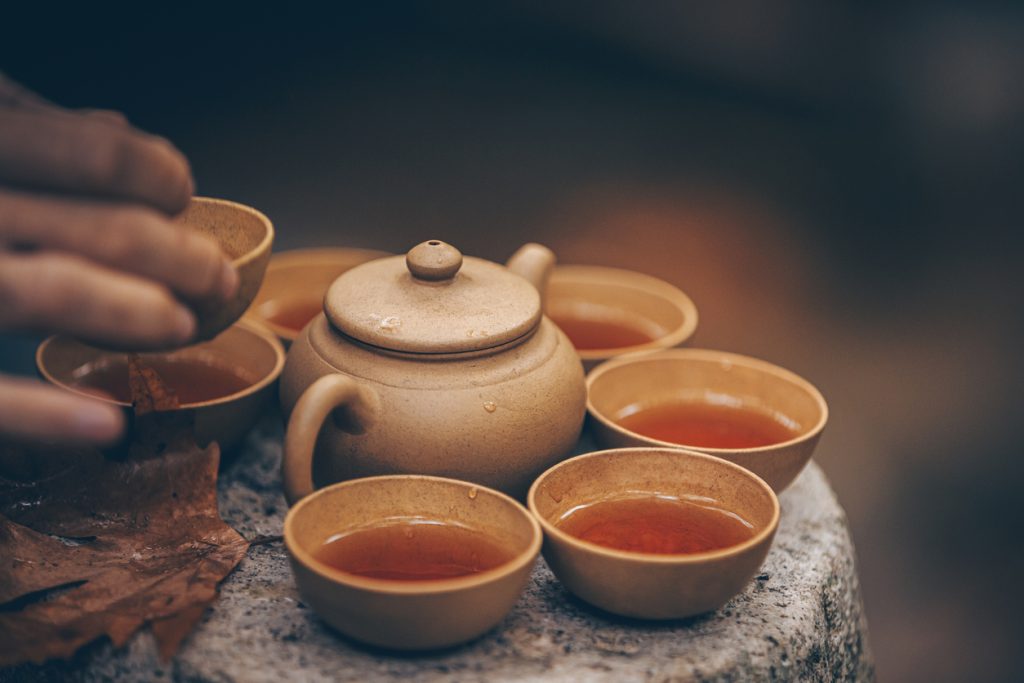
Queen’s DPhil student Melody is bringing research out of the library and into the Ashmolean Museum this term, leading a series of tea-tasting sessions to explore ‘sensory archaeology’ and the role of taste in understanding historical cultures, using tea in China as a case study.
Supported by a highly competitive Public and Community Engagement with Research (PCER) grant, the sessions offer a rare opportunity for the public to take part in student research at the Ashmolean and bring together academics, artists and heritage specialists. We asked Melody to tell us about her research.
Can you tell us a bit about what is meant by the phrase ‘sensory archaeology’?
Sensory archaeology is a theoretical stance that argues past human senses can and should be studied through material culture. It is important to understand the sensory world of the past because the cultural value we give to different senses also shapes how society was (and is still) structured.
It is important to understand the sensory world of the past because the cultural value we give to different senses also shapes how society was (and is still) structured.
Your current PCER grant-supported project asks a deceptively simple question: what makes the perfect cup of tea? How and why are you testing that at the Ashmolean?
We will test this through a sensory evaluation (like a survey), which is a standard practice in the food and beverage industry. We are testing this at the Ashmolean Museum as many of the cup designs will be based on vessels from the Ashmolean’s collection, which also correspond to archaeological examples of cups I have encountered during my research. We need 100 participants, so this is also a chance to create an immersive experience where people not just visit the museum and look at objects, but ‘taste’ them too.
This project brings together archaeologists, scientists, artists, and a museum. How have those different perspectives shaped the way the experiment has been designed?
The experiment design has become a balance of addressing the most fundamental needs and limitations of each perspective. Archaeologists and scientists want rigour in terms of controlling all the variables, the museum needs a format that will be comfortable and enjoyable for participants, while working with the artist has given a maker’s, rather than a user’s, view of these cups. We also ran two special sessions with the local Chinese community, and the experiment also had to accommodate community needs such as providing Chinese language facilitation and bilingual surveys and consent forms.
There’s a strong sensory element: taste, smell, even the absence of perfume or strong flavours beforehand. Why is controlling those factors so important?
Our perception of the taste/smell of food and drink are easily influenced by many factors, so we need to remove as many interferences as possible.
What have been both the key challenges and the most enjoyable elements of leading a public-facing research project in a space like the Ashmolean as a DPhil student?
The most enjoyable elements have been working with the Ashmolean Museum staff and local community leads to create an event that will be not just be useful for my research but also enjoyable for the participants. Finally sharing the event with our initial Chinese community sessions was so exciting — seeing my research actually bring enjoyment to other people, especially non-academics, was so meaningful. However the biggest challenge has also been trying to make sure all the logistical puzzle pieces are in place while observing museum guidelines.
Seeing my research actually bring enjoyment to other people, especially non-academics, was so meaningful.
This is a collaborative project funded by the PCER grant, co-designed and executed with the help and expertise of the following people:
PI: Dr Anke Hein, School of Archaeology
Prof Charles Spence, Crossmodal Research Laboratory
Dr Jenny Wang, WeaveYard https://www.weaveyard.com/
Jynsym Ong, Magdalen Studios https://www.jynsymong.com/
Dr Luciana Carvalho, Department of Chemistry
Beth McDougall, GLAM/Pitt Rivers Museum
Ashmolean Museum Public Engagement with Research Coordinator
Ashmolean Museum Teaching Curator