For Dr Laurence Leaver, teaching medicine has never been about delivering information, it’s about helping students see the person behind the condition. Over 25 years at Queen’s, alongside his work as a GP, he has guided generations of preclinical medics through their first encounters with patients, grounding their learning in real lives and real stories. As he retires from teaching, he looks back on what has changed, and what hasn’t.
You’ve been teaching preclinical medics at Queen’s since 2001; what originally drew you to the role, and what has kept it interesting over 25 years?
The students of course! I like the students’ insightful questions, curiosity, and the light-bulb moments when they understand things. It is always a great antidote to the moans of practising doctors to have bright young students who want their jobs…they remind me of why I went into medicine, how you can make a difference to people whom you have the privilege of getting to know, and how fascinating medicine can be. Also teaching students helps me to keep a bit more up to date: “To teach is to learn twice.” – attributed to Joseph Joubert.
You’ve spoken about the importance of students learning from patients; have there been particular moments where you’ve seen that happen for them?
Absolutely – in this course the patients are highly selected: most of those who participate not only have an interesting story and condition but are often well-informed and articulate too, and sometimes we learn from the patients about non-medical matters as well! I remember one student asking the patient, during a neurology seminar, for advice on starting up a tech company!
Over the years, how have the students you teach changed and in what ways have they stayed the same?
The students seem to know more each year (or perhaps I know less!) but their confidence is probably reducing – this may be related to society not valuing young people so highly and worries about getting good training posts in the NHS. Students, at least those from most backgrounds, seem to have less money and less time for external interests, or even personal leisure. The resident doctors in the years above them may relay stories of being undervalued, especially compared to doctors in other countries. The numbers asking about working abroad have gone up.
Their conscientiousness, intelligence, openness to ideas, helpfulness, and personable nature (with rare exceptions?) hasn’t diminished. The turnover of Fellows has been slower. I enjoyed a post-dinner game of chess with Peter Robbins many years ago- nobody has asked me since, but I very much enjoy the company of Chris Norbury, Paolo Tammaro, Chris O’Callaghan and others.
As both a GP and a tutor, how has your clinical work shaped the way you teach and vice versa?
The Y1/Y2 ‘Learning with patients’ course is very broad and was designed to be delivered by GPs so the topics very much reflect my day-to-day practice. As well as prompting me to find out about recent developments in each topic, sometimes the students find out something about the patient that I didn’t know – and that can lead to me addressing an issue (such as side effects of medication) that the patient hadn’t told me about. It’s definitely a win-win.
You clearly place a lot of emphasis on supporting students as individuals; how do you go about this in practice?
People learn best when they are happy and healthy. I ask the students how their course is going and about life more generally and try to highlight how well they are doing, how they will become good doctors, that the problems they face are within their capabilities, that the ‘system’ wants them to succeed despite the way it is sometimes organised, and try to put things in perspective – with a risk of telling them stories of when I was at their stage! They never seem to complain about such stories: they are too polite!
The students know I am a GP who might understand a broad range of problems, so they often ask me about things – of course I have to be clear that I am their tutor not their GP and help them to make use of more appropriate help where necessary, but they may be able to do so with a better understanding of how best to navigate the network of support and what to expect. I think it’s very important for tutors to ensure their students know we care about them and believe in them. My past time as Associate Director of Preclinical Studies for Welfare was very much about this.
Looking back, what moments or aspects of teaching at Queen’s will you miss most?
I love seeing the students at their Schools Dinner – it’s great to celebrate with them how they have grown as people and as medics, and to share some reflection of their success. Similarly, I like seeing them at later stages in their careers: as clinical students, resident doctors, GPs, or these days, as local consultants to whom I can refer. One day they may be treating me (that’s the ultimate feedback on your quality of teaching!). To think I have helped them, especially if they think I have helped them, is an honour and privilege. I am hoping NOT to miss other great things about Queen’s because I hope to continue coming to the QCMS and other interesting events.
From his colleagues
Among the many things I have appreciated about working with Laurence is his contagious passion for medicine and the way he illustrates that the discipline extends far beyond the technical understanding of disease, requiring above all a profound interest in, and deep care for, patients, their needs, and their experiences. Outside of work, I have enjoyed Laurence’s friendship during college dinners, conversations, and even practical sessions (!) on our other interests, from jam-making to woodworking.
Prof Paolo Tammaro
Queen’s medical students have been hugely fortunate to benefit from Laurence’s wisdom and good advice – about primary care and much more besides – for the past quarter of a century. It amazes me that he’s been able to combine so much teaching with his duties as a busy GP. He draws on that experience to craft incisive admissions interview questions. He cares. He makes the best marmalade I have ever tasted. His act will be a tough one to follow.
Prof Chris Norbury
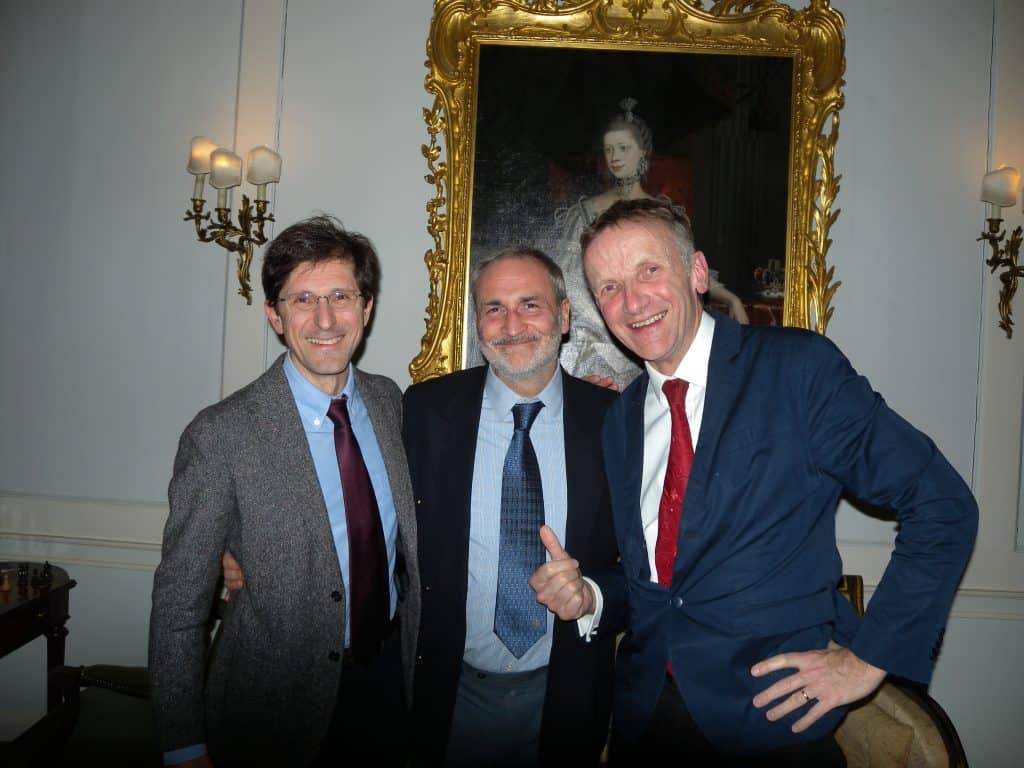
Header photo (from left to right): Prof Tammaro, Dr Leaver, and Prof Norbury