📖 Four Queen’s second-year Germanists have contributed to 'Fragmented: A New Translation of Selected Unfinished Todesarten Texts', a forthcoming #TaylorEditions volume of unfinished prose by Austrian writer Ingeborg Bachmann whose 100th birthday it would have been today.
💬 Working with texts full of ambiguity and possibility, the students discovered translation as something deeply human: creative and collaborative, sometimes frustrating, and ultimately joyful.
Edited by Dr Isabel Parkinson, Lecturer in German, the book will be published as part of the Taylorian Editions 'Writers in Residence' series.
Experts including Dr Frances Reynolds, Shillito Fellow and Associate Professor of Assyriology and Senior Research Fellow of Queen's, discuss the enduring historical significance of the Code of Hammurabi.
They explore how these ancient Babylonian laws, carved into a basalt pillar, established a lasting legal legacy that continues to be recognised by international institutions today.
🎉 The College warmly congratulates Lecturer in Neuroscience Dr David Menassa who has received the 2026 Saïd Foundation Alumni Achievement Prize. The prize recognises an individual who has made a significant contribution to the development of their field of research and the Levant region.
🔗 Discover more about David's work to understand how the brain is affected in conditions such as autism and ADHD, as well as in diseases of ageing such as Alzheimer’s and Parkinson’s: ow.ly/eZ8a50ZcJ6C
Protecting honeybees through student-led innovation 🌼🐝
A student team at Queen’s is tackling a global threat to pollinators with an ambitious synthetic biology project designed to protect honeybees. Bringing together biology, biochemistry, chemistry, engineering, and biomedical science, the team is developing a treatment with the potential to be more sustainable than existing methods.
The project is particularly exciting because it sees first-year students getting involved in interdisciplinary research, showing how collaboration can lead to real-world impact.

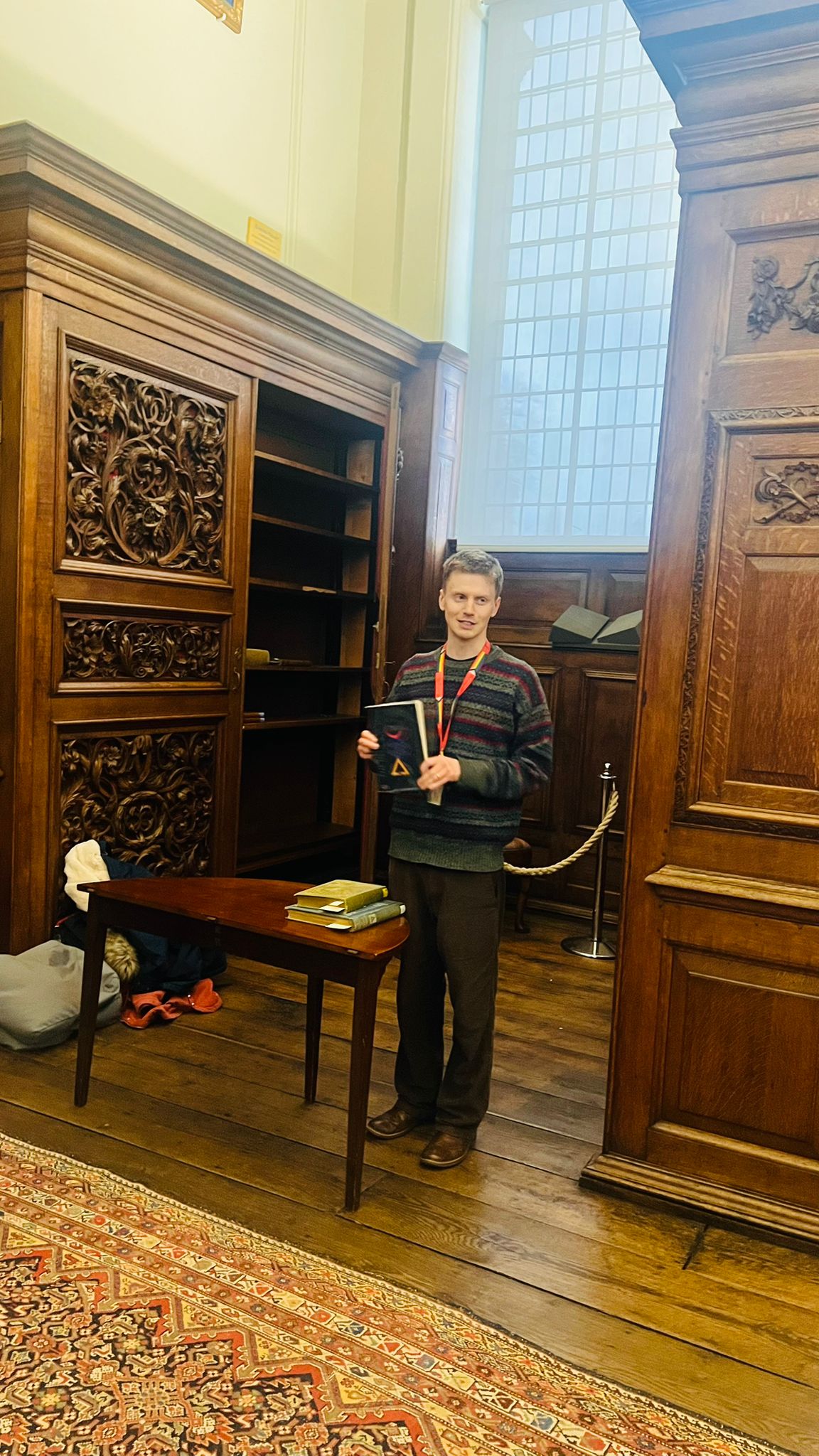


📖 Four Queen’s second-year Germanists have contributed to 'Fragmented: A New Translation of Selected Unfinished Todesarten Texts', a forthcoming #TaylorEditions volume of unfinished prose by Austrian writer Ingeborg Bachmann whose 100th birthday it would have been today.
💬 Working with texts full of ambiguity and possibility, the students discovered translation as something deeply human: creative and collaborative, sometimes frustrating, and ultimately joyful.
Edited by Dr Isabel Parkinson, Lecturer in German, the book will be published as part of the Taylorian Editions 'Writers in Residence' series.
🔗 Discover more: ow.ly/fytT50ZgKjV
#TranslationStudies #GermanLiterature #IngeborgBachmann #LiteraryTranslation #CreativeTranslation #StudentProjects #ModernLanguages ... See MoreSee Less
Experts including Dr Frances Reynolds, Shillito Fellow and Associate Professor of Assyriology and Senior Research Fellow of Queen's, discuss the enduring historical significance of the Code of Hammurabi.
They explore how these ancient Babylonian laws, carved into a basalt pillar, established a lasting legal legacy that continues to be recognised by international institutions today.
ow.ly/LzeU50ZgLhx
#CodeOfHammurabi #AncientLaw #BabylonianHistory #LegalHistory #Assyriology #AncientCivilizations #HistoricalLegacy ... See MoreSee Less
🎉 The College warmly congratulates Lecturer in Neuroscience Dr David Menassa who has received the 2026 Saïd Foundation Alumni Achievement Prize. The prize recognises an individual who has made a significant contribution to the development of their field of research and the Levant region.
🔗 Discover more about David's work to understand how the brain is affected in conditions such as autism and ADHD, as well as in diseases of ageing such as Alzheimer’s and Parkinson’s: ow.ly/eZ8a50ZcJ6C
#Neuroscience #AcademicAchievement #ResearchExcellence #LevantRegion #SaïdFoundation #AlumniAchievement #ScientificResearch #NeuroscienceResearch ... See MoreSee Less
Protecting honeybees through student-led innovation 🌼🐝
A student team at Queen’s is tackling a global threat to pollinators with an ambitious synthetic biology project designed to protect honeybees. Bringing together biology, biochemistry, chemistry, engineering, and biomedical science, the team is developing a treatment with the potential to be more sustainable than existing methods.
The project is particularly exciting because it sees first-year students getting involved in interdisciplinary research, showing how collaboration can lead to real-world impact.
The teams tells us more: ow.ly/OWGu50ZcHWF.
#iGEM #SyntheticBiology #StudentResearch #BeeHealth #Interdisciplinary #STEM #Oxfordresearch #HoneybeeProtection #StudentInnovation #PollinatorHealth #InterdisciplinaryScience #SustainableScience #BeeConservation ... See MoreSee Less